Study finds drylands could spread across 40% of Earth's land by 2100, with Australia hit hardest
Parts of Africa are also expected to undergo notable shifts.
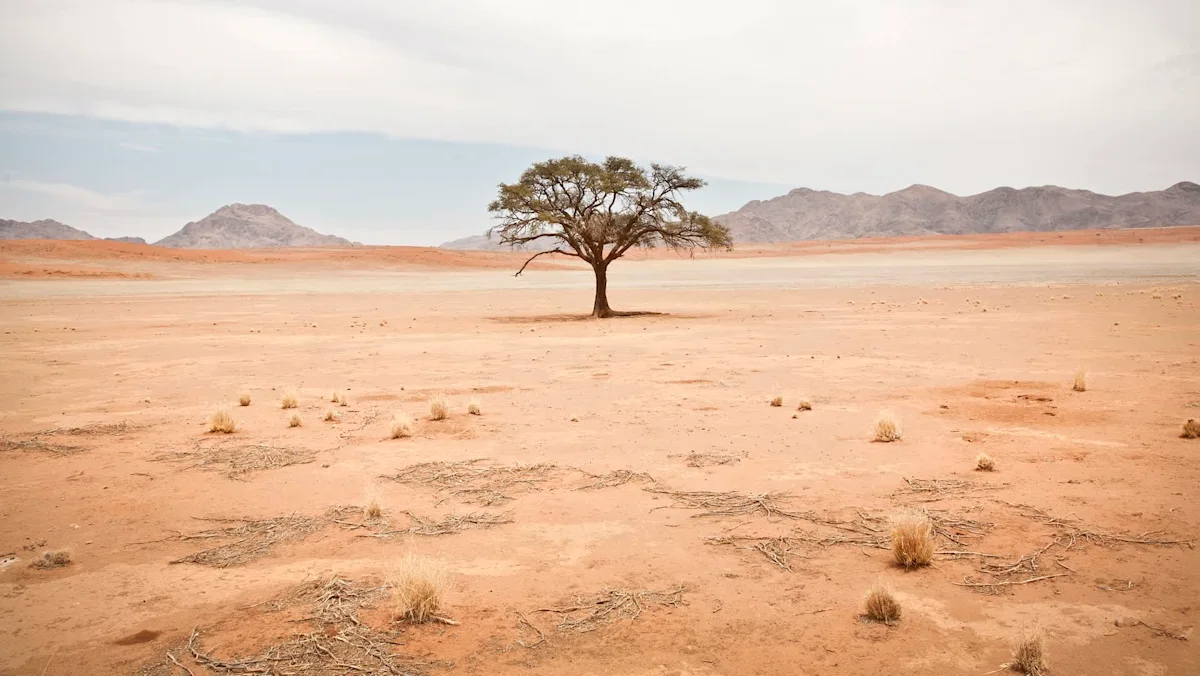
Research suggests that 40% of the world's land could become drylands by the end of the 21st century, impacting ecosystems.
Global drylands are projected to expand from about 38.58% to between 39.31% and 40.28% by 2071 to 2100, with carbon dioxide potentially affecting the spread.
Human activity is driving rising temperatures, leading to water scarcity, ecosystem degradation, and desertification in dryland regions, necessitating sustainable development and climate adaptation efforts.
Research has indicated that 40% of the world's land could shift into drylands by the end of the 21st century.
A study published in the journal Environmental Research Letters projected that global drylands could expand from about 38.58% of Earth's land area outside Antarctica during the 1994 to 2023 baseline period to between 39.31% and 40.28% by 2071 to 2100, according to ScienceAlert . It's a change that would alter ecosystems.
Using meteorological records from 1960 to 2023 alongside CMIP6 climate models, the researchers estimated how dryland areas may change over time. They treated places with an aridity index below 0.65 as drylands — a classification based on having relatively little rainfall compared with water losses from evaporation and plant activity.
In some scenarios, the researchers found that carbon dioxide — the main driver of rising global temperatures — could slightly curb the projected spread of drylands. As CO2 concentrations rise, plants often partly close tiny pores known as stomata, which reduces water loss through transpiration.
"Conventional projections often neglect CO2 effects on potential evapotranspiration, which may yield higher aridity estimates and alter aridity-change hotspot patterns," the authors wrote.
The study found that hyper-arid zones are expected to see the largest increase, while the upper end of the projections would amount to about 915,000 square miles (2.37 million square kilometers) compared with the 1994 to 2023 baseline.
As drylands expand, water scarcity can worsen, ecosystems can degrade, and communities and agriculture may find it harder to adapt to a hotter world. Regions already living close to the edge of water stress may have even less room for error as conditions continue to change.
ScienceAlert reported that the researchers predicted Australia will experience the most severe dryland changes, with Brazil next. Parts of Africa are also expected to undergo notable shifts. The paper said China and Russia contain extensive dry sub-humid zones, while Algeria, Libya, and Saudi Arabia are home to hyper-arid areas.
"Expansion of dryland climatic conditions into formerly more humid regions may aggravate water scarcity, ecosystem degradation and desertification, posing challenges to global sustainable development," the researchers wrote.
Human activity remains the underlying driver of rising temperatures, which increase evaporative demand and can push already water-stressed regions toward greater aridity. The most powerful long-term mitigation is rapidly reducing planet-warming pollution.
Restoration and conservation efforts through native vegetation, reforestation, improving soil organic matter, controlling erosion, and rebuilding watersheds are crucial. Healthy soil can hold more water, support more vegetation, and be more resilient during drought.
"Given the high ecological vulnerability of drylands, updated assessments of dryland extent and future redistribution are needed to support climate adaptation and sustainable development," the team added.
The projections line up with changes already playing out on the ground, from cropland degradation in dry regions to drought-driven displacement. They also tie into efforts to rebuild soils and manage carbon so landscapes can better hold up as aridity spreads.
• Across vulnerable farming regions, soil degradation is already here , shrinking arable land as climates dry.
• Catastrophic drought leaves land barren and pushes more Syrian families toward displacement.
• Farmers are treating soil as a climate solution , storing carbon while protecting moisture and nutrients.
Expanding dry conditions are reshaping land, livelihoods, and adaptation strategies. Without appropriate intervention, drylands will keep spreading.
Get TCD's free newsletters for easy tips, smart advice, and a chance to earn $5,000 toward home upgrades. To see more stories like this one, change your Google preferences here .
Topics in this story
Gathered from external sources. Rights to this text belong to whoever originally published it.