Jared Isaacman’s support for Musk’s space data centers did not occur in a vacuum
It meshes with his vision of a NASA-led expansion of human civilization beyond Earth.
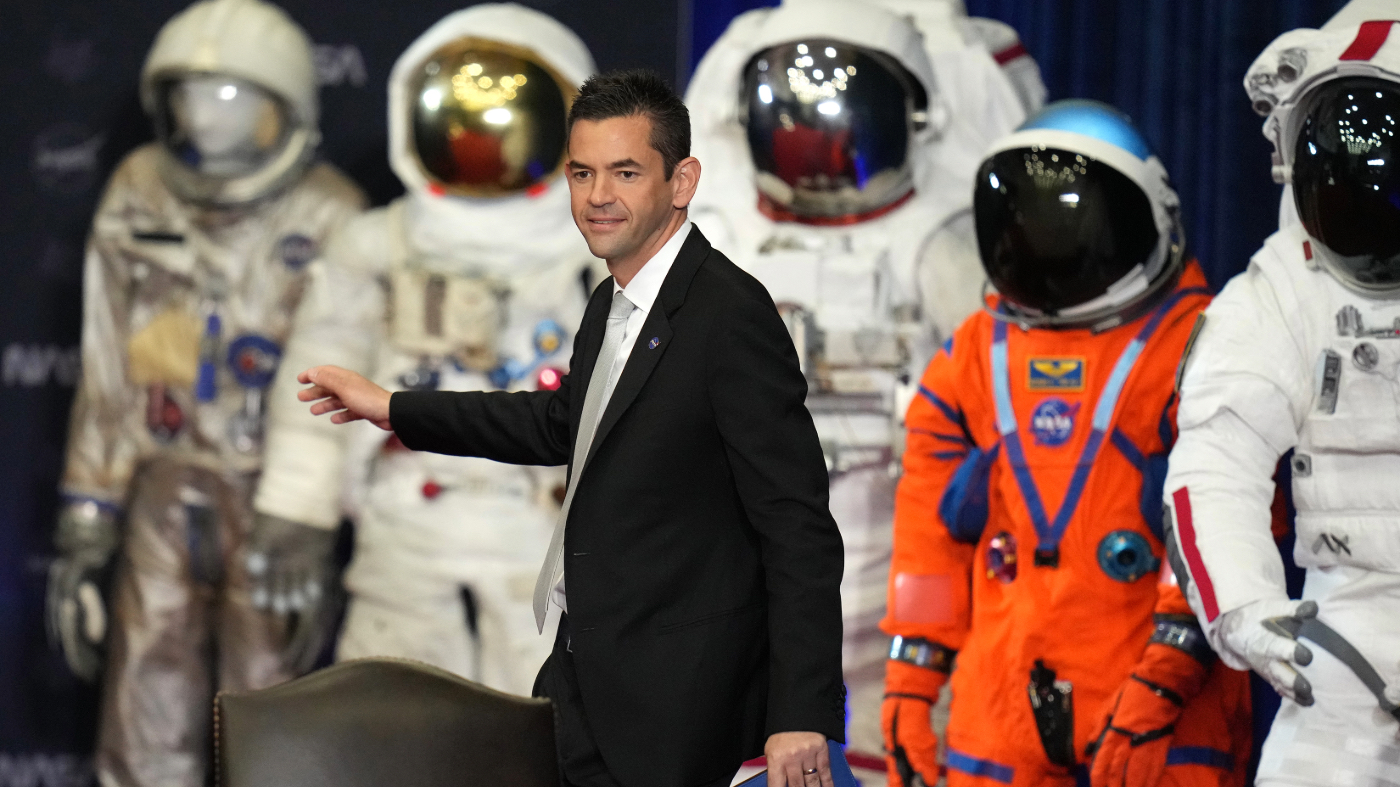
NASA Administrator Jared Isaacman’s support for Elon Musk’s idea to put AI data centers in space and power them with solar panels did not occur in a vacuum. It comes not just against a background of rising, bipartisan opposition to ground-based data centers but also the recent announcement of an immense, SpaceX Starbase to be built in Louisiana .
Many people oppose data centers out of the same kind of “NIMBY” emotion that fueled opposition to nuclear power plants and hydraulic fracking. They view them as big, noisy eyesores that will consume a lot of electricity and water to the detriment of local communities.
Opposition to ground-based AI data centers is not universal. Trade unions, which foresee lots of jobs being created in their construction and operation, are warmly supporting them . On the other hand, if Meta’s experiments with using robots at data centers pans out, those jobs may be fewer than many expect.
The reason that many people are opposed to AI data centers in their communities may have less to do with objective facts than a Chinese disinformation campaign to turn them against such facilities. Engadget reports that X uncovered a Chinese bot farm with 200,000 accounts, 200 of which were used to manipulate the debate about data centers.
It should be noted that the Chinese are going pedal to the metal to create their own data centers. As a totalitarian country, China is not concerned with public opinion one way or the other. Beijing is determined to dominate AI according to its ideology and interests.
Musk thinks he has an answer to the nimby problem on AI data centers by deploying them in space. In the latter stages, at least, the data centers would be manufactured on the moon and launched from the lunar surface.
The recent announcement of a launch facility called Star Base Louisiana is likely part of that vision. SpaceX plans to build 10 launch pads on the Louisiana coast capable of launching and recovering 1,000 Starships per year. Thatis more than enough to facilitate the lunar base, the orbital data center constellation, and eventually the Mars settlement that are the basis of Musk’s vision for the future.
A coalition of environmental groups is already raising objections to Star Base Louisiana. The Louisiana Wildlife Federation, National Wildlife Federation and Pontchartrain Conservancy have complained that the proposed regulations would waive 13 different wildlife, water and public health laws for space development projects.
Currently, it is unknown how the objections will hamper the construction and operation of the $100 billion facility. Environmentalists have hampered Star Base Boca Chica to a certain extent. Expect a similar effort directed toward the Louisiana facility.
Even if all or most of the AI data centers are deployed in space, as Musk envisions and Isaacman supports, the disquiet that many people feel toward AI will not be entirely soothed. The fear that AI will destroy jobs or, as a lot of science fiction has envisioned, destroy the human species is widespread. Many people have seen the Terminator movies, which envision an AI system called Skynet going rogue and waging war on humanity.
Fear of AI is likely overblown. While the technology will make some jobs obsolete, it will also create even more jobs . The future will belong to people who have the knowledge to interact with AI systems and guide them for the benefit of humankind. Obviously, humans must always be in the loop where the technology is concerned.
No doubt Isaacman supports that concept of space-based data centers both because he is astute enough to judge the politics of ground-based versions and because it meshes with his vision of a NASA-led expansion of human civilization beyond Earth. A lunar base devoted to science and exploration is one thing, A lunar settlement that includes mining and manufacturing is quite another. Support for the former may be tenuous and fickle. Support for the latter will be based on real-world economic benefit.
AI will certainly be of benefit for space exploration. The technology will automate spacecraft navigation, speed data analysis and improve astronaut safety through real-time monitoring of systems and predicting failures before they happen.
AI will not replace all human beings on the high frontier of space. AI systems and humans working together will be an unstoppable force that will spread civilization to the moon, Mars and beyond.
Mark R. Whittington, who writes frequently about space policy, has published a political study of space exploration entitled “ Why is It So Hard to Go Back to the Moon? ” as well as “ The Moon, Mars and Beyond ” and, most recently, “ Why is America Going Back to the Moon? ” He blogs at Curmudgeons Corner.
Topics in this story
Gathered from external sources. Rights to this text belong to whoever originally published it.