London Underground drivers to stage new strikes in coming months
The union is in dispute with London Underground over working arrangements for drivers.
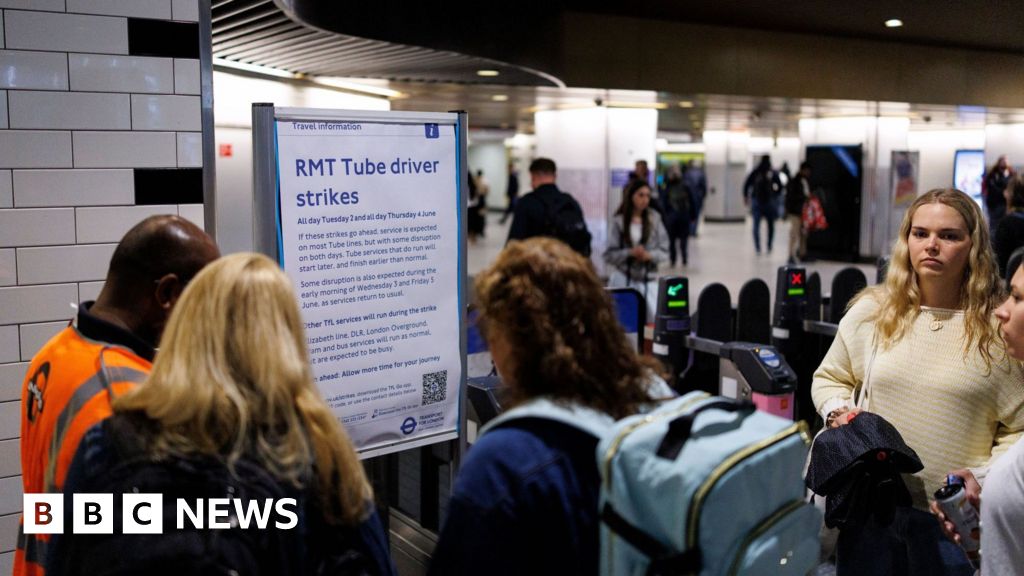
London Underground drivers are to stage a series of 24-hour strikes in a long-running dispute over working arrangements, the Rail, Maritime and Transport (RMT) union has announced.
A series of walkouts will begin on 26 November, with further strikes planned for 17 December, 19 December, 4 January, 6 January, 17 February, 23 February and 25 February.
The action will be taken in opposition to Transport for London (TfL) plans to introduce a four-day working week.
The union says drivers will face longer hours driving trains and work longer days, but TfL said the change would be voluntary and would mean drivers work fewer hours overall.
London Tube strikes: What you need to know
A series of strikes in the spring over the same issue caused significant disruption across the network, with some lines being entirely closed.
Despite further talks being held since, RMT has not accepted TfL's proposals.
General secretary Eddie Dempsey said: "London Underground is attempting to dress up a wholesale attack on drivers' working conditions as a voluntary four-day week.
"Our members are being asked to spend more time driving trains, accept longer and more unpredictable shifts and surrender agreements that have been negotiated and defended over many years."
The union also said it believed the changes would "pave the way for hundreds of job cuts".
TfL said that drivers choosing to remain on a five-day week would be given a guarantee of remaining at the same depot.
Nick Dent, director of customer operations for London Underground, said: "This will give our colleagues a real, meaningful choice on their working pattern without having to change where they work.
"This will also mean less time at work for Tube drivers, while delivering a more efficient, reliable Tube service for our customers."
About half of the drivers on the network are members of the RMT union.
Many others are represented by the Aslef union, which said it was "surprised" by the action.
Finn Brennan, Aslef's full-time organiser on London Underground, said: "The voluntary four-day week gives Tube train drivers an extra 35 days off every year with rosters based on a 34-hour week in return for some changes to working conditions and moving to electronic, rather than paper-based, systems for booking on for duty.
"Management have agreed that anyone who wants to keep working a five-day week will be able to do so without suffering any detriment, and we will be holding them to that.
"A strike designed to stop people having the choice of a shorter working week and more time off is a strange choice to make."
Under the proposals, most drivers would see their working week reduced from 36 hours to 35 hours, according to TfL. Their contractual hours would remain the same because paid meal breaks would be introduced.
This effectively means drivers would work longer days, but fewer days each week and fewer overall hours each week.
The RMT instead wants a 32-hour week over four days, meaning drivers would work three fewer hours each week for the same salary.
The business group BusinessLDN said the strikes were likely to affect the hospitality sector in particular in the run-up to Christmas.
"These strikes will not bring any festive cheer to Londoners and visitors who rely on the Tube to get around the city," transport programme director Ed Richardson said.
"We urge both sides to reach an agreement urgently and avoid these damaging strikes."
Listen to the best of BBC Radio London on Sounds and follow BBC London on Facebook , X and Instagram . Send your story ideas to hello.bbclondon@bbc.co.uk
Tube usage down by 41% during strike, TfL says
Topics in this story
Gathered from external sources. Rights to this text belong to whoever originally published it.