In 2012, researchers dyed Wisconsin’s Ward Lake blue to test reduced sunlight; in that full-lake experiment, phytoplankton biomass fell 60%
In 2012, University of Wisconsin researchers dyed Ward Lake blue to study the effects of reduced sunlight on its ecosystem, revealing a significant drop in phytoplankton biomass by 60%. The experiment provided valuable insights into the changes in lake food webs, carbon dioxide levels, and animal diets.
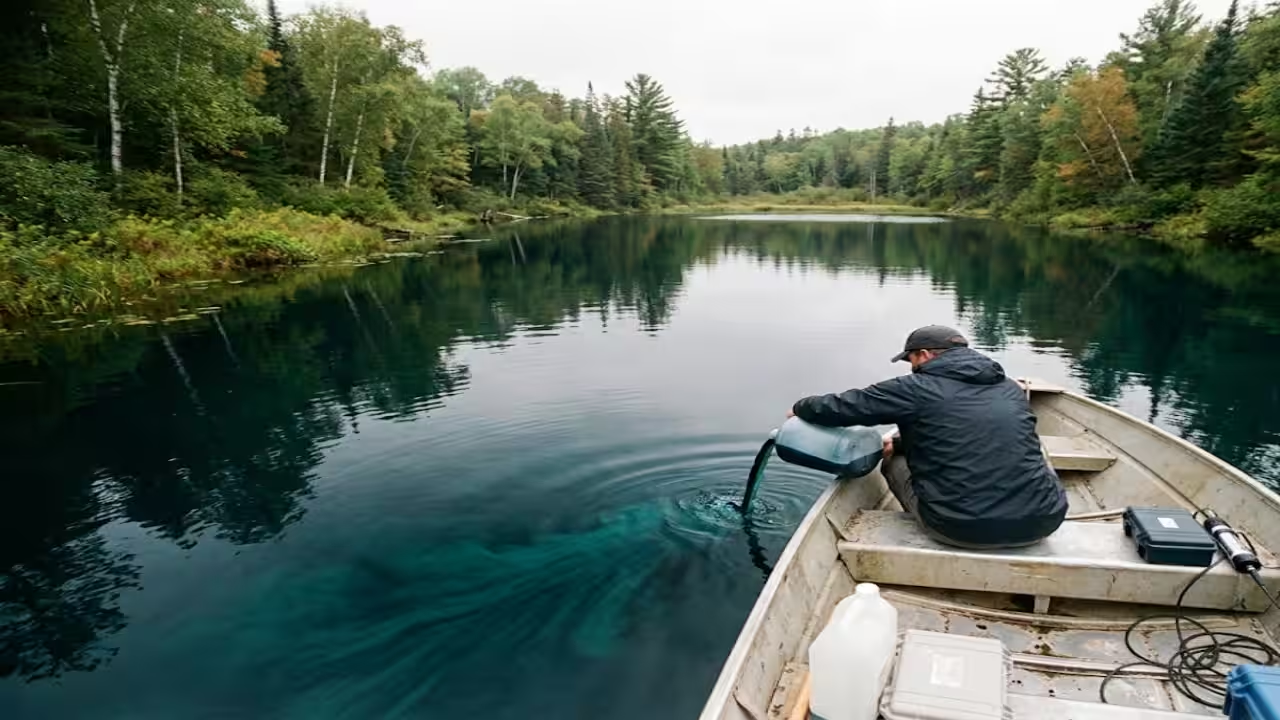
Even when something significant is moving beneath the surface, a lake may appear the same from the beach year after year. Heavy rains have been carrying more dissolved organic debris from the ground into lakes in many chilly northern locations, darkening the water and reducing the amount of sunlight that allows algae to bloom. That type of darkening has been connected by Canadian researchers to less phytoplankton in boreal lakes. Because nature takes decades to conduct the experiment and provides no unspoiled lake for comparison, it is more difficult to determine what it does to the rest of the food chain.University of Wisconsin limnologists in Madison didn't want to wait that long. In 2012, Ryan Batt and colleagues with Stephen Carpenter introduced a pond dye called Aquashade to Ward Lake, a small, naturally productive lake in northern Wisconsin, to reduce the amount of sunlight reaching the algae. The scientists at the Centre for Limnology intended to examine how a darker lake might feed its creatures. Their 2015 study found a 60% drop in phytoplankton biomass compared with a previous year. The 60% decline was only part of the result. The study also recorded changes in animal diets, oxygen levels and the lake’s overall metabolism.How researchers darkened Ward LakeAquashade is a concentrated liquid, a bit like food colouring, created from two dyes named tartrazine and erioglaucine. It operates by blocking light. Batt’s inquiry was basically about diet. The fish and zooplankton in Ward Lake mostly depend on algae that grow in the lake. If the algae went, would they fall back on food from the surrounding land, including debris washed in by streams, leaves and fallen logs? He compared it to eating imported processed food instead of fresh.To judge any change, the team compared Ward Lake with its own measurements from 2010 and with a nearby reference lake, Paul Lake, that was left alone. Without that comparison, a bad summer could easily be mistaken for an experimental effect.Changes beyond phytoplanktonThe Ecosphere study showed that the decline in phytoplankton biomass was accompanied by a shift in the behaviour of the entire lake. Ward Lake had a shallower warm surface layer and shallower sunny zone, greater carbon dioxide and lower dissolved oxygen compared with 2010 and the reference lake. Readings and net ecosystem production numbers indicated the change from a lake that produced more energy, through photosynthesis, than it consumed to one that consumed more than it produced.The 2015 paper reporting the 2012 Ward Lake experiment found that an Aquashade concentration of about 1.5 parts per million reduced the depth of illuminated water by roughly half. Phytoplankton biomass fell by 60%, while zooplankton biomass declined by 55%. These findings came from the same whole-lake experiment, not a separate later trial.Responses across the food webThe diet results were the most interesting. A specialist copepod kept relying heavily on phytoplankton even after the lake was darkened. A generalist zooplankton predator called Chaoborus, however, drew more of its support from sources on land. The lake’s food web did not respond uniformly. Some animals maintained their feeding patterns, and others shifted toward alternative food sources. These differences matter when predicting how darker lakes may affect fish.The whole-lake result does not mean every Aquashade treatment reduces phytoplankton biomass. In a separate experiment using 600-litre tanks, researchers found no change in phytoplankton biomass at 2.0 ppm, although zooplankton abundance and community composition changed. The experiments used different settings and measured different ecological responses, so their findings should not be treated as a direct comparison of dose alone.The notion has lived on with researchers. In 2024, a doctoral student at the same centre dyed Peter Lake blue to see if suppressing light may make a lake more immune to algae outbreaks, according to a UW-Madison newsletter. The Ward Lake work has a straightforward takeaway. Less light means less algae, fewer zooplankton and a lake that operates on a different energy budget, and the species living in it will not all cope in the same manner.
Topics in this story
Gathered from external sources. Rights to this text belong to whoever originally published it.