When is a home safe after a wildfire? California passes first smoke standards
California is poised to become the first U.S. state to set standards for testing and remediation for smoke contamination from wildfires, with a pair of bills passed Monday.
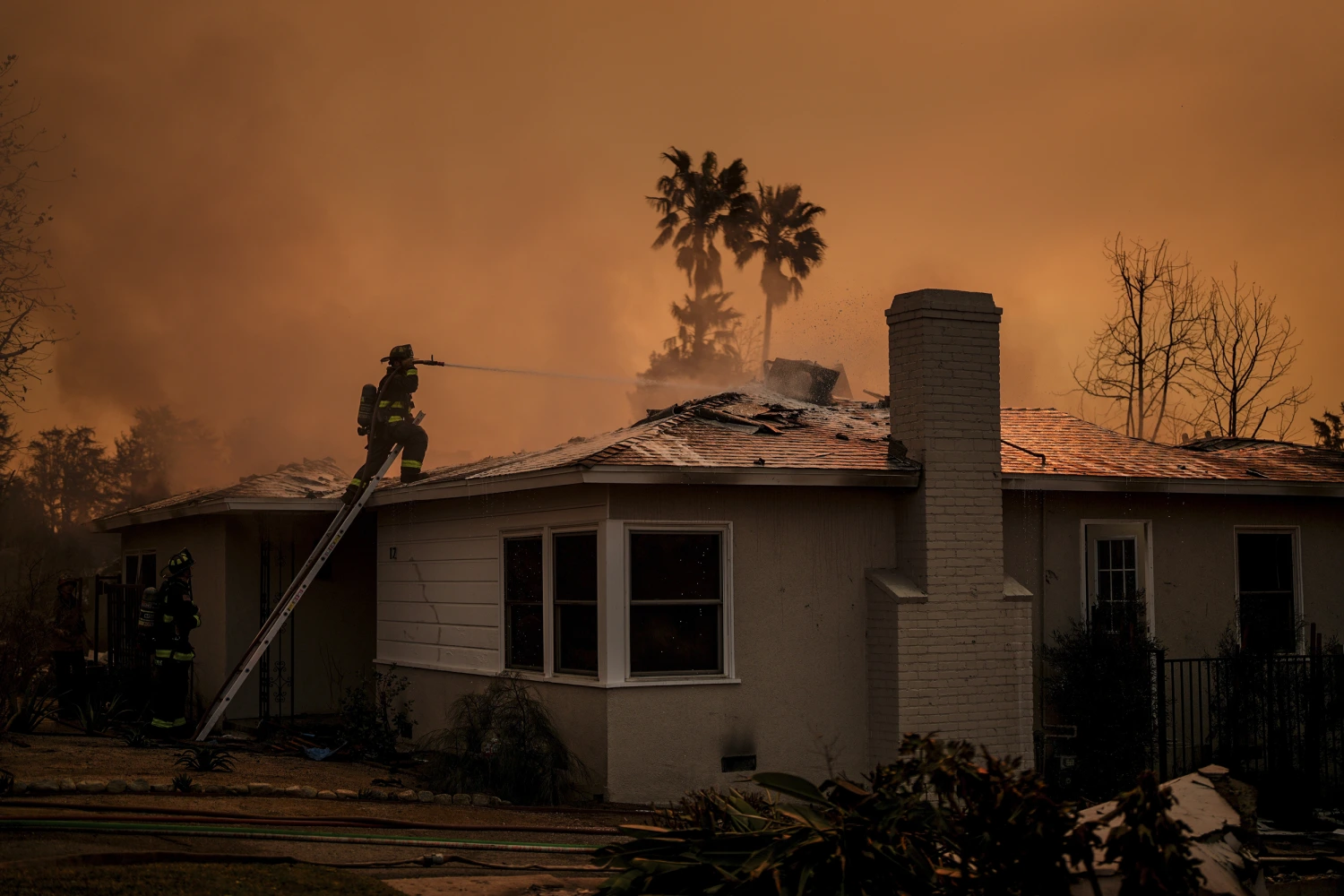
After a wildfire fills a house with smoke, when is it safe to return? With a pair of bills passed on Monday, California is poised to become the first U.S. state to set standards for that contamination risk. Since last year’s fires in Los Angeles, thousands of people have remained displaced or stuck in temporary housing, even though many of them own homes that survived the blazes. But because there are no consistent requirements for testing and remediating toxins in smoke, like lead and asbestos, which can settle into walls and ducts during a wildfire, the residents fear that moving back to their homes could make them sick. The uncertainty has left many California homeowners at war with their insurers. State Assembly Member John Harabedian, who represents Altadena, where the Eaton Fire killed 19 people and burned about 9,400 homes and structures, authored one of the bills passed this week. “I think this is going to be extremely helpful for those Eaton and Palisades fire survivors who continue to litigate and fight these issues with their insurance carriers,” he said. “Many families haven’t been able to resolve these disputes because there is no objective metric, there is no actual goalpost, and there is no certainty.” Together, the two bills require California’s Department of Toxic Substances Control and Air Resources Board to develop regulations and guidance on what contaminants need to be addressed after a wildfire, how environmental testing should be conducted and when homes can be considered ready for re-occupancy. “AB 1642 is a first-in-the-nation setting of standards for testing, remediation, and restoration for any residential property that has been affected by a wildfire,” Harabedian said. “Its companion bill, 1795, will ensure that insurance companies will use those standards for testing and remediation when processing insurance claims for homes that were affected by a wildfire.” He added that media coverage of these issues, including from NBC News, helped lawmakers understand the policy gaps that needed to be addressed. The bill next goes to Gov. Gavin Newsom’s desk to sign into law. Harabedian said Newsom’s staff provided feedback on the bill, but the governor has not formally signaled whether or not he’ll sign. An advocacy group called Eaton Fire Residents United partnered with Harabedian’s office to create and push for the pair of bills. “These bills are going to be a beachhead and an example for other states around the country,” said Dawn Fanning, the group’s managing director. “It lays out the playbook of what insurance can and cannot argue with people.” The insurance industry opposed the legislation but said the final bills represent a step forward toward clearer guidance on smoke-related claims. Karen Collins, vice president of the American Property Casualty Insurance Association, said the group’s members are concerned that the bills leave open questions about the specific standards the state will enact. “What we have is as a framework,” Collins said. “Many of the most important decisions have been deferred to future regulations.” California is facing an insurance crisis as premiums rise and companies stop renewing policies in fire-prone areas. Collins said the decisions regulators make to implement the new legislation (assuming Gov. Newsom makes it into law) could exacerbate the problem — especially if standards change over time and create uncertainty. “It’s critical that standards be grounded in credible science and valid methodologies,” she said.
Topics in this story
Gathered from external sources. Rights to this text belong to whoever originally published it.