Meet Tiffani Gay, the student whose electromagnet prototype removed nearly 93% of oil from polluted water
The project focuses on separating non-surface crude oil from water, an area the ISEF abstract describes as having limited research.
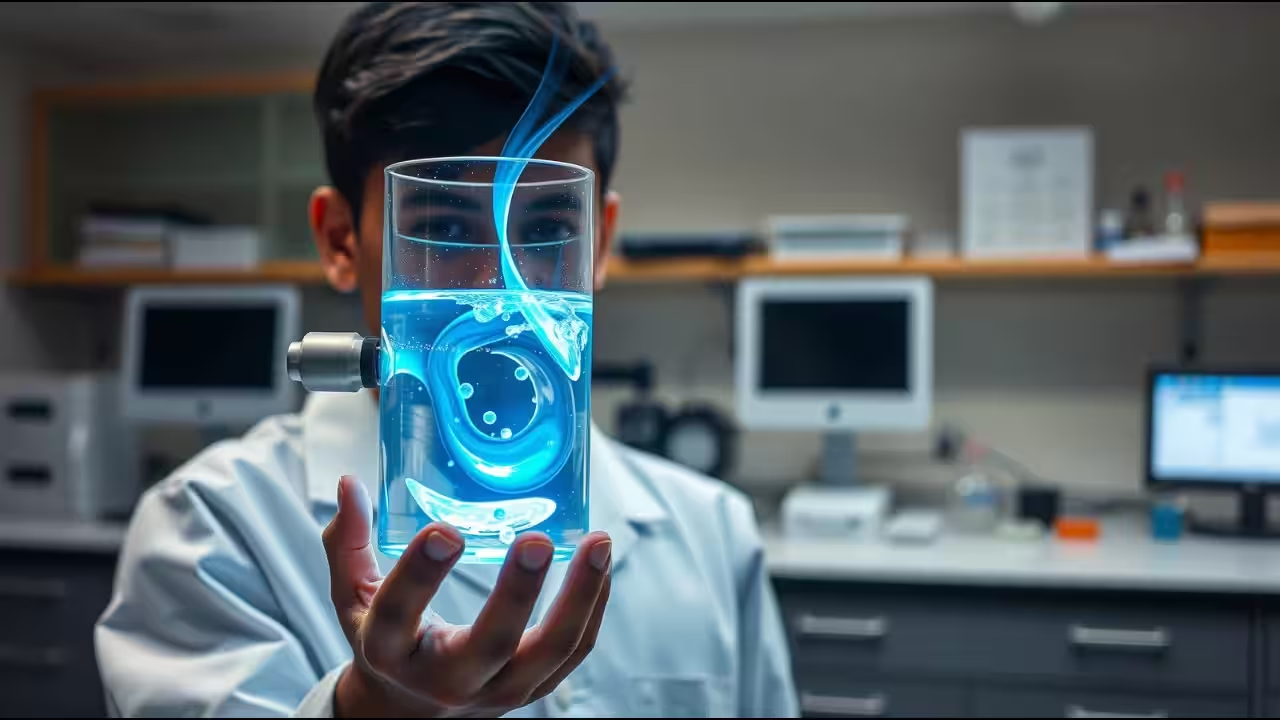
The project focuses on separating non-surface crude oil from water, an area the ISEF abstract describes as having limited research. Tiffani Gay, a student researcher from Orlando Science Schools, developed a prototype that uses an electromagnetic field and a specialised magnetorheological fluid to separate oil from water. Her project, “Year II: Resistant Electromagnet Propulsion for Petroleum Removal Employing Biocompatible Magnetorheological Fluid in Oil Spill Applications,” was presented in the Environmental Engineering category at the 2024 Regeneron International Science and Engineering Fair. According to the official ISEF project abstract, the project reported approximately 92.8% oil removal under its most effective reported condition, which used a 1:4 concentration of the magnetorheological fluid in distilled water. The project received the National Oceanic and Atmospheric Administration's Taking the Pulse of the Planet First Award.Tiffani Gay and electromagnetic oil separation: how the prototype worksGay's research focuses on the separation of non-surface crude oil from water. The ISEF abstract says the prototype connects an oil-and-water solution to an electromagnetic-field separation tube. When the electromagnetic coils were discharged, the system produced a propulsive effect that separated the oil and water. The process uses a specialised magnetorheological fluid, or MRF, containing iron oxide, specifically Fe3O4 microspheres, suspended in oleic acid. The project describes the fluid as viscoelastic and reports that it exhibited super lipophilicity and hydrophobicity,’ as described in the project abstract. When added to the petroleum-and-water solution, the MRF gave the mixture magnetic properties that allowed the electromagnetic field to act on it during the separation process.Electromagnetic separation removed 88.5% of oil after 14 minutesThe project's reported results varied depending on the test conditions. The ISEF abstract reports that the EMF system was most effective at 14 minutes, when it removed 88.5% of the oil. The abstract also reports that there was no significant relationship between the type of water used in the experiment, with both seawater and distilled water tested. The highest reported removal rate came when the magnetorheological fluid was used at a 1:4 concentration in a distilled-water environment. Under those conditions, approximately 92.8% of the oil was removed. This is the headline result from the project, but it represents the outcome of the reported experimental conditions rather than evidence that the prototype can remove the same proportion of oil from an actual marine spill. The distinction matters because the project was a prototype study. The ISEF abstract reports successful oil separation in the experimental system, while the proposed applications would require the technology to be developed and tested beyond the conditions used in the project.Where Tiffani Gay's oil-separation system could be usedThe project abstract identifies several possible applications for the technology. It says the approach could potentially be used for pollution-control applications involving polyatomic hydrocarbons, microplastics and organic pharmaceutical compounds. These are presented as potential applications of the research rather than demonstrated results from the prototype. Gay's proposed deployment options include connecting the system to a tube along a shoreline or using a buoy collection mechanism for applications in deeper water. The project also says a deep-learning model based on fluorescence imaging is being investigated to quantify pollution levels and potentially guide targeted use of the system. The official ISEF abstract concludes that the device met its engineering goals by introducing a method of oil-spill removal based on electromagnetics. The reported results provide a proof of concept for the prototype under the tested conditions, while further development would be needed to determine how the system performs in larger or more complex environments.
Topics in this story
Gathered from external sources. Rights to this text belong to whoever originally published it.