South Portland placed more than 200 discarded holiday trees on an eroded Maine beach after a 2022 storm; they trapped sand and vegetation began returning within months
After a powerful winter storm stripped away sections of Maine’s coastline in December 2022, an unlikely form of coastal protection began taking shape on
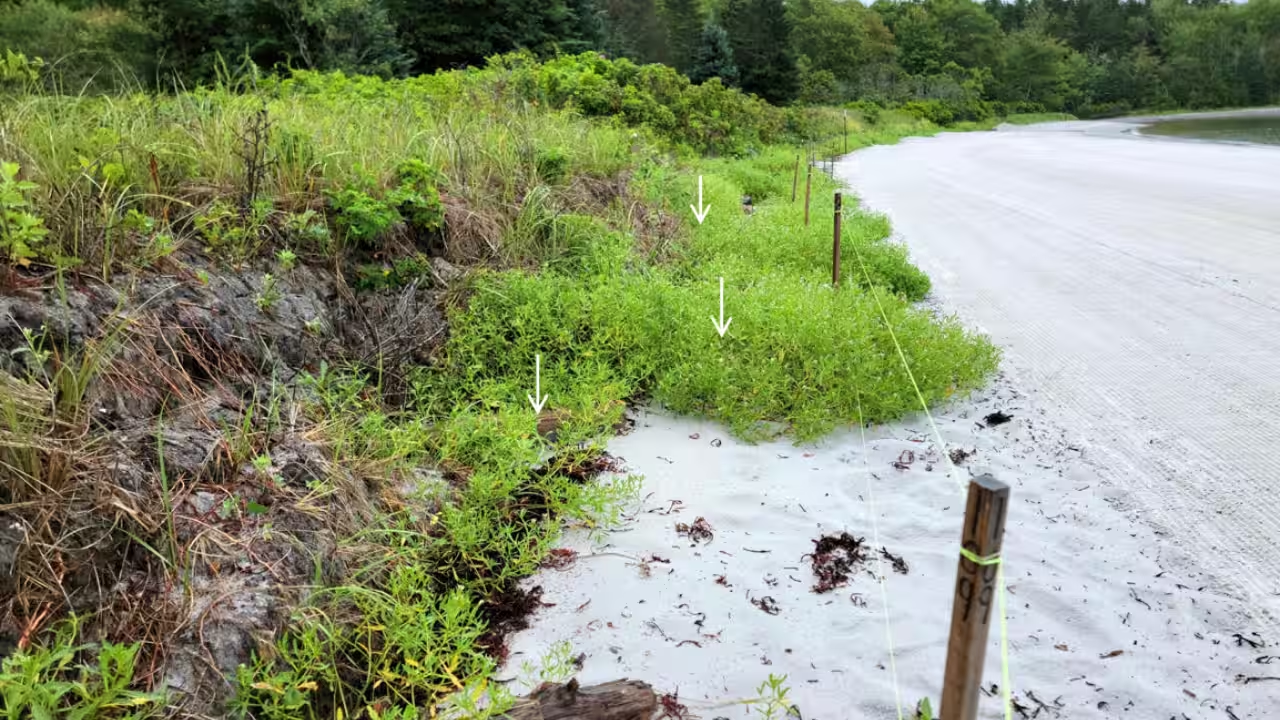
After a powerful winter storm stripped away sections of Maine’s coastline in December 2022, an unlikely form of coastal protection began taking shape on the sand. Instead of sending discarded Christmas trees to waste facilities, South Portland put more than 200 of them to work along the damaged Willard Beach, where they were arranged to slow erosion and capture drifting sand, states a report by NOAA's Office for Coastal Management. The experiment was part of a broader effort led by the Maine Geological Survey, working with South Portland, Bristol and Phippsburg. Across three beaches, storm debris and unwanted holiday trees were repurposed as temporary structures to help rebuild dunes. Within months, vegetation began returning in some areas.Turning trees into dune buildersAccording to the report, the approach was straightforward: place woody material where dunes had been damaged and allow wind and waves to do much of the restoration work. At Willard Beach, the Christmas trees were positioned in rows parallel to the shoreline, roughly following the shape of natural dune ridges. Their branches helped slow moving sand, allowing it to accumulate rather than being carried away.The project was particularly important because erosion had exposed or threatened buried infrastructure along parts of the beach. A solid waste permit from the Maine Department of Environmental Protection helped make the reuse effort possible.As sand collected around the trees, the beach began developing conditions more favourable to the return of vegetation.Three beaches, three approachesThe wider project also examined how woody debris could be used in different coastal settings. At Pemaquid Beach in Bristol, the storm had carved steep, eroded faces into the dunes. Sections of washed-up logs were placed perpendicular to the shoreline to reinforce the base of the damaged dunes. Overhanging sections were allowed to collapse, helping accelerate the natural reshaping process.At Popham Beach State Park in Phippsburg, the storm had flattened large sections of the dunes and pushed the Morse River channel northward. Dozens of logs washed ashore were arranged parallel to the beach, creating lines that resembled natural dune ridges. The structures were intended to capture windblown sand and gradually rebuild the dunes. The work was carried out with the Maine Bureau of Parks and Lands.Letting nature do the restThe projects did not rely on elaborate construction or permanent barriers. Instead, the trees acted as rough, temporary sand traps while natural processes supplied the materials needed for recovery. Windblown sand became caught in branches and accumulated around the woody structures. Wave-deposited material added to the buildup in some areas, while returning vegetation helped stabilise newly formed sand.The results offered Maine officials another tool for responding to storm-damaged beaches, particularly where traditional engineering solutions may be costly or disruptive to natural dune systems.A second life for holiday treesThe projects also demonstrated how material that would normally be discarded can serve a practical purpose after the holiday season. In South Portland, more than 200 unwanted Christmas trees became part of an effort to protect a vulnerable stretch of shoreline. The work across Willard, Pemaquid and Popham beaches highlighted the value of combining local knowledge, government agencies and natural processes. Rather than trying to force eroded beaches back into their former shape, the projects gave sand, vegetation and dunes a framework in which to rebuild themselves.Image Courtesy: NOAA
Topics in this story
Gathered from external sources. Rights to this text belong to whoever originally published it.