Researchers removed invasive reeds at a Connecticut pond, reducing their growth by 98% and increasing native plant diversity by 39% over six years
Connecticut’s Highstead Pond recorded a 39% increase in native plant species richness after researchers began removing an invasive reed.
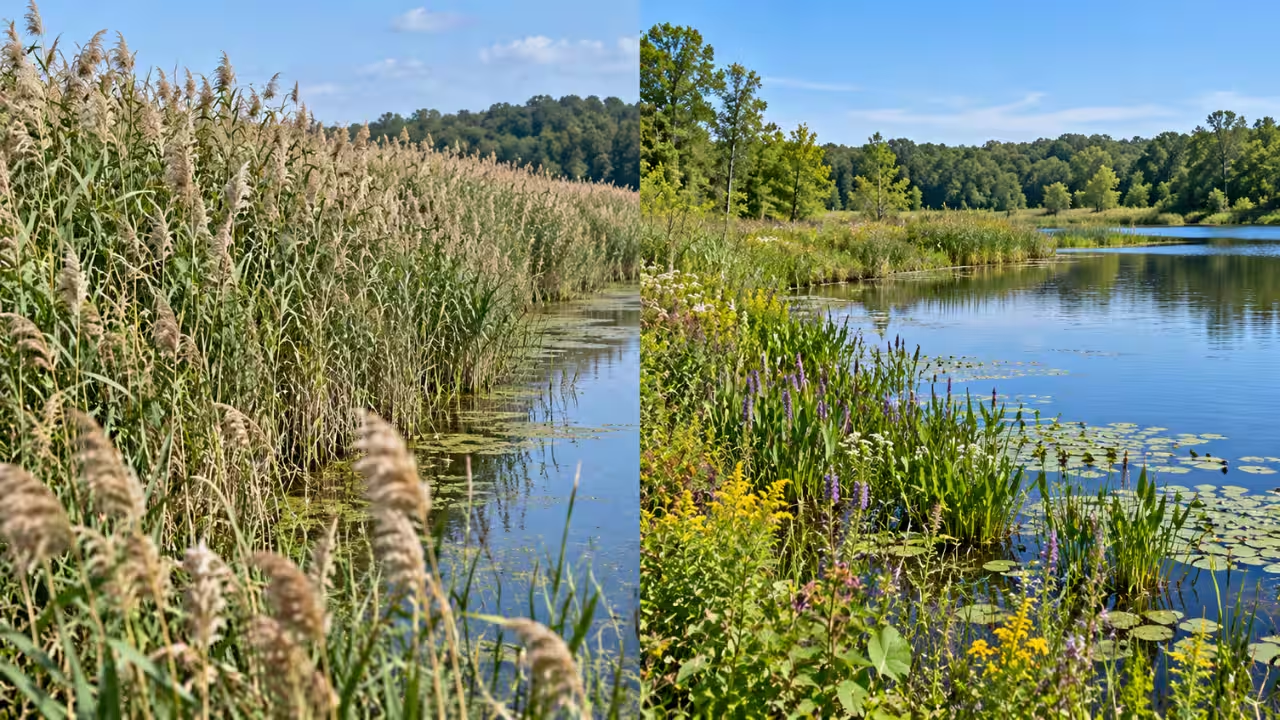
Connecticut’s Highstead Pond recorded a 39% increase in native plant species richness after researchers began removing an invasive reed. Over six years, researchers monitored vegetation at Highstead Preserve, where the reed Phragmites australis had covered 30% of the pond’s shoreline. According to the study published in BioOne Complete, titled ‘Response of a Wetland Plant Community to Management of Phragmites Australis (Poaceae) in Southwestern Connecticut ‘, repeated herbicide treatments achieved 98% mortality of the invasive grass, while native plant richness increased by approximately four species per plot on average by 2017. However, non-native plant richness also rose during the study, highlighting the challenges of restoring wetland vegetation through invasive species management.How did invasive Phragmites spread at Highstead PondBefore the management programme began, Phragmites australis covered 30% of the shoreline around Highstead Pond. The reed formed several small, dense patches measuring less than 100 square metres and one larger patch of approximately 1,300 square metres. The species is a perennial grass native to Eurasia that is now found across temperate regions of North America, including freshwater, brackish and salt marsh environments.According to the researchers, relatively little information was available about the effectiveness of different management strategies and the responses of plant communities following the removal of Phragmites australis. To assess the impact of treatment, they monitored vegetation around the pond over six years, comparing plant densities and species richness before and after the reed was treated. In 2012, before herbicide application, the team randomly placed 28 one-square-metre plots in areas invaded by the reed. They counted live stems of vascular plant species, with a separate method used to estimate the abundance of grasses and other plants growing in overlapping clumps.How did researchers compare three methods of reed removalThe team used three techniques to apply a glyphosate-based herbicide: hand wiping, a long-handled brush applicator and spraying with a backpack sprayer. The hand-wipe method involved wiping the leaves and upper half of each stem, while the wand method used a long-handled brush to treat the same parts of the plant. The spray method applied the herbicide to the whole plant.The first year of treatment produced different results across the three methods. The researchers reported a 72% reduction in Phragmites australis using the handwipe approach, compared with reductions of 20% to 32% for the wand and spray treatments. The spray method also caused greater damage to other herbaceous vegetation. Stem densities of non-Phragmites herbs declined by 76% in the spray treatment, while they remained largely unchanged in the handwipe and wand treatments. Herb species richness in the spray-treated plots fell by 50%, from an average of 12.6 species per plot to 6.3. Following these results, the researchers used the handwipe method to treat all remaining reed stems in subsequent years.How did native plants recover after invasive reed removalBy 2014, following the second year of treatment, the density of Phragmites australis stems had declined by 98% across the 28 plots compared with the 2012 levels. The researchers also recorded increases in other herbaceous plants. Herb densities increased by 207% across all plots, while the original spray-treated plots recorded a 390% increase. In those spray-treated plots, herb species richness recovered from an average of 6.3 species in 2013 to 12.3 species in 2014.The study found that the recovery continued through 2017. Across all plots, herb species richness exceeded the pre-treatment level by almost four species per plot on average, representing a 29% increase. Woody stem density and woody species richness also increased between 2014 and 2017, by 128% and 103%, respectively. By 2017, ten species occurred in at least 40% of the sampled plots, compared with seven species meeting that frequency threshold before treatment. The researchers said this indicated a more even distribution of plant species than in 2013 or before the management programme began.How did native plant diversity increase by 39% after invasive reed removalThe study’s findings showed that native plant species richness increased by approximately four species per plot on average in 2017 compared with the pre-treatment measurements taken in 2012. This represented a 39% increase in native species richness across the plots. Non-native species richness also increased during the same period, rising by an average of 0.75 species per plot, or 110%.The researchers also recorded an increase in Microstegium vimineum, another invasive grass. It occurred in 18% of the plots during the first year after treatment and in 54% of the plots by 2017. The study therefore documented increases in both native and non-native plant diversity following the removal of Phragmites australis. The authors noted that removing one dominant non-native species can lead to greater species richness among both native and non-native plants in areas where other non-native species are already prevalent.The researchers concluded that hand wiping was the most effective method for managing Phragmites australis in relatively small areas, although it was more time-consuming than spraying. They also highlighted the ability of the wetland plant community to recover after the initial damage caused by the spray treatment. However, the study found that the invasive reed could regenerate after herbicide treatment. The authors reported achieving 98% mortality only after multiple years of treatment and said continued spot treatment of new stems would likely be needed each year into the foreseeable future.The findings, published by the New England Botanical Club in Rhodora, provide a six-year record of changes in vegetation following invasive reed management at Highstead Pond. The results documented a 98% reduction in reed stem density by 2014, a 39% increase in native plant species richness by 2017 and a simultaneous increase in non-native species richness during the study period.
Topics in this story
Gathered from external sources. Rights to this text belong to whoever originally published it.