California releases more than 3,000 endangered mountain frogs into the wild, restoring a species that has lost most of its home
Science News: More than 3,000 endangered mountain yellow-legged frogs and tadpoles have been released into Californiaâs mountain ranges in 2026, giving a once wides.
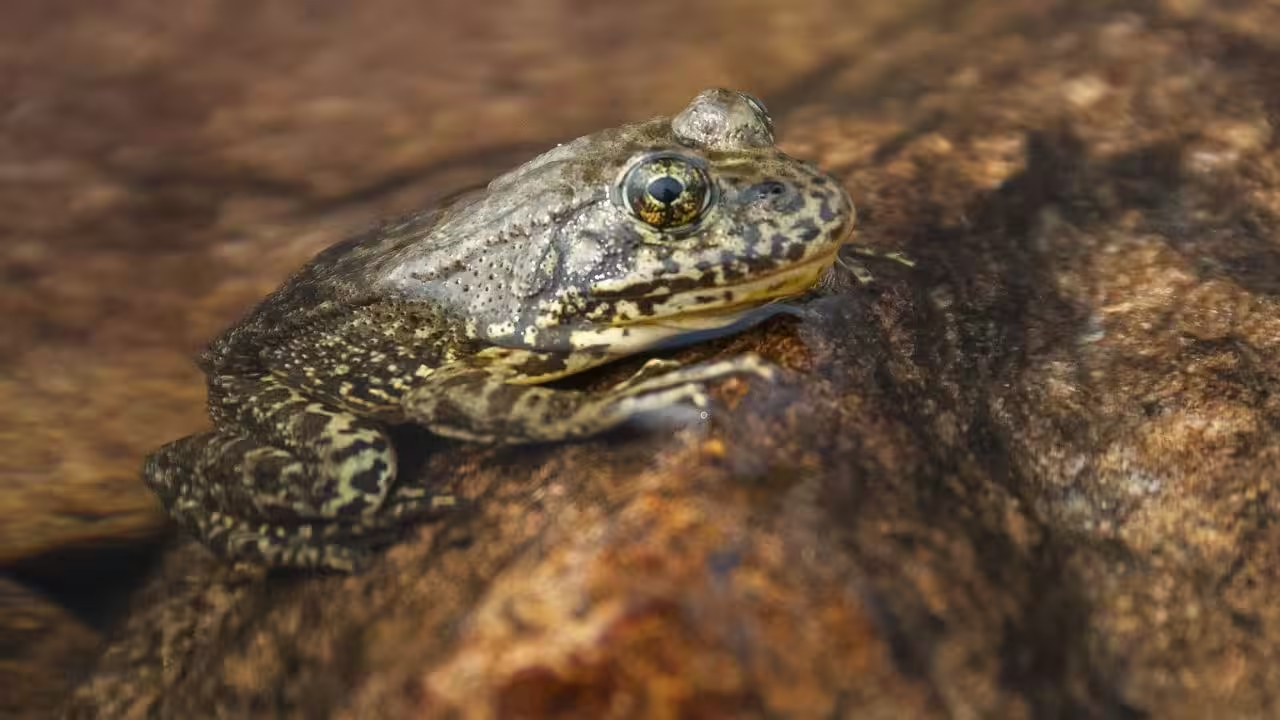
More than 3,000 endangered mountain yellow-legged frogs and tadpoles have been released into Californiaâs mountain ranges in 2026, giving a once widespread amphibian another chance to survive in the wild. The reintroduction, carried out by the âSan Diego Zoo Wildlife Allianceâ and its partners, is part of a long-running effort to rebuild populations of a species that has suffered a dramatic decline. The tiny frogs have been returned to high-elevation habitats in the San Bernardino and San Jacinto mountains. Their release marks another step in a conservation programme that began as a rescue effort and has now returned more than 10,000 mountain yellow-legged frogs to the wild. The work also highlights how carefully managed breeding, monitoring and habitat restoration can help endangered wildlife regain a foothold in its native home.How are 3,000 frogs being returned to the Californian mountainsThe latest releases are part of a conservation breeding and reintroduction programme led by the San Diego Zoo Wildlife Alliance. According to PEOPLE, more than 3,000 mountain yellow-legged frogs and tadpoles have been reintroduced during 2026 into the San Bernardino and San Jacinto mountains, areas within the speciesâ historic range. Some were released into high-elevation habitats including Bluff Lake in the Big Bear Valley. The programme began in 2006 as a simpler rescue effort before developing into a broader breeding and reintroduction project. The frogs released this year were bred at the organisationâs Beckman Center for Conservation Research before being moved back into suitable mountain habitats.The San Diego Zoo Wildlife Alliance explains that its conservation team has been working to improve breeding methods so that more healthy young frogs can eventually be returned to the wild. Scientists recreate conditions that frogs experience naturally, including seasonal changes and colder periods that encourage hibernation. They also adjust light cycles and study the animalsâ nutritional needs. Because natural breeding remains difficult, the organisation has also explored assisted reproductive methods, including hormone treatments and in-vitro fertilisation(IVF). At the same time, sperm is preserved through its âFrozen Zoo programmeâ to help protect the speciesâ genetic diversity for the future.Reason for mountain yellow-legged frogs becoming so rareMountain yellow-legged frogs once played a major role in the high-country ecosystems of Californiaâs Sierra Nevada. According to the National Park Service (NPS), âRana muscosaâ and âRana sierraeâ live in naturally fishless lakes, ponds and streams at high elevations. They were once the most numerous amphibians in the Sierra Nevada, but have disappeared from 92% of their historic range. The decline has been severe enough for both species to receive legal protection. The NPS says Rana muscosa was listed as endangered and Rana sierrae as threatened under Californiaâs Endangered Species Act in 2012. Both were later listed as endangered under the federal Endangered Species Act in 2014.One of the biggest problems came from an unexpected change to mountain lakes. Trout were introduced into high-elevation waters to attract people interested in fishing and recreation. The fish eat tadpoles and young frogs and also compete with them for insects. According to the NPS, trout can force frogs into smaller, poorer-quality areas and separate populations from one another. A deadly fungal disease known as chytridiomycosis has added another major threat. The disease attacks the skin of frogs and can kill infected animals, making it particularly damaging to populations already weakened by other pressures.What has conservation work achieved so farSan Diego Zoo Wildlife Alliance has now reintroduced more than 10,000 mountain yellow-legged frogs into the wild, including the animals released during 2026. The frogs are being monitored after release to track their health, survival and ability to establish themselves in their native habitats. There is evidence from other restoration work in California that mountain yellow-legged frogs can respond strongly when some of the pressures facing them are reduced. The NPS describes a restoration programme in Sequoia and Kings Canyon National Parks where staff began removing introduced trout from selected lakes and streams in 2001. Using large nets and equipment that temporarily stuns fish, park staff removed nearly 44,000 fish from 19 lakes by 2011, including complete removal from nine lakes. The results were striking. In three Upper LeConte Canyon restoration lakes, surveys found that the number of frogs and tadpoles increased from nearly 190 in 2001 to more than 18,800 in 2004 after most of the fish had been removed. More than 2,000 frogs also moved into two nearby lakes.Importance of bringing the frogs back from the brinkThe recovery of mountain yellow-legged frogs is important not only because it could prevent an endangered species from disappearing. The frogs are also part of a wider mountain food chain. The NPS explains that frogs eat insects such as grasshoppers and are themselves eaten by animals including snakes and hawks. Their disappearance can therefore affect other wildlife and disturb the natural balance of mountain ecosystems. Introduced trout can also consume aquatic insects and other small animals, creating additional changes in these habitats.The challenge, however, is far from over. The San Diego Zoo Wildlife Alliance lists disease, non-native predators, wildfire, drought, habitat destruction, pollution and agriculture among the threats facing the species. Its conservation programme focuses not simply on producing frogs, but on giving them a better chance of surviving once they leave human care. Their future will depend on whether they survive, reproduce and establish new generations in the wild. For now, the growing number of releases offers conservationists a reason for cautious optimism that with sustained care, a species once common across Californiaâs mountains may have a path back.
Topics in this story
Gathered from external sources. Rights to this text belong to whoever originally published it.