Trump’s questionable social media posts on space deserve context
Two recent social media posts by the president are causing eyebrows to rise.
President Trump will be remembered, along with John F. Kennedy Jr. and Ronald Reagan, as one of the American presidents who took America’s space program to new heights. The world is going back to the moon, largely because of Trump and the two men he appointed to be NASA administrator — Jim Bridenstine in his first term and Jarad Isaacman in his second.
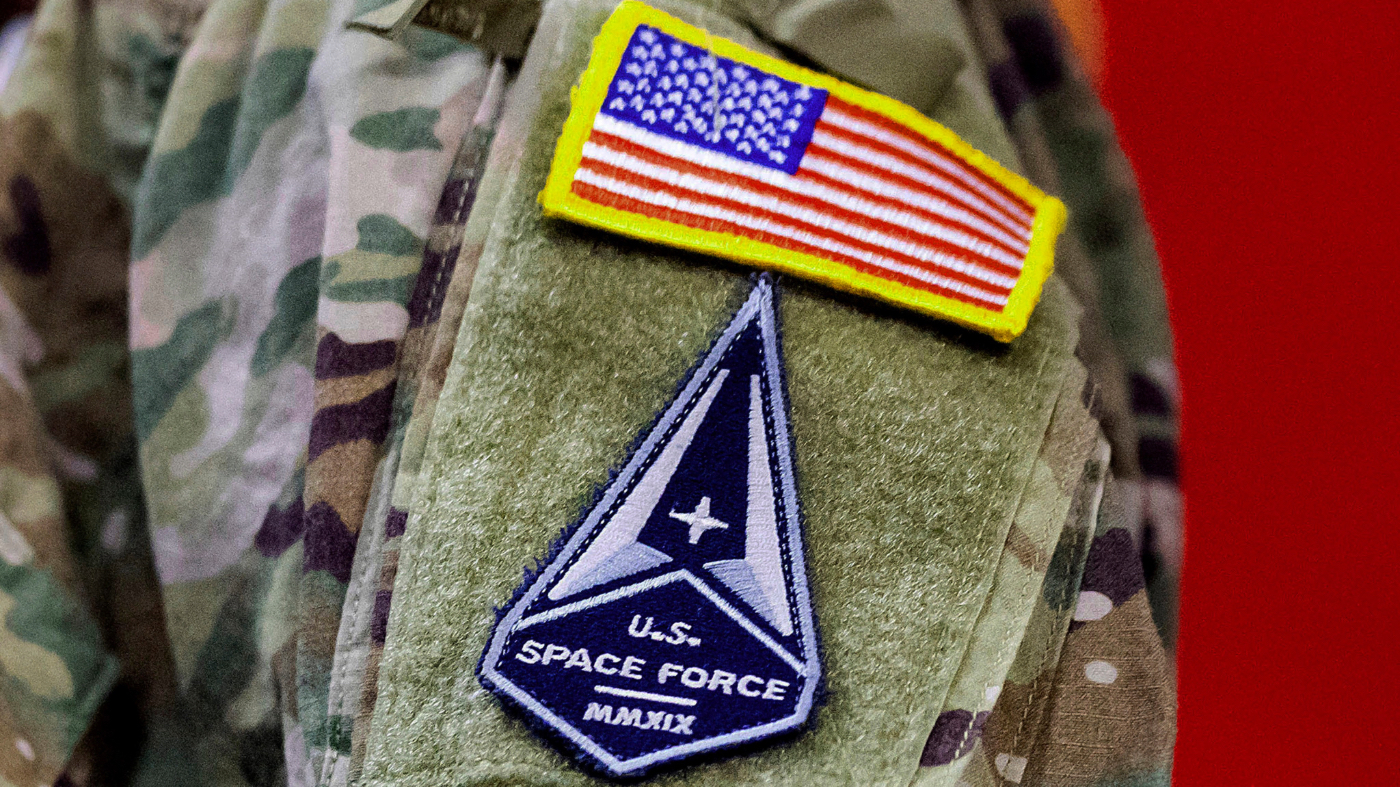
However, two recent social media posts by Trump have been perplexing. The first was a graphic of proposed uniforms for members of the U.S. Space Force. The problem with the proposal is that the uniforms resembled something worn in “Star Wars” by the crew of the evil Galactic Empire’s Death Star — obviously not a good look for an American military service.
The post has sparked a lot of mockery on social media. It also suggests that science fiction may not be the appropriate model for fashioning a look for America’s space military service. Some may think that it detracts from the Space Force’s role as a serious military branch that operates in a realm increasingly important to the defense of the U.S. and the free world.
The exception may be the television and movie franchise “Star Trek.” One can imagine the Space Force someday morphing into Star Fleet, the exploration and military service at the center of the franchise. After all, SpaceX’s Elon Musk, upon the formation of the Space Force, posted on X that “Star Fleet begins.”
Perhaps the uniforms worn by Space Force personnel could be derived from those worn by characters in the Star Trek TV shows and movies. They would not contain the whiff of space-based fascism.
The other Trump space social media post that has caused consternation is a graphic of the moon with the Earth in the distance, bearing the caption, “The Moon is Ours” with an American flag. The post is being widely interpreted as Trump declaring the moon to be sovereign American territory, an act prohibited by the Outer Space Treaty of 1967
On the other hand, former House Speaker Newt Gingrich (R-Ga.) proposed making the moon a U.S. state during his 2012 campaign for the presidency. He proposed a “Northwest Ordinance for Space” that would govern how a moon base might eventually become a 51st state once it had achieved 13,000 inhabitants.
Gingrich’s proposal — not to speak of the annexation of the moon — went nowhere in 2012, thanks in large part to the ridicule heaped on the idea by the eventual Republican nominee, Mitt Romney. Romney went down to defeat, so it was left to Trump to revive the moon base idea once he became president.
Now the moon base, as part of the Artemis program, is wildly popular. But what about annexing the moon?
The problem is that it runs contrary to the Artemis Accords strategy that NASA is using to enhance American soft power. The U.S. is not going back to the moon alone. It has amassed a remarkable coalition of nations and private companies for that effort.
The U.S. State Department has just announced the Space Catalyst Partnership , designed to foster cooperation between the signatory members of the Artemis Accords and private companies. The partnership “will primarily promote civil and commercial space cooperation through three tools: diplomatic outreach, industry engagement, and the targeted use of foreign assistance, subject to the availability of funds.”
Obviously, if the U.S. was seen as instituting an imperialist land grab on the moon, its allies in the Artemis Accords might rethink their cooperation with NASA and American companies such as SpaceX. The Artemis Accords, as I have mentioned before , provide a more sensible and subtle way of governing celestial bodies such as the moon.
During the Apollo race to the moon against the Soviet Union, the U.S. was going pretty much alone, with the rest of the world as bystanders. With the Artemis program, the U.S. is taking the rest of the world, with the exception of rogue states such as China and Russia, back to the moon with it.
The U.S., which is providing the bulk of the resources for the Artemis program, is still going to be the dominant power. But it is achieving quite a bit of good will around the world through its willingness to share.
The strategy is a marked contrast with that of China, which has made no secret of its imperial ambitions. Thus, America maintains the moral high ground.
Mark R. Whittington, who writes frequently about space policy, has published a political study of space exploration titled “ Why is It So Hard to Go Back to the Moon? ” as well as “ The Moon, Mars and Beyond ” and, most recently, “ Why is America Going Back to the Moon? ” He blogs at Curmudgeons Corner
Topics in this story
Gathered from external sources. Rights to this text belong to whoever originally published it.