Drilling Begins at Possible 'Noah's Ark' Site
Drilling Begins at Possible 'Noah's Ark' Site
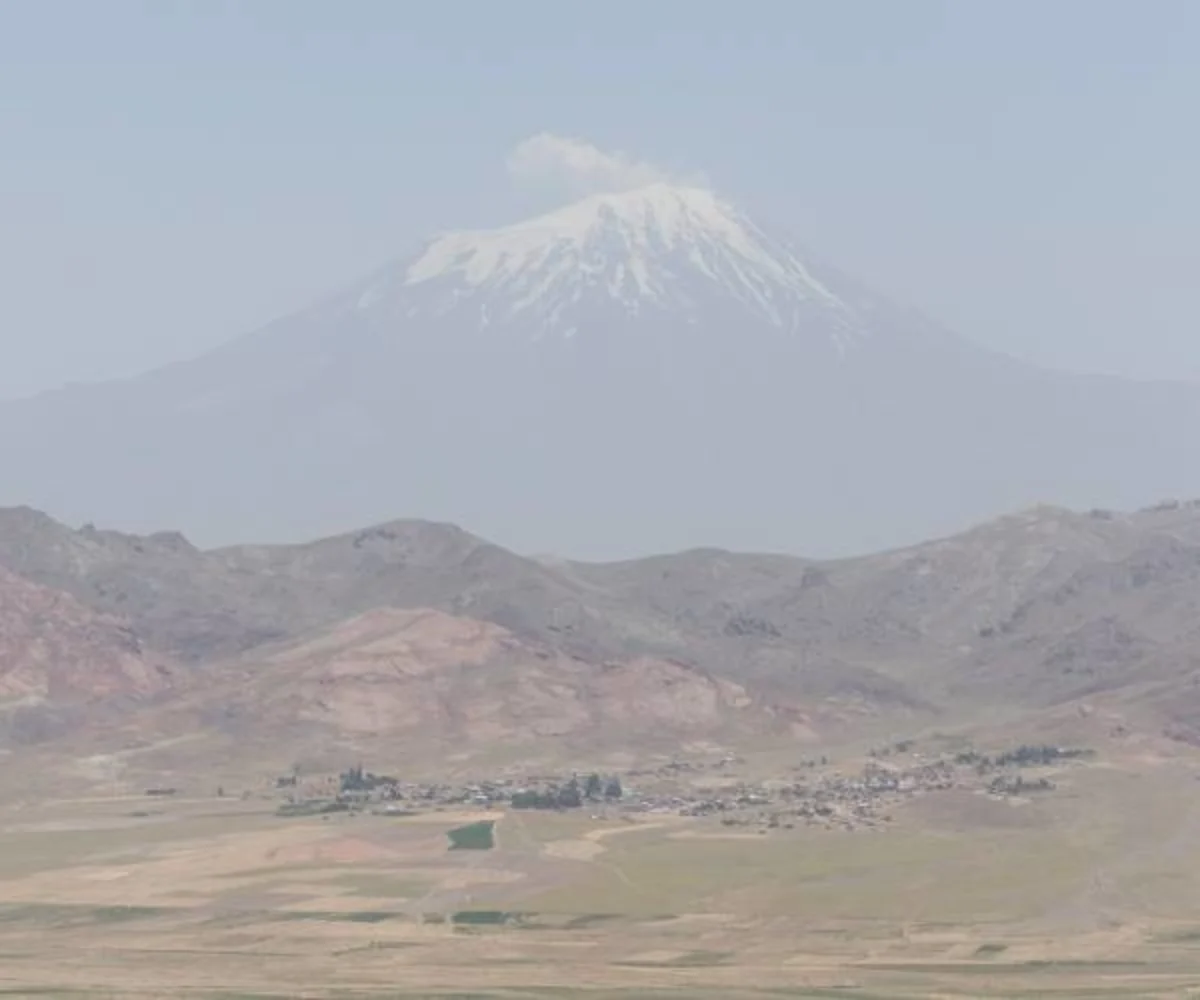
Researchers are drilling into a boat-shaped formation in Turkey, challenging the theory that it is a natural geological feature.
Recent radar surveys and core drilling have revealed anomalies at the site, including possible walls, passageways, and sediment-filled cavities.
Despite claims by some expedition members, the evidence collected so far has not definitively proven that the formation is Noah's Ark or man-made.
Researchers have begun drilling into a mysterious boat-shaped formation in eastern Turkey, which some say could be the remains of Noah's Ark.
An international research team claims it has found new evidence challenging the long-held view that the site is a natural geological feature, the Daily Mail reported Wednesday.
Independent researcher Andrew Jones, founder of Noah's Ark Scans, described the latest scans as a "compelling new line of evidence" suggesting the formation contains non-natural structures.
Jones, who has investigated the site for nearly 30 years, told the Daily Mail that neither the radar surveys nor drilling conducted inside the formation detected limestone or solid bedrock.
"This destroys the theory the site is a solid limestone block shaped into a boat by glaciers and weathering after coming down the mountainside, and it also refutes the theory that this is bedrock around which mud flowed to form the shape," Jones said.
Jones acknowledged the evidence has not definitively identified the formation as the biblical vessel.
But he added, "I firmly believe the Durupinar Formation represents the buried remains of Noah's Ark."
The Durupinar Formation, near Mount Ararat in Turkey's Agri province, has long fueled speculation that it could be connected to Noah's Ark, the vessel described in the Book of Genesis, in the Bible.
Most geologists who have studied the formation have concluded it is a natural geological feature shaped by processes including folding, landslides, and erosion.
But researchers examining the site say recent radar surveys and core drilling have uncovered anomalies they believe warrant further investigation.
A multidisciplinary team led by professor Cenker Atila of Sivas Cumhuriyet University conducted roughly 90 days of fieldwork this year, collecting about 1,000 soil samples from roughly 150 locations.
Researchers also used ground-penetrating radar, GPS mapping, and core drilling to investigate what lies beneath the formation.
The first major radar survey in 2019 detected linear and angular anomalies that researchers interpreted as possible walls, passageways, and separate compartments.
A deeper investigation conducted this year by Khosrow Bakhtar used an advanced radar system developed through U.S. Air Force research that was capable of probing significantly deeper than earlier equipment.
That survey detected massive layered reflectors, underground boundaries that bounce radar signals back toward the surface, as well as what researchers interpreted as sediment-filled cavities.
The team says recent scans have also revealed straight lines, right-angle intersections, and large, cavitylike spaces at multiple depths, including potential chambers, corridors, and tunnels.
Researchers also reported a thick underground layer appearing to divide into three sections, a feature some expedition members have compared to God's command in Genesis for Noah to construct the ark with three decks.
Preliminary testing has also found soil inside the formation contained about 40% more carbon than samples collected outside, potentially indicating organic material.
Core drilling uncovered a layer rich in organic material that researchers are testing to determine whether it contains remnants of decayed wood.
Members of the Noah's Ark Scans expedition have nevertheless gone further, claiming the latest investigation has "100% confirmed" that the formation is not a natural geological feature but a "man-made object."
"Good morning from the outer rims of Noah's ark," marketing and fundraising director Lauren Witzke wrote on X Tuesday as drilling began.
"Core drilling has begun and the big bang evolutionists are already in damage control mode," she added, claiming the work could eventually force "university curricula" to be rewritten and "Darwinism" to be dismantled.
"This is the place where creation began anew," Witzke said.
The formation was discovered in 1959 after appearing in an aerial photograph taken during a Turkish military mapping operation.
Despite the expedition members' claims, the evidence collected so far has not independently established that the Durupinar Formation is Noah's Ark or that it is human-made.
Laboratory analysis of the newly collected soil and core samples remains underway.
Topics in this story
Gathered from external sources. Rights to this text belong to whoever originally published it.