Scientists found solar-tracking panels can make desert soil store more carbon; the key is how their moving shadows redistribute water
Nature & Environment News: Solar panels that follow the Sun could be doing more than producing clean energy. Scientists have found that these moving panels can also help desert .
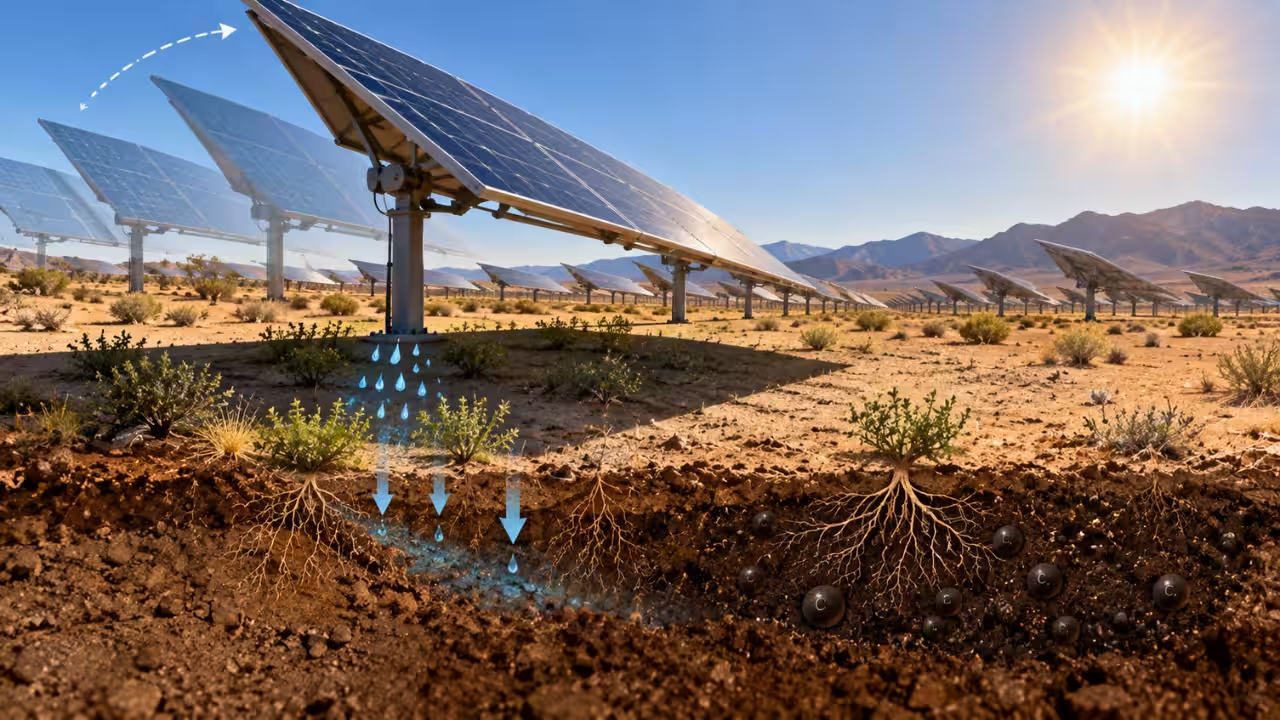
Solar panels that follow the Sun could be doing more than producing clean energy. Scientists have found that these moving panels can also help desert soil hold on to more carbon by changing where rainwater ends up. In a study carried out in a desert steppe in northwest China, researchers found that solar-tracking panels created wetter patches around the installation, giving plants better conditions to grow. More plant growth then changed the communities of bacteria and fungi in the soil, helping organic material break down and become part of the soil carbon store. The area between the panels recorded the greatest build-up of soil carbon, while the eastern edges supported greater plant diversity. The findings suggest that the way solar panels move and cast shadows can have wider effects on fragile desert ecosystems. Rather than simply taking up land, solar-tracking systems could potentially help improve soil conditions while continuing to generate renewable electricity.How solar-tracking panels shift water to help desert soil store carbonAccording to the study published in ScienceDirect, titled ‘Solar-tracking photovoltaic systems enhance soil carbon accumulation in desert steppe through microclimate-mediated changes in vegetation and microbial communities’, water is one of the biggest limitations for vegetation in dry grasslands. The researchers found that solar-tracking panels changed where water was available, with soil moisture generally highest at the east edge, followed by the west edge, the area between panels and the soil beneath the panels. Compared with the control area, the tracking system increased soil water content in several of these zones.The researchers say this happens because photovoltaic systems can alter the local microclimate. Shading can lower soil temperatures and reduce evaporation, while panels can intercept rainfall and redistribute it. Unlike fixed panels, which can leave the ground directly beneath them short of water, solar-tracking systems can create precipitation zones along both the eastern and western edges of the panels. The study describes this water redistribution as an important factor behind the ecological changes observed.Plants add more carbon to the soilThe extra moisture did not affect every part of the solar installation in the same way. The area between the panels had the highest values for soil organic carbon, particulate organic carbon, mineral-associated organic carbon and microbial biomass carbon in the upper 10 centimetres of soil. The researchers linked this result mainly to greater plant biomass in that zone.At the eastern edge, meanwhile, better water availability was associated with greater vegetation diversity. As plants grew and communities changed, more plant material entered the soil through roots and litter. The study explains that soil organic carbon is formed largely from plant material and dead microorganisms, meaning changes in vegetation can eventually influence the amount and type of carbon stored underground.Soil microbes help turn plant material into carbonThe researchers found that changes in vegetation were linked to changes in soil microbial communities. In particular, the abundance of Proteobacteria and Ascomycota increased. These microorganisms drive the transformation of organic material, helping move carbon from plant material into different forms within the soil.The process also involved soil enzymes. Activities of glucosidase, cellobiohydrolase and acetylglucosaminidase increased, helping accelerate the transformation of plant-derived organic matter. The researchers' modelling showed that soil water helped start this chain of changes by promoting plant growth and altering fungal communities, while enzyme activity drove carbon accumulation.Solar tracking creates an energy and ecology benefitThe findings suggest that solar-tracking photovoltaic systems could offer more than an energy benefit in fragile desert landscapes. The researchers conclude that the technology has greater potential to accumulate soil carbon by optimising soil water redistribution, which in turn supports plant growth and changes microbial communities.This could be particularly important in arid and semi-arid regions, where renewable-energy development can otherwise create concerns about changes to fragile soils. The study argues that solar-tracking systems can maintain favourable micro-environmental conditions across different zones around the panels while producing electricity.
Topics in this story
Gathered from external sources. Rights to this text belong to whoever originally published it.