Alfalfa Sprouts Were Linked to E. Coli and Salmonella at the Same Time — Here’s How That’s Possible
Among the 55 cases reported in the outbreaks, at least two people were infected with both bacteria.
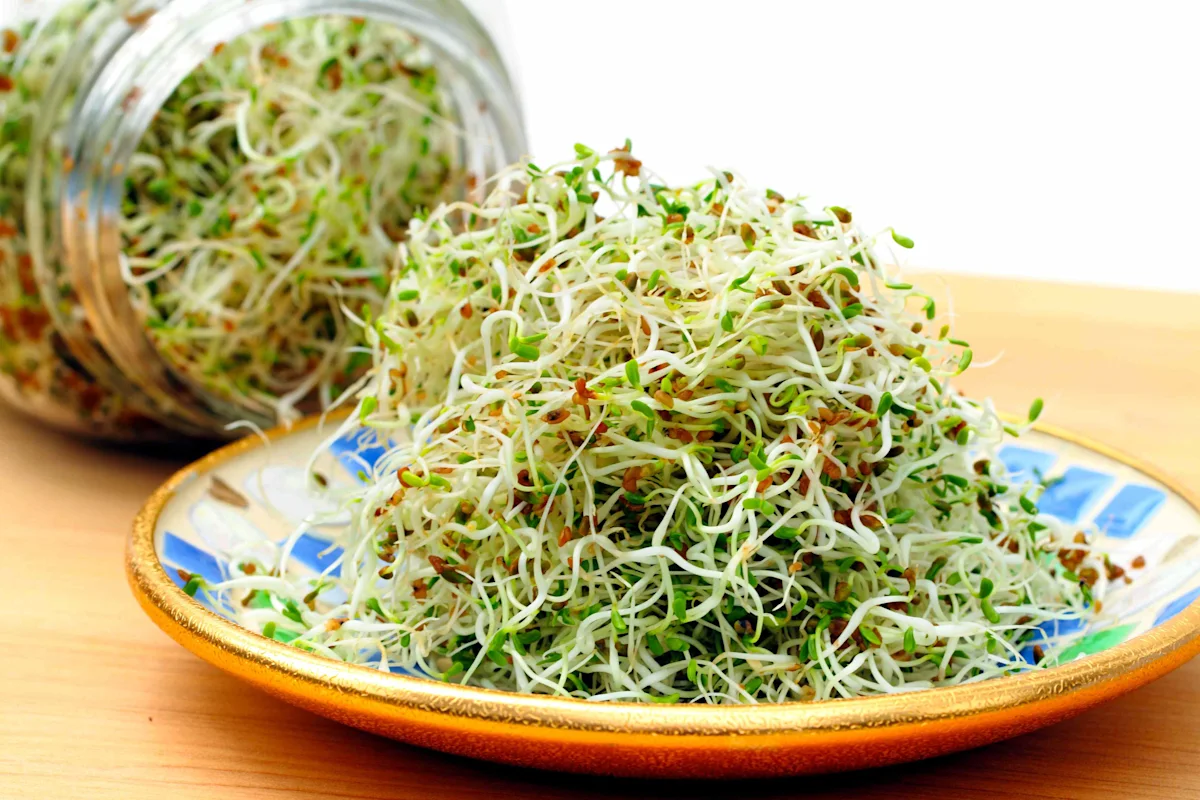
Everything Sprouts recalled select lots of Everything Sprouts and Calco alfalfa sprouts because of potential E. coli and Salmonella contamination. The outbreak has been linked to 55 illnesses across 15 states and four hospitalizations.
Alfalfa sprouts are considered a higher-risk food because the warm, moist conditions used to germinate the seeds also favor bacterial growth. Bacteria on contaminated seeds can grow during germination and become trapped within microscopic tissues, making them difficult to wash away.
Consumers should dispose of recalled sprouts and clean and sanitize any surfaces or containers they touched. Older adults, young children, pregnant individuals, and immunocompromised people should avoid raw or lightly cooked sprouts.
The summer of foodborne outbreaks now includes an alfalfa sprout recall linked to two foodborne illnesses. Everything Sprouts, LLC has recalled select lots of its alfalfa sprouts sold under the Calco and Everything Sprouts brands due to potential contamination with E. coli and Salmonella .
To date, 55 cases linked to the recall have been reported across 15 states, according to the Centers for Disease Control and Prevention (CDC). Four people have been hospitalized in connection with the outbreak, and at least two have been infected with both E. coli and Salmonella .
"Everything Sprouts became aware of reports of illnesses from federal and state agencies," the company said in a statement . "During this outbreak, we have tested our products daily and have not received any positive lab results. We continue to work closely with public health officials to investigate the source of this potential issue and will provide updates as they become available."
The U.S. Food and Drug Administration (FDA) maintains the full list of recalled products, including lot numbers and bar codes.
The recall is raising many questions about how you can get two illnesses from one food. As you can imagine, "it has been very rare to have more than one bacterial pathogen causing outbreaks and recalls in the past," says Francisco Diez-Gonzalez , PhD, director of the Center for Food Safety at the University of Georgia. But alfalfa sprouts have unique characteristics that make them ideal breeding grounds for bacteria — even two types at once, according to Kalmia E. Kniel , PhD, professor and chair of microbial food safety at the University of Delaware.
How can alfalfa sprouts be contaminated with two types of bacterial pathogens at once?
"Sprouts are often considered higher-risk products," Kniel says. The seeds are germinated to create sprouts in moist, humid, warm environments, and these are the same conditions that favor the growth of bacteria, including Salmonella and E. coli , she explains. It's usually thought that the fields where the alfalfa seeds were grown could have been contaminated by irrigation or runoff water, soil, or animal waste, Diez-Gonzalez says.
"There is often concern that the seeds are contaminated," Kniel says. As a result, the seeds are often soaked in chlorinated water . "But soaking the seeds in chlorinated water will not completely inactivate the pathogens, as the bacteria are protected in the crevices of the seeds," Kniel says.
Related: Recalls Are Rising: This Is How Food Safety Experts Decide What's Safe to Eat
Multiple alfalfa sprout recalls have been linked to E. coli or Salmonella separately, Diez-Gonzalez says. "According to most of the evidence, the bacteria can be present in the seeds after contamination of the fields where the alfalfa plants are grown as a source of seeds," he says. But when the seeds are germinated, the bacteria can grow into the sprouts.
At that point, "bacteria present on the seed shell can become trapped within microscopic tissues, making them impossible to wash away," Kniel says. "These aren't two separate contamination events," says Amesh A. Adalja , MD, an infectious disease expert and senior scholar at the Johns Hopkins Center for Health Security. "The seed is the shared vehicle."
What are the symptoms of an E. coli and Salmonella co-infection?
It depends. "These bacteria attach to different receptors, provoke different inflammatory responses," Adalja says.
These illnesses can look "indistinguishable without testing," according to Adalja. However, he says that someone with an E. coli and Salmonella co-infection would likely experience cramps, diarrhea, fever, and sometimes bloody stool, given the "overlap" in symptoms between E. coli and Salmonella infections.
Related: The Food Recall System Is Broken, and Experts Say We're All at Risk
Doctors would typically only know if you have two infections if you're given a multiplex PCR gastrointestinal panel that tests your stool sample against several potential pathogens, Adalja explains.
While these co-infections aren't common, Adalja says they may have occurred in the past more often than people realize. "Co-infections almost certainly occurred in earlier sprout outbreaks, but clinicians weren't using tools in a way that would find them," he says.
When did the E. coli and Salmonella outbreaks start?
Illnesses linked to the outbreak began on May 31 and have continued since then, according to the CDC .
According to the CDC, 76% of the 34 interviewed patients said they'd eaten alfalfa sprouts before getting sick. Epidemiological evidence and traceback information from restaurants and grocery stores suggest that Everything Sprouts could be fueling the outbreak.
What should you do if you have recalled alfalfa sprouts?
If you have the recalled products at home, the FDA and CDC recommend disposing of them. Then, clean and sanitize any surfaces or containers the sprouts may have touched.
Alfalfa sprouts remain a high-risk food regardless of whether there is a recall, Kniel points out. "Vulnerable populations — older adults, young children, pregnant individuals, and anyone immunocompromised — should avoid raw or lightly cooked sprouts," she says.
If you really love alfalfa sprouts but want to lower your risk of getting sick under ordinary circumstances, Diez-Gonzalez suggests cooking your sprouts before eating them.
Fast Facts: Alfalfa sprouts linked to E. coli and Salmonella outbreaks
Which alfalfa sprout products are being recalled? These products have been recalled as part of the outbreak, according to the FDA :
Everything Sprouts and Calco-branded alfalfa sprouts (5 ounces) with lot numbers 222, 223, 225, 226, or 230 and bar codes 860014523113, 860014523120, or 850079470149
Everything Sprouts Crunchy Protein Sprout Mix (5-ounce cups) with lot numbers 222, 223, 226, and 230
Everything Sprouts Zesty Garlic Mix (5-ounce cups) with lot numbers 222, 223, 225, 226, and 230
Where have illnesses linked to the recalled sprouts been reported? Infections have been detected in these states, according to the CDC : Florida, Indiana, Iowa, Kansas, Michigan, Minnesota, New Hampshire, New York, North Carolina, North Dakota, Pennsylvania, South Carolina, South Dakota, Washington, and Wisconsin
Read the original article on Food & Wine
Topics in this story
Gathered from external sources. Rights to this text belong to whoever originally published it.