Volunteers removed nearly 100,000 sea urchins in Norway; the underwater deserts are now turning into forests with fish nurseries returning
Nature & Environment News: Nearly 100,000 sea urchins have been removed from three coastal sites in northern Norway by almost 500 volunteers working to bring back underwater kel.
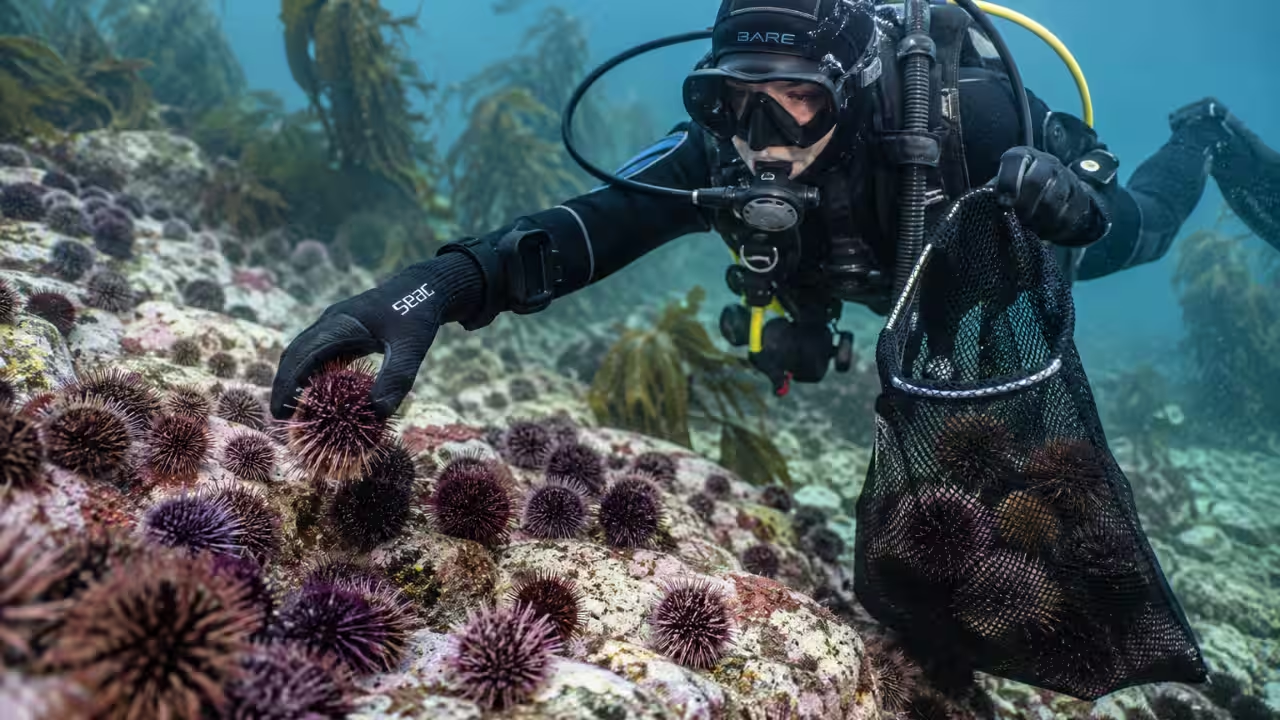
Nearly 100,000 sea urchins have been removed from three coastal sites in northern Norway by almost 500 volunteers working to bring back underwater kelp forests. Between April 2024 and May 2026, Rissa Citizen Science organised 23 restoration events at Sørsjetéen, Telegrafbukta and Øksfjord, with divers spending more than 20,000 minutes underwater clearing urchin barrens. The effort has already produced visible changes. At Sørsjetéen, kelp and seaweeds have recolonised an entire 200-metre jetty, while restoration work at Øksfjord has also seen seaweed return to previously barren seabed. The recovering forests are creating nursery habitat for fish and helping bring back marine biodiversity. The project shows how sustained community action can help reverse damage to Norway's underwater ecosystems.How nearly 100,000 sea urchins were removedThe restoration campaign brought together almost 500 volunteers across 23 events at three sites. Since the first removal event in April 2024, divers and citizen scientists have removed 98,085 sea urchins from Sørsjetéen, Telegrafbukta and Øksfjord. Divers have spent a combined 20,336 minutes, or about 339 hours, underwater clearing the urchin barrens. At Sørsjetéen and Telegrafbukta, the average number of urchins removed per event was 2,698 and 2,790 respectively. The work is not limited to removing the animals. Citizen scientists also bring samples to the surface, where they count, weigh and measure them to track how urchin populations respond as seaweed returns.Why removing sea urchins can bring kelp backSea urchins are a natural part of marine ecosystems, but unusually high numbers can transform kelp forests into barren seabeds. In northern Norway, the loss of predators contributed to a major increase in green sea urchins from around the early 1970s. Their intense grazing removed kelp and helped create large areas where underwater forests could no longer regenerate. NIVA estimates that Norway once lost about 8,400 square kilometres of kelp forests to this process, with urchin barrens persisting across thousands of square kilometres. Kelp forests are important habitats for biodiversity and commercial fish species, while also acting as carbon sinks and nutrient filters. Controlling urchin density can therefore give kelp an opportunity to establish again.Kelp forests are returning at three restoration sitesThe clearest recovery has been recorded at Sørsjetéen, where restoration began before the period covered by the latest impact report. Kelp and seaweeds have now recolonised the entire 200-metre jetty, and the site has moved into a maintenance phase while the underwater forest matures. At Telegrafbukta, volunteers began removing urchins in June 2025 across a restoration area of about 2,000 square metres, with roughly one-third restored so far. The third site, Øksfjord, saw volunteers restore approximately 150 metres of coastline during two restoration weekends in October 2025 and May 2026. Follow-up observations there have also recorded seaweed growth across parts of the seabed that were previously dominated by urchins.The returning forests are creating habitat for marine lifeThe return of kelp changes much more than the appearance of the seabed. Dense kelp creates a three-dimensional underwater habitat where fish and other organisms can feed, shelter and grow. Rissa Citizen Science reports that the recovering forests are creating nursery habitats for fish and bringing back biodiversity. NIVA similarly describes Norwegian kelp forests as important habitats for biodiversity and commercial fish species. The organisation says kelp forests support productive fisheries, protect coastlines and provide other ecological and economic benefits. The recovery at the restoration sites therefore has significance beyond the return of the plants themselves, because rebuilding the forest can restore habitat for a much wider marine community.Volunteers are testing whether the recovery can lastThe project is being treated as a long-term restoration effort rather than a one-time clean-up. Volunteers continue monitoring urchin numbers and maintaining restored areas, while an Urchin Density Challenge allows people around the world to count urchins from underwater images. Between its launch in November 2025 and May 2026, more than 250 users worldwide had counted around 5,000 image frames containing about 53,000 urchins. The wider scientific evidence also suggests that removing urchins alone cannot solve the underlying problem. NIVA says long-term restoration requires action on the ecological conditions that allowed urchin populations to expand, including protecting and rebuilding predator populations. The Norwegian experience shows that kelp can return when grazing pressure is reduced, but maintaining that recovery will require continued monitoring and broader ecosystem management.
Topics in this story
Gathered from external sources. Rights to this text belong to whoever originally published it.