New Map Shows Which U.S. States Will Have 'Good' View of Thursday's Lunar Eclipse
A new map has emerged for the near-total lunar eclipse.
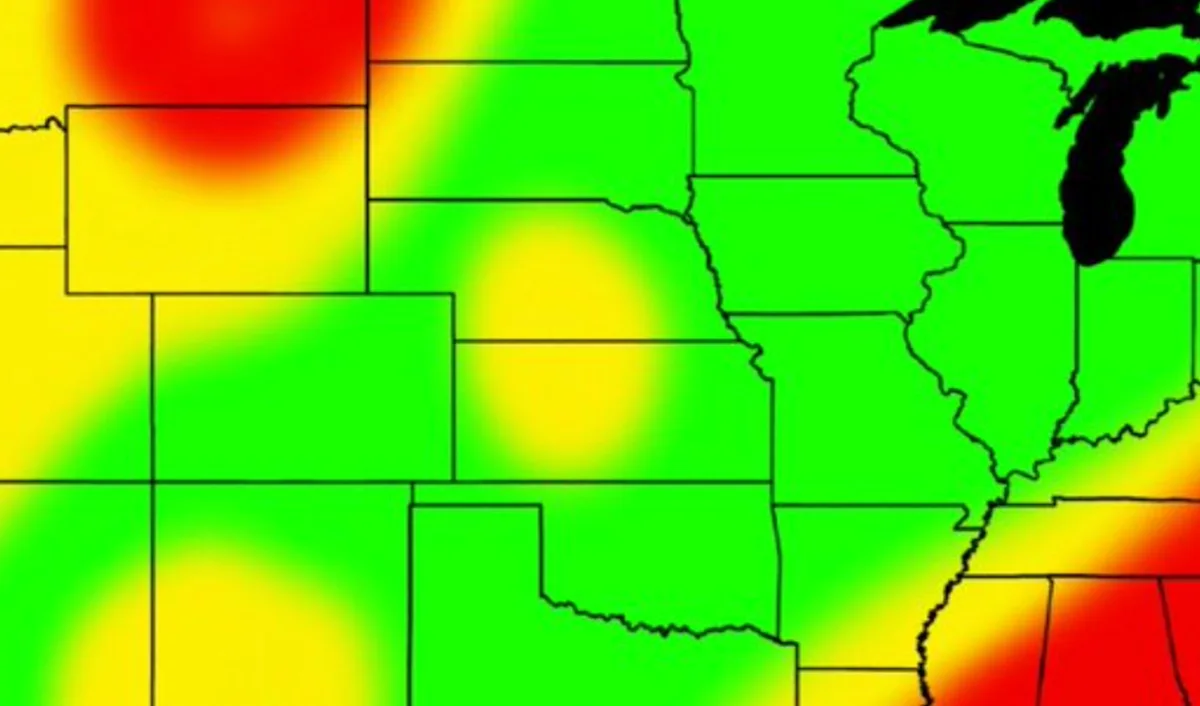
Just part of the United States will have a good view of the near-total lunar eclipse this Thursday, August 27.
Roughly half of the United States will have "good" to "okay" views of the lunar event this Thursday, while the other half of the country will have "poor" viewing conditions. The near-total lunar eclipse is set to begin on Thursday night.
According to astronomy.com , the eclipse will begin at 9:23 p.m. E.T., as the Moon first enters the outer part of Earth's shadow, the penumbra. However, the best viewing conditions will come at 10:33 p.m. E.T. That's when the Moon will first pass into the umbra, which is the darker, inner portion of our planet's shadow — and the partial eclipse begins before midnight.
Ultimately, not everyone in the United States will have a good view of it. But many will!
U.S. states with "good" viewing conditions of the near-total lunar eclipse are as follows:
U.S. states with "okay" viewing conditions include:
And, finally, the U.S. states with "bad" viewing conditions include:
Unlike solar eclipses, you can watch the lunar eclipse with your naked eye. You don't need any optical aid, as it'll be viewable with just your eyes alone.
Lunar eclipses also progress slowly, so there's not a huge rush to look at the sky on Thursday evening. The lunar eclipse process will be viewable for much of Thursday evening heading into Friday morning, August 28.
However, this is the last lunar eclipse until February of 2027. And the next one after that isn't until August of 2027.
So, if you can get to a viewpoint of the lunar eclipse, it'll be your last opportunity to do so for a while.
This story was originally published by Men's Journal on Aug 25, 2026, where it first appeared in the News section. Add Men's Journal as a Preferred Source by clicking here.
Topics in this story
Gathered from external sources. Rights to this text belong to whoever originally published it.