SpaceX Starship flight test 15 takes us one step closer to the moon
The capture of the Starship rivals the Artemis crewed lunar mission as the greatest space story of 2026.
Elon Musk is a man with many problems. He has to develop his Starship super rocket into an operational spacecraft capable, among other things, of landing people and cargo on the moon. He has to do that while running his other businesses and fending off a newly elected political class both in Austin and Washington, who regard him with great hostility.
On Nov. 13, SpaceX conducted the 15th test of the Starship super rocket. The goals were to capture the Super Heavy first stage booster back at the launch pad, send the Starship into low Earth orbit, deploy 26 of the most advanced versions of the Starlink communications satellites, then capture the Starship back at the launch pad.
The Starship reached orbit and deployed the Starlink satellites, But, because of a guidance issue, SpaceX diverted the Super Heavy stage to a splashdown in the Gulf and initiated the destruct mechanism to destroy the vehicle as it hit the water.
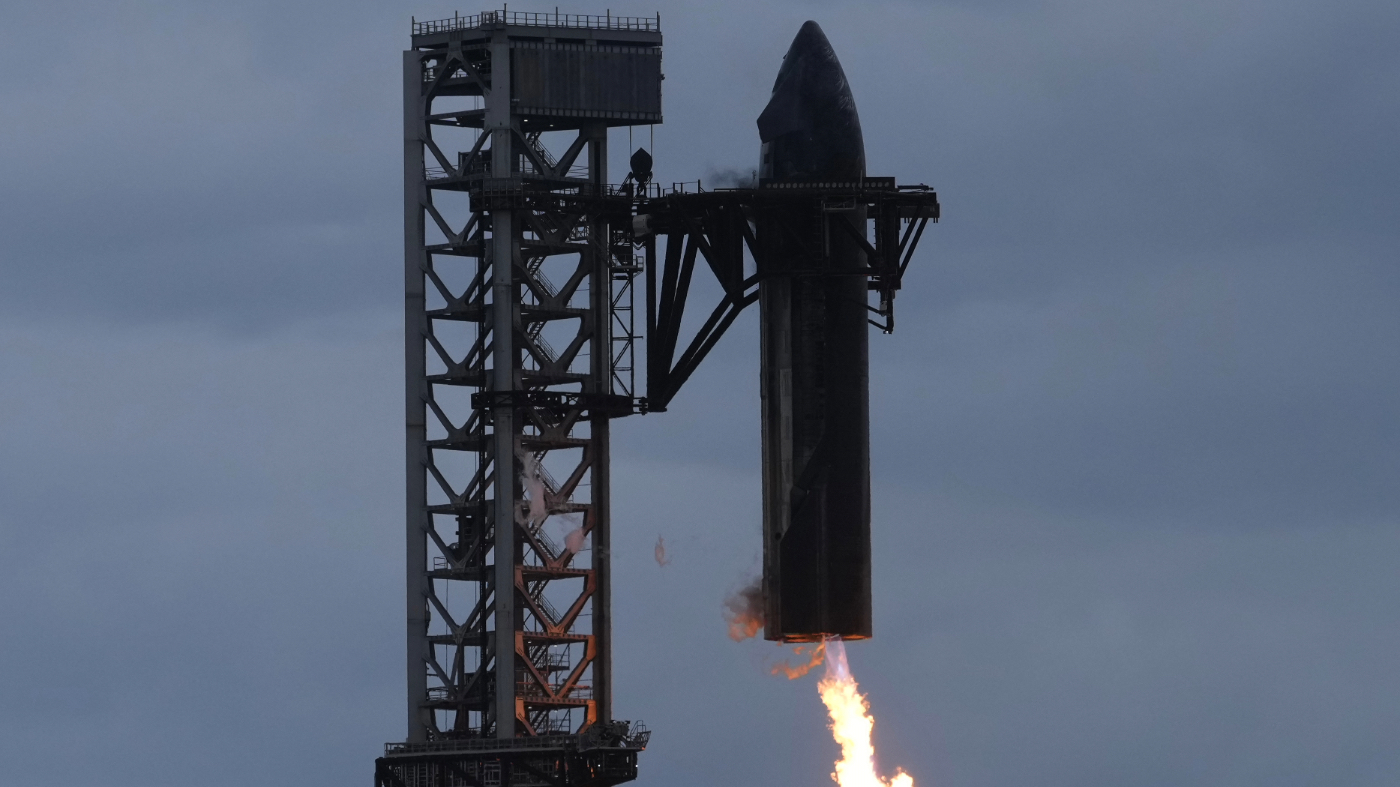
However, the very next day, SpaceX brought the Starship back from orbit and sent it safely back to the launch pad to be captured by the Mechazilla arms. In so doing, Musk’s company took a giant leap toward the day when Starship flies regularly to and from space, enabling the opening of commercial space to the moon, Mars and beyond.
Starship is the size and weight of a small building. The feat of bringing it out of low Earth orbit, sending it down to the pad at Starbase while slowing its velocity and securing it with the Mechazilla arms was one of precision engineering unparalleled in human history. The capture of the Starship rivals the Artemis crewed lunar mission as the greatest space story of 2026.
SpaceX has a flown Starship freshly back from space that its engineers can study and use the results to make design changes to future generations of the launch vehicle. Then the company can fly future tests to develop an operational rocket, which will be even larger than the one that flew during Flight Test 15.
SpaceX has to learn how to capture both the Starship and the Super Heavy first stage consistently. Then the company can achieve total reuse of its giant rocket and bring down launch costs even further. The company also has to master in-orbit refueling of the Starship, the better to turn it into a cislunar and later an interplanetary spacecraft.
Flight test 15 provided an eloquent answer to newly elected Democrats due to take power in both Washington and Austin. As mentioned before , Democrats poised to take office in January are gunning for SpaceX and Musk, even though such a lawfare campaign might jeopardize the Artemis return to the moon program.
Douglas MacKinnon goes even farther and suggests that an attempt to take down Musk may place the human species at risk. The SpaceX CEO’s desire to spread humankind beyond the Earth is inspired as a way to enable its survival, despite the threat of nuclear war, biological holocaust or some other calamity.
Fortunately, SpaceX’s capture of the Starship has elicited bipartisan praise in Washington. A poster on X compared Musk to the Ayn Rand hero Howard Roark, noting the image of him personally inspecting the Starship along with SpaceX engineers. That would place Musk’s numerous enemies as Rand’s villains — not a nice role to play.
U.S. Senator-elect James Talarico (D) has already indicated that he might be willing to work with Musk. He noted, despite the SpaceX CEO’s efforts to deny him a seat in the Senate, that he is a fan of SpaceX and Telsa.
Talarico has provided a way for Musk’s various enemies to climb down from their threats of lawfare. They had threatened hearing after hearing upon the theme of “Are you or have you ever been a capitalist?” Somewhere, the late Sen. Joe McCarthy (R-Wis.) is appreciating the irony.
How about instead, any congressional hearing start with, “Mr. Musk, you are building reusable rocket ships, electric cars, the technology that can cure blindness and paralysis, and AI data centers in space. How can we help?”
Thus, the hearings would have a positive legislative purpose and not be a way to torment a political enemy.
Mark R. Whittington, who writes frequently about space policy, has published a political study of space exploration entitled “ Why is It So Hard to Go Back to the Moon? ” as well as “ The Moon, Mars and Beyond ” and, most recently, “ Why is America Going Back to the Moon? ” He blogs at Curmudgeons Corner.
Topics in this story
Gathered from external sources. Rights to this text belong to whoever originally published it.