Isar Aerospace launches Spectrum rocket in second test flight
The Spectrum rocket, built by Germany's Isar Aerospace, launched its second test flight into space on Saturday, lifting off at 10:12 pm (2012 GMT), a livestr...
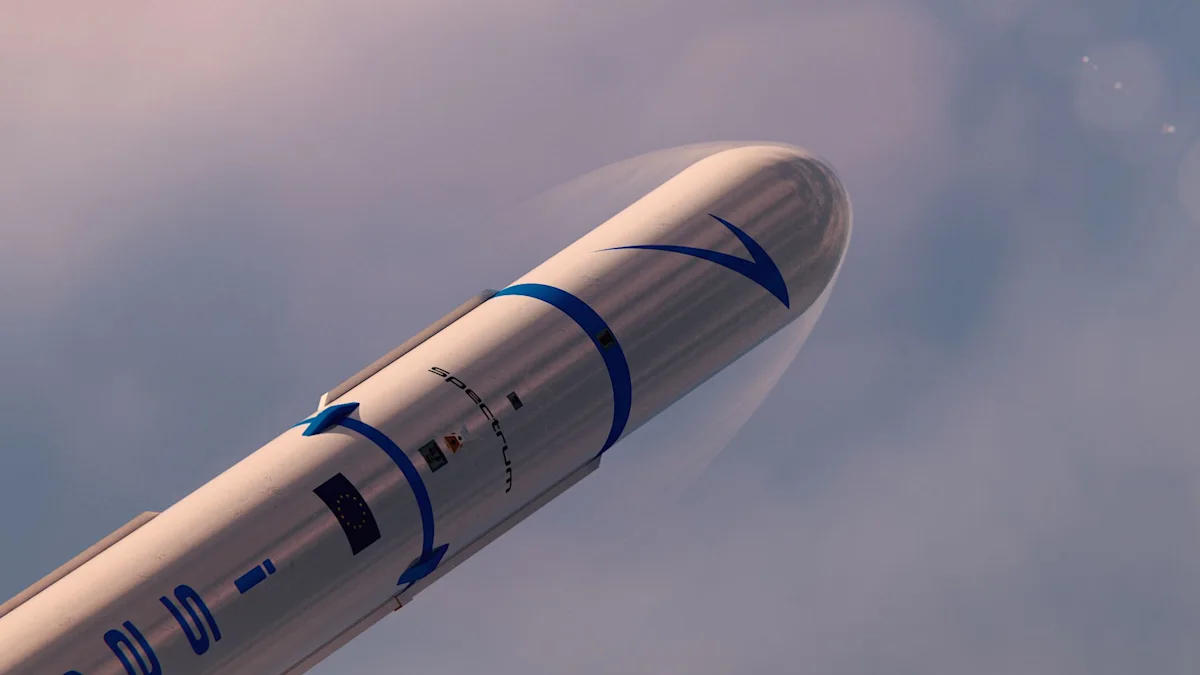
Isar Aerospace's Spectrum rocket successfully launched into space on its second test flight, aiming to place civilian and military satellites into low Earth orbit.
The German space start-up, Isar Aerospace, has raised over half a billion euros in investment capital and is fully booked with orders worth several hundred million dollars through to 2028.
Europe's interest in becoming more independent in space is highlighted by Isar Aerospace's efforts to develop a rocket capable of launching satellites, as the continent currently relies heavily on US technology for space launches.
The Spectrum rocket, built by Germany's Isar Aerospace, launched its second test flight into space on Saturday, lifting off at 10:12 pm (2012 GMT), a livestream showed.
It blasted off from the Norwegian spaceport at Andøya.
A video feed to the ground broke off 10 minutes after take-off as the rocket soared beyond the connection's maximum range.
The Bavarian space start-up first launched the Spectrum rocket in March last year, but it crashed into the sea 30 seconds after take-off.
Once it reaches series production, the Spectrum is set to place civilian and military satellites into low Earth orbit, a few hundred kilometres above the Earth's surface.
Isar Aerospace, based near Munich, aims to produce 40 rockets per year.
It is already fully booked with orders worth several hundred million dollars through to 2028, even though the rocket is not yet ready for series production.
The presenters of the live broadcast said the rocket reached an altitude of around 100 kilometres above the Earth's surface just under four minutes after launch - the so-called Kármán line, which marks the notional boundary of space.
The broadcast showed the first stage jettisoning.
The Spectrum rocket was carrying a payload of five scientific satellites from several universities and a scientific experiment. It was not immediately clear whether the satellites had also been successfully deployed into orbit.
Originally, the Spectrum rocket was due to lift off in January but that was postponed due to a faulty valve.
On the second attempt in March, a Norwegian fisherman failed to leave the safety zone in the waters off the launch base in time with his boat.
In April, launch preparations were halted due to a leaking pressure vessel. In June, a further issue emerged.
Isar Aerospace intends to carry out further launches this year, and construction of the third Spectrum rocket is already well advanced.
The German government, the EU and other European states all have a strategic interest in the success of the company, with a workforce of some 400 people.
So far, Isar Aerospace has raised more than half a billion euros in investment capital, most recently signing a €200-million ($232-million) contract with the European Space Agency (ESA), part of an ESA programme designed to accelerate the development of European launch vehicles.
Europe keen to become more independent in space
Europe is currently widely unable to launch satellites into space using its own technology. The vast majority of European satellites have been launched into space by SpaceX, though this is unpopular with European space companies.
Isar Aerospace said the US launched 198 rockets last year, while Europe launched just eight.
Some 60% of enquiries to Isar Aerospace come from the military sector, boss Daniel Metzler said earlier this year.
However, even when the Bavarian Spectrum rocket is production-ready, it will still not be able to reach greater altitudes in space.
This is a project in focus at the Franco-German ArianeGroup, which seeks to launch a total of seven to eight Ariane 6 rockets this year, in a programme beset by years of delays.
Unlike the Spectrum, the Ariane is a large launch vehicle capable of carrying much heavier payloads, even into geostationary orbits some 36,000 kilometres above the Earth's surface.
There have been four Ariane launches this year, according to European Spaceflight.
Topics in this story
Gathered from external sources. Rights to this text belong to whoever originally published it.