Trump surprises NASA officials with call after Roman Space Telescope launch
Trump dialed into a NASA press conference after the Nancy Grace Roman Space Telescope launched aboard a SpaceX Falcon Heavy from Florida.
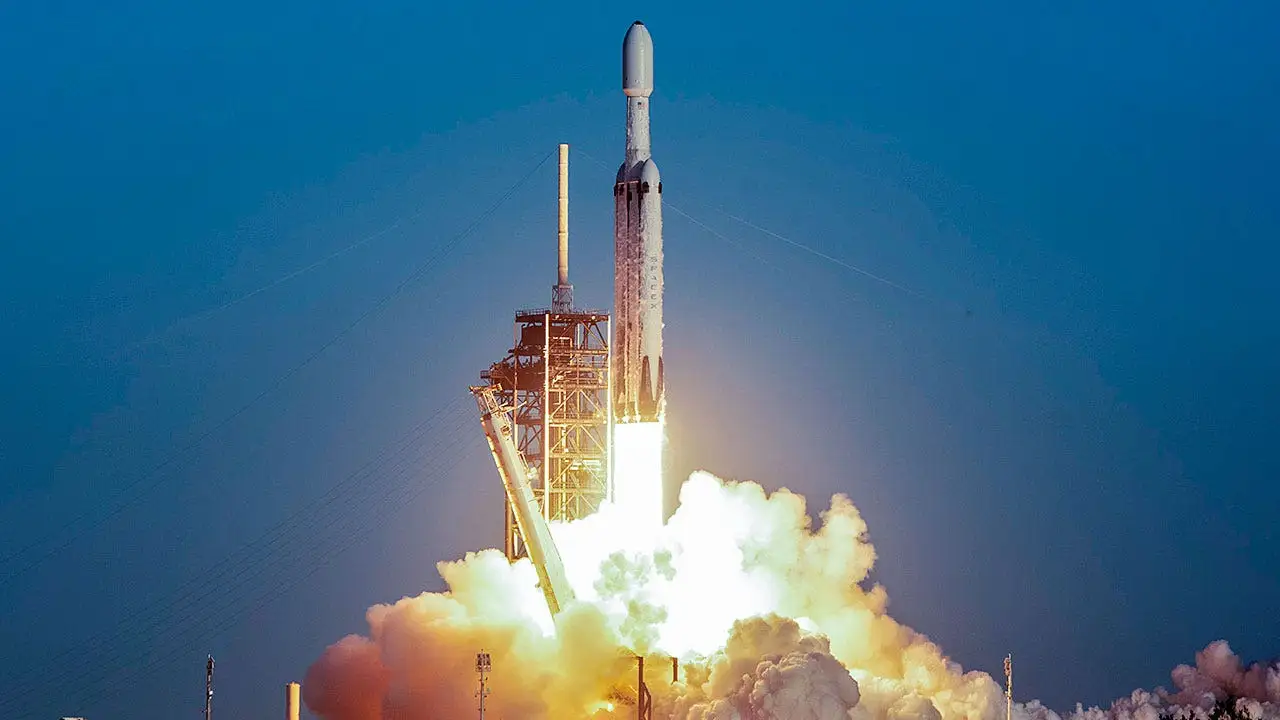
President Donald Trump unexpectedly dialed into a NASA press conference Sunday, congratulating the agency after the Nancy Grace Roman Space Telescope successfully launched on a nearly 1 million-mile journey into space. Trump’s call came shortly after the telescope launched aboard a SpaceX Falcon Heavy rocket from Kennedy Space Center in Florida. NASA officials said the telescope successfully separated from the rocket and began sending telemetry as it headed toward its destination in space. NASA Administrator Jared Isaacman unexpectedly walked out of the press conference holding his cell phone, saying, "The president is excited about Roman." He returned moments later with Trump on speakerphone. The president thanked and congratulated the team. "I just called Jared to find out, is there anything negative that I should know about, like, it will never be able to return? Little things like that," the president joked. TRUMP TO TRANSFORM SPACEFLIGHT FROM SPECTACLE TO STATUS QUO TARGETING 3 LAUNCHES PER DAY "He said, 'No, it's looking great. It couldn't be better. And it was another great successful launch.' Jared is doing a fantastic job. You are doing a fantastic job, and I'm supplying you [with] all that money!" Trump then reflected on the state of NASA facilities when he first took office, praising the progress the agency has made in the intervening years. "And now again, like we are with the country itself, we're the hottest there is. We're the hottest in space, we have the hottest country anywhere in the world. So let's keep it all going. You're a big part of it. Let's keep it all going." NASA ANNOUNCES THREE NEW MOON MISSIONS AS AGENCY RACES TO BUILD PERMANENT LUNAR BASE BY END OF 2026 The press conference followed the successful launch of the Roman Space Telescope, which Isaacman predicted would become a household name like the Hubble Space Telescope and the James Webb Space Telescope. "Over the course of the next several months, Roman will travel nearly 1 million miles away from Earth to Lagrange point L2 and begin transmitting imagery and data back home that will contribute to world-changing science," Isaacman said.
Topics in this story
Gathered from external sources. Rights to this text belong to whoever originally published it.