Texas football knows what it expects. Does it know what it needs?
Texas won at least 10 games nine straight years under Mack Brown and four times in the 12 seasons since. Brown’s best years hold a lesson for Steve Sarkisian...
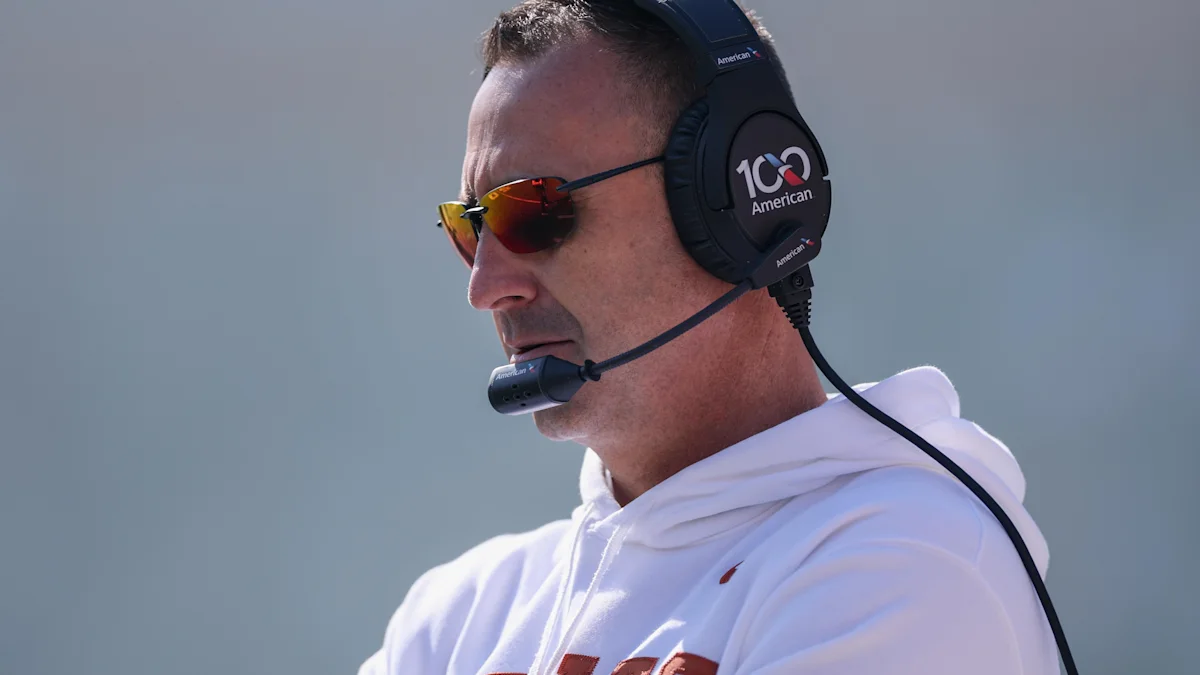
In January 2013, Mack Brown was still the head coach at Texas, coming off a nine-win season . A regent and a former regent were already on the phone with Nick Saban's agent .
Saban stayed at Alabama. News of his contract extension broke that December, minutes before Brown was scheduled to speak at the Texas football banquet, and Brown stepped down the next day . Three weeks later, Texas hired Charlie Strong , a coach it never really wanted in the first place. Red McCombs, whose name is on the business school, ripped the hire on the radio .
Since Brown, Texas has hired a fallback, a cure, and a better version of the cure. Strong, a defensive coach, took over his own defense's play-calling in his third year and never posted a winning record . So Texas swung the other way with Tom Herman, the offensive coordinator for Ohio State's 2014 national champions . When Herman hit a wall, Texas hired more or less the same coach again in Steve Sarkisian: Herman with fancier pre-snap motion, scripted play designs, and a better résumé. He has accomplished more at Texas than either predecessor.
Texas keeps shopping for the hot name or the offensive mind. The job has always been bigger than either. On his way out, Brown passed along how Darrell Royal described it — so many kinds of people follow Texas football that the coach has to pull them all together. Royal compared it to a box of BBs scattered across a room. The coach has to "get all the BBs back in the box."
Royal is the best coach Texas has ever had, and his way isn't coming back. He was his own athletic director for most of his career, and he won with the wishbone, an offense his own staff drew up . Nobody gets that setup again.
Brown's way can come back because it ran on people. He worked the politics and kept the big-money alumni at bay, the ones who want a say without ever having coached a down. He put great position coaches around him and let them do the one-on-one teaching. Greg Davis ran his offense for 13 seasons and called the plays, and Brown kept final say over every call . "I hear every play," Brown said. He knew he was a capable CEO. He also knew other coaches were better suited to certain jobs.
It worked. Texas won at least 10 games every year from 2001 through 2009 . Brown won the 2005 national title and was one Colt McCoy injury away from a second. For those nine seasons, 10 wins was the floor. In the 12 seasons since Brown left, Texas has gotten there four times .
The end wasn't pretty. Texas went 5-7 in 2010 and never won more than nine games again under Brown. Texas still jumped the gun. It went shopping before it knew what it was shopping for, and it hasn't stopped.
Texas is like nowhere else in the country — the coaches, the fans, the expectations, the donors, the money. The athletic director who hired Strong was fired less than two years later , after a plane towed a "Patterson Must Go" banner over the stadium. Herman won his last game at Texas, a bowl blowout, and was fired four days later , three weeks after his athletic director said publicly that Herman was the coach . During the fight over "The Eyes of Texas," a donor held up a $1 million pledge until the university decided whether to keep the song. Every coach since Brown has been hired to fix a scoreboard problem and then judged on everything else.
The money has only gotten bigger. Texas spent $375.9 million on athletics in fiscal 2025 , and the people who want a say now help pay for the roster. Managing those relationships is part of building the roster.
Sarkisian has put more of those BBs back in the box than anyone since Brown. After a 5-7 first season, he won the Big 12 in 2023, reached two straight playoff semifinals and strung together three straight 10-win seasons . Texas rewarded him with a contract that runs through the 2031 season . His reputation with quarterbacks is real. Arch Manning was praising Sarkisian's quarterback coaching more than a year before he committed to Texas. Quinn Ewers grew up wanting to be a Longhorn , backed out of his commitment to Herman's Texas and came home after Sarkisian took over .
That reputation helped bring those quarterbacks to Texas. Giving up the play sheet would mean handing over the work that built it.
Sarkisian has already shown he can run a unit from above it. Last season his defense ranked 40th nationally in yards allowed per game . Before the bowl game, he replaced his defensive coordinator and brought back Will Muschamp, Brown's defensive coordinator the last time Texas played for a national title. Through October 21, with six games played, Texas ranked second in the country in yards allowed per play . The offense Sarkisian calls ranked 103rd in yards per play .
Herman had the same decision to make. After the 2019 season, he gave up calling plays and said, "I needed to be a better head coach, which necessitated a play-caller on offense." Texas fired him a year later anyway . Ryan Day handed his play sheet to Chip Kelly at Ohio State in 2024. "As you move up, you've got to give up," Day said. Ohio State won the national title .
Sarkisian has been asked twice, a year apart, whether he would do the same. "No, because that's why I got hired," he said last October. "I was a really good offensive coordinator." After Oklahoma this month, he said, "Not a chance."
In 2013, Texas wanted Nick Saban. Seven years later, Saban won a national title with an offense he didn't call . He handed it to Steve Sarkisian.
Sarkisian says calling plays is why Texas hired him . He might be right. But only time will tell if that's the best thing at the end of the day for Texas' Fight(ing) chances moving forward.
Topics in this story
Gathered from external sources. Rights to this text belong to whoever originally published it.