GM can’t ‘bring back’ Apple CarPlay because it never left
GM’s announcement of a new look for Apple CarPlay and Android Auto in its trucks is causing some confusion. But the automaker never truly ditched phone mirroring in its vehicles.
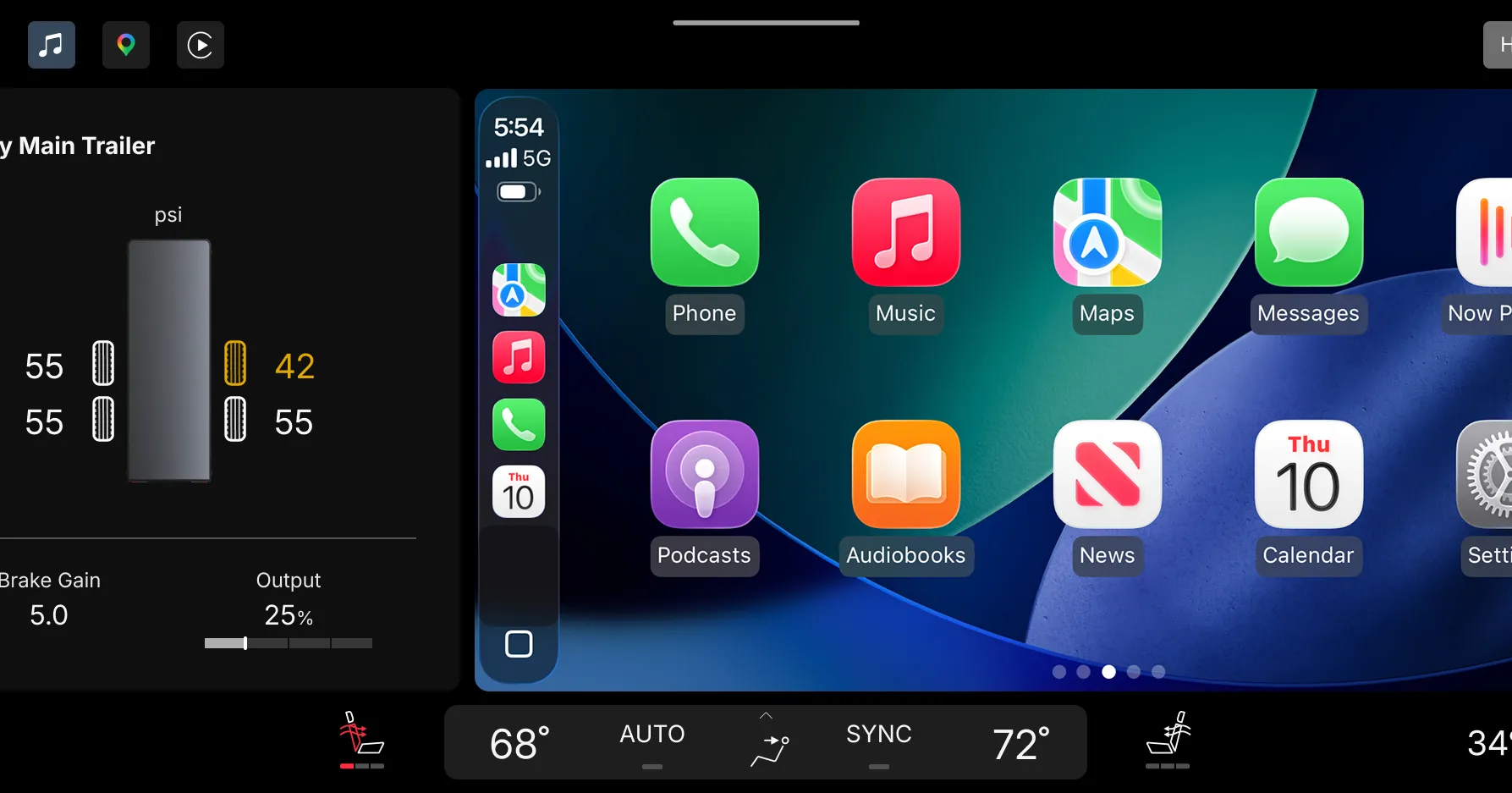
Last week, GM announced a new software experience for its upcoming Chevy Silverado and GMC Sierra trucks, including a new look for Apple CarPlay and Android Auto, the popular phone mirroring systems that the automaker made a big deal about removing from its electric vehicles in 2023. Naturally, this led to some confusion about whether GM was “bringing back” CarPlay and Android Auto to its vehicles. Yahoo Finance reported it that way, calling it an “about-face” by the automaker, while Apple Insider’s headline boasted that GM “cave[d]” on its decision to remove the interface from its gas-powered vehicles. Even The Verge’s own commenters were a bit flummoxed about what was going on. It’s certainly true that GM has not offered phone projection in any of its electric vehicles for the past three years. That means no CarPlay or Android Auto in the Chevy Equinox, Blazer, Bolt, and Silverado EVs; Cadillac Lyriq, Optiq, Vistiq, and Escalade IQ; or GMC Sierra and Hummer SUV and Truck EVs. All of those vehicles have Google software products embedded in their systems, like Maps and Gemini. That’s because GM builds its operating system on top of Android Automotive, which is often called Google Automotive Services or GAS when bundled with the full suite of native apps. But if you’re hoping to plug in your phone, or connect wirelessly, and see the familiar app layout on the infotainment screen of a GM electric vehicle, you’ll be sorely disappointed. The same can’t be said about GM’s many gas-powered trucks and SUVs. GM never disabled phone projection in its best-selling ICE models. Tens of thousands of owners of GM-branded vehicles regularly project their phones’ displays on their vehicles’ infotainment screens without any issue. And now CarPlay and Android Auto are both getting spiffy new picture-in-picture upgrades in the Chevy Silverado and GMC Sierra, a sign that perhaps GM is learning to co-exist with phone mirroring. GM is partly responsible for the confusion. In an October 2025 appearance on Decoder, GM CEO Mary Barra defended the company’s decision to prohibit CarPlay in its electric vehicles and indicated that the policy would eventually extend to GM’s gasoline-powered lineup as well. Everyone freaked out for a second time. Removing phone projection in EVs was one thing, but many truck and SUV owners were understandably incensed about the prospect of losing the capability in their beloved GM-branded vehicles. But a few days later, GM seemed to walk back that statement, clarifying to a number of outlets that Apple CarPlay and Android Auto would remain available in its gas-powered vehicles “for the foreseeable future.” Last week’s announcement of a new software experience in the Silverado and Sierra trucks would seem to be included in that “foreseeable future.” Allow me to add some further reporting here. For the Silverado/Sierra announcement, I spoke to Colin McCormick, group product manager for Google built-in, projection, and profiles at GM. Here’s what he had to say about how GM’s position on phone projection has evolved over the years: > And so the way that I look at this is that we were one of the early adopters of CarPlay and Android Auto when it first came out. And we do have a small segment of EVs right now that don’t offer that, but there is a large majority of our vehicles that do offer that. And our big position on this is that it shouldn’t be two competing systems. So as we work together with Apple and Google to provide solutions that we think are best for the customer, this is what we’re representing in this new UI design. So I think we’re landing in a spot where … we don’t have a customer that has to decide, ‘Oh, I’m going to use projection,’ or, ‘Oh, I want to use the native system.’ That’s our sweet spot for us. And that’s where we want to live. GM most likely realizes that its position on CarPlay and Android Auto isn’t popular. People really like mirroring their phones! It’s clean, it’s familiar, and it’s (mostly) dependable. The same can’t be said for most modern cars’ native software. Even the ones that are really well designed, like Rivian and Tesla, still struggle with some core functions like profile logins and messages. And you can find plenty of owners of both brands that would give their firstborn child for the ability to mirror their phone. CarPlay and Android Auto aren’t perfect. They have dependability problems and connectivity problems aplenty. But they are worlds better than the majority of the native operating systems in cars today — most of which are just trash. Yes, they’re getting better. And GM is not wrong in thinking it can offer a better experience. But people get testy when you take away their choices. So GM is finding ways to coexist with CarPlay and Android Auto. It doesn’t want to lose more customers over it, which is why we’re getting this most recent solution that includes picture-in-picture phone projection. GM thinks this solves the “two competing systems” problem, as mentioned by McCormick. But what it really does is get it out of the corner it backed itself into over phone mirroring.
Topics in this story
Gathered from external sources. Rights to this text belong to whoever originally published it.