Just because Tesla’s Optimus is in production doesn’t mean it’s actually ready
Tesla is manufacturing humanoid robots while still working out how to make them useful, reliable, and durable enough for customers.
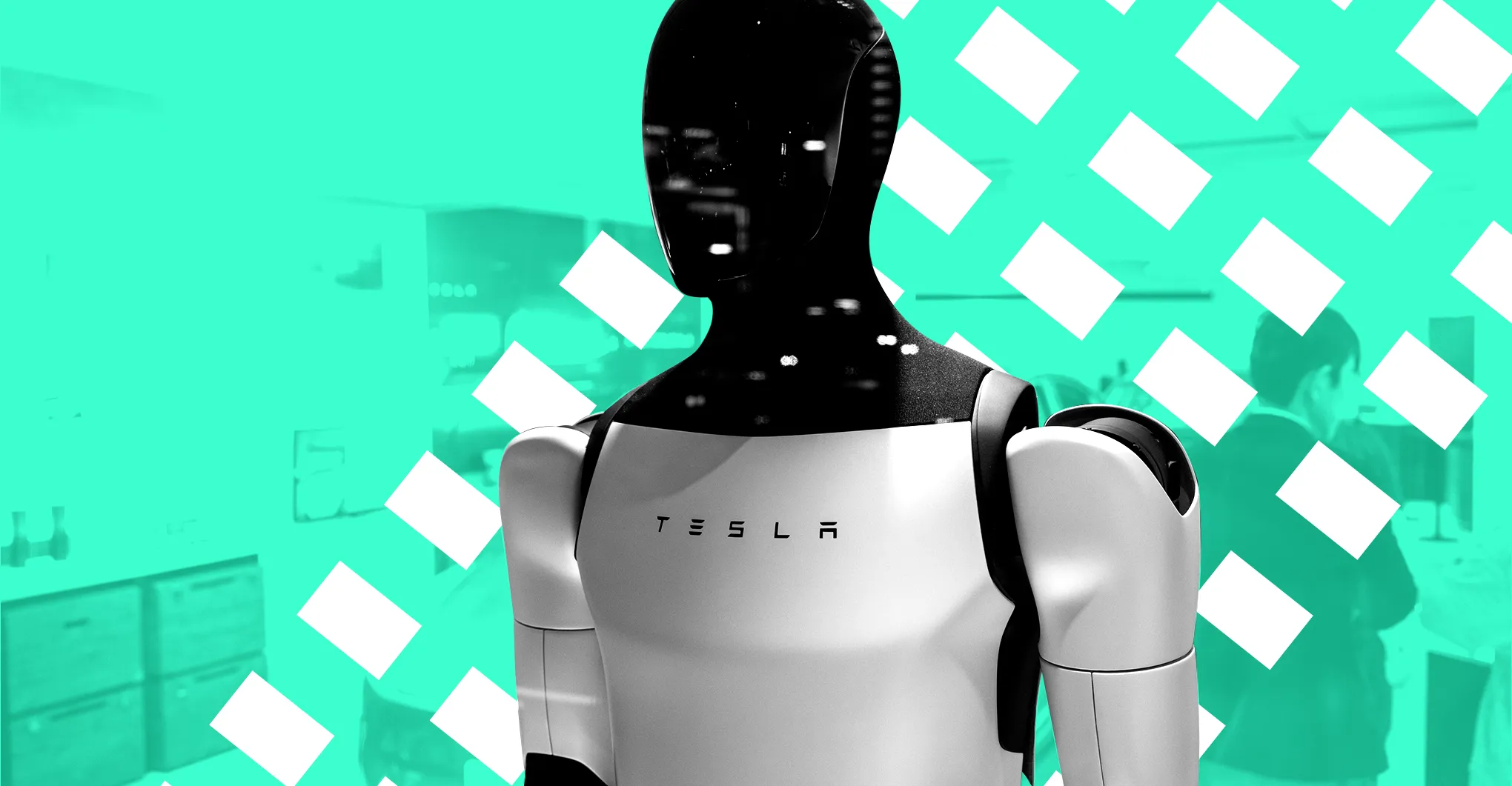
On Tesla’s earnings call Wednesday, CEO Elon Musk announced that the company had begun early production of its humanoid robot on its high-volume line in Fremont, California. Then he laid out what still needs work: the robot’s hands, its safety, reliability, and durability, and the artificial intelligence needed to make it a productive tool. “There’s still quite a lot of work to do with regard to the AI and the robot for it to be truly useful for open-ended tasks,” Musk said. "“At some point, there will be more humanoid robots on Earth than there are humans.”" - ELON MUSK These are substantial caveats for a product slated for volume production. Musk expects the pieces to come together around the end of 2027, when Tesla could begin delivering Optimus to outside companies, but didn’t say which or what exactly the robots would do for them. In the meantime, Tesla needs to build a fleet of robots that can practice tasks and generate training data, then feed what they learn back into the system. It also needs to integrate a new chip that Musk says will give the robots far more computing power. Tesla called the machines coming off the Fremont line its first “production-quality bots” and said its manufacturing process was suitable for a commercial product. But the company did not disclose how many robots it has produced, what tasks they can currently perform autonomously, or how often they can complete the tasks without human intervention. The announcement marks a step toward manufacturing Optimus at scale, not evidence that Tesla has a robot ready to do even the initial jobs Musk envisions — dangerous, repetitive industrial work performed around the clock — let alone become the general-purpose household machine he ultimately imagines. “You can produce them, but the software is lacking,” Ken Goldberg, a robotics professor at the University of California, Berkeley, told The Verge. “If you have a lot of hardware without the software, I think that’s a big problem.” Musk himself spent much of his discussion of Optimus explaining why investors shouldn’t expect finished robots to immediately pour out of the factory. Production will follow an S-curve, he said, with a slow, bumpy beginning. “There’s like 10,000 things that have to go right for production of the robot,” Musk said, “and it will move as fast as the slowest.” Most of the equipment for a line intended to produce a million robots annually is already in Fremont, according to Musk. But reaching a rate of 20,000 robots a week will take “at least a year, maybe a little longer,” he said. “There’s still parts of the design that are changing,” Musk said. “You’ve got to basically build up an entire gigantic global supply chain and have domestically a very, very big factory, and everything has got to work.” "“If you have a lot of hardware without the software, I think that’s a big problem.”" - KEN GOLDBERG Those production challenges are only one part of the unfinished work. A robot that can repeatedly perform a carefully defined task has a different job from a general-purpose humanoid expected to adapt to varied objects and surroundings. Musk described industrial applications as the first market for Optimus, with at-home purchases coming as the robot develops a much wider range of capabilities. Optimus is “going to do like 1,000 times more things than a car would do,” Musk said. Some of Goldberg’s more pessimistic colleagues think a truly useful humanoid robot is still 25 years away, he said. Goldberg believes the field will solve its hardest problems — including reliability, speed, and dexterity — sooner than that. But even he doesn’t expect them to be solved on Musk’s timeline. Robots have become adept at walking, running, and jumping, Goldberg said, but dexterity remains much harder. Manipulating flexible materials, such as wires and fabric, or assembling products is incredibly difficult; doing it quickly and reliably enough for real work is harder still. “I’ve been working on these problems for 40 years,” Goldberg said. “I don’t think they’re going to be solved in the next year or two.” Musk acknowledged that Tesla is ramping production before resolving Optimus’ main hardware problem: its hands. “We’re building robots that do not have perfected hands,” he said. Unlike human hands, robot hands can’t heal themselves. Yet they must withstand repeated use while remaining soft enough to handle delicate objects without damaging their sensors. “What an incredible thing the human hand is at the end of the day,” Musk said. Durability is a challenge for the rest of the robot, too. “It can’t, like, wear out after a month,” Musk said. Closing the software gap will require training data Tesla doesn’t yet have. Unlike its cars, Optimus has no vast installed base from which the company can gather information. Musk said Tesla therefore needs to build roughly 10,000 to 20,000 robots to practice tasks at what he called “Optimus Academy.” “With Optimus, we have to bootstrap it by making the robots and having them do self-play, which is really how a human learns to navigate the world,” Musk said. He compared the process to a toddler gradually mastering increasingly complex skills. “Eventually, they learn to wipe their own ass, which is a big milestone,” Musk said. “And then they learn to read and do all sorts of things.” Goldberg described learning through self-play as a hypothesis whose success in software doesn’t establish that it will work as well in physical hardware. “When you get into hardware, it’s not so clear,” he said. Tesla is also waiting on hardware that has yet to be integrated. Musk said he hopes to put the company’s AI5 chip into Optimus around April 2027, providing roughly 10 times the computing power of AI4. He expects the new chip, improved software, and mechanical refinements to come together before customer deliveries. If all that works, Musk expects Optimus will eventually have a hand in its own production. “The Optimus robots will build the future Optimus robots,” he said, describing a self-reinforcing production loop that would grow “extremely fast.” “At some point, there will be more humanoid robots on Earth than there are humans,” Musk predicted. Before then, Musk promised a video within a month or two showing Optimus performing tasks that aren’t preprogrammed. He criticized humanoid demonstrations that look impressive but wouldn’t translate into useful real-world performance. “If you actually try to use that humanoid robot in the real world, you would have a lot of trouble,” he said. “It wouldn’t work, basically.” Goldberg calls the problem “video emptor.” A video might show the one successful attempt out of a thousand, he said, hide a person controlling the robot offscreen, or depend on a precisely arranged setting. In robotics labs, task success rates have stalled at around 70 to 80 percent, Goldberg said. “That’s not acceptable for real industry.” Musk remains convinced Optimus will become “the biggest product on Earth.” While Tesla’s announcement brings it closer to manufacturing Optimus in large numbers, building a robot customers can depend on – and actually use – remains a separate milestone.
Topics in this story
Gathered from external sources. Rights to this text belong to whoever originally published it.