H-1B visa costs are rising for US companies while America needs more than 157,000 engineers and skilled technicians
Tech News News: While leading artificial intelligence (AI) labs like OpenAI and Anthropic debate intentional slowdowns over unchecked model capabilities, an acute bot.
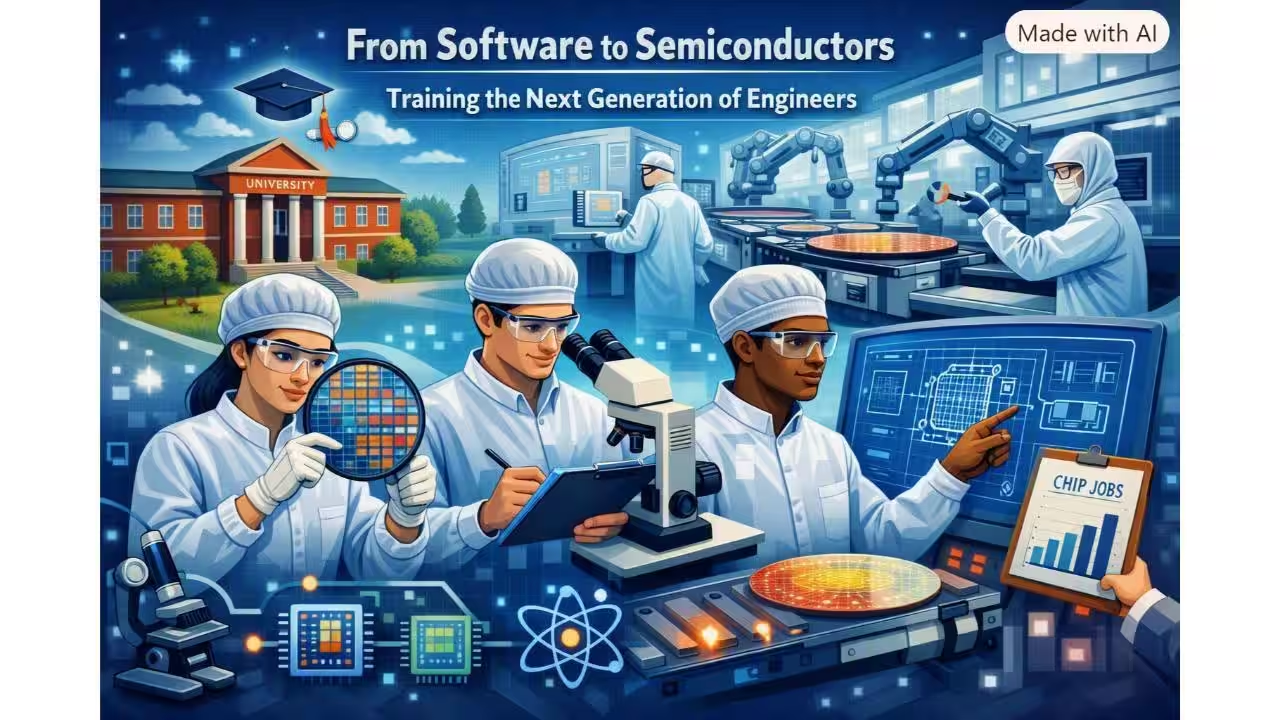
While leading artificial intelligence (AI) labs like OpenAI and Anthropic debate intentional slowdowns over unchecked model capabilities, an acute bottleneck of severe shortage of specialised talent on the hardware manufacturing front may compel a pause across the sector, a report has said. According to joint findings published by McKinsey and the SEMI Foundation, the US is looking at a shortfall of up to 157,000 semiconductor specialists and technicians by 2030, and what’s ‘alarming’ is that this deficit comes as the Trump administration broadens immigration crackdown. It has introduced sweeping hurdles spanning immigrant categories, guest-worker authorisations, permanent residency applications and existing travel permissions.Stricter rules, a proposed $103,265 H-1B charge and shortage of skilled labourThe updated regulatory framework introduces targeted barriers across distinct applicant groups. The H-1B skilled workers and dependents has been hit by intensified application vetting alongside a proposed filing fee soaring to $103,265. Meanwhile, employment green card petitioners are facing stricter evaluations under an updated “public charge” standard. Amid this, leaders on the ground warn that these tightening pathways are suffocating hiring pipelines.“I’m concerned. We just don’t see that there’s enough technical people in the pipeline," Jon Taylor, executive vice president of Samsung’s semiconductor division in Austin, Texas, told CNBCData from McKinsey reveals that a mere 3% of domestic engineering graduates choose to enter the chip industry each year, leaving 73% of semiconductor employers struggling with severe recruitment bottlenecks.Companies racing against time in domestic chip fabsAccess to skilled labor is necessary as America mounts its fastest manufacturing buildout in history to produce cutting-edge logic processors and memory chips domestically. In Arizona, fabrication facilities belonging to Taiwan Semiconductor Manufacturing Company (TSMC) and Intel are actively producing next-generation logic chips.South Korea’s Samsung is slated to become the next overseas giant to begin domestic logic fabrication, with operations launching at the first of two production facilities in Taylor, Texas, later this year. Representing a $35 billion regional commitment, Samsung projects the twin Texas fabs will generate roughly 3,500 jobs.“We’re hiring engineers, we’re hiring technicians, we’re hiring people in supply chain. Everybody wants and needs the same thing, and it’s a bit of a race against time right now as everything is starting to come online,” Taylor added.Although the US invented semiconductors and still dominates computer chip architecture, the vast bulk of commercial chip fabrication migrated to Asian facilities decades ago, creating regional talent pools.To bridge workforce needs, Idaho-based memory manufacturer Micron has conducted rapid-hiring tours at technical schools in South Korea, interviewing applicants and extending immediate full-time job offers for its Asian operations within a single day.Get the latest technology news and updates. Download the TOI App.
Topics in this story
Gathered from external sources. Rights to this text belong to whoever originally published it.