Inside Microsoft’s big Copilot rethink
Copilot is now being positioned as the ‘OS for work.’
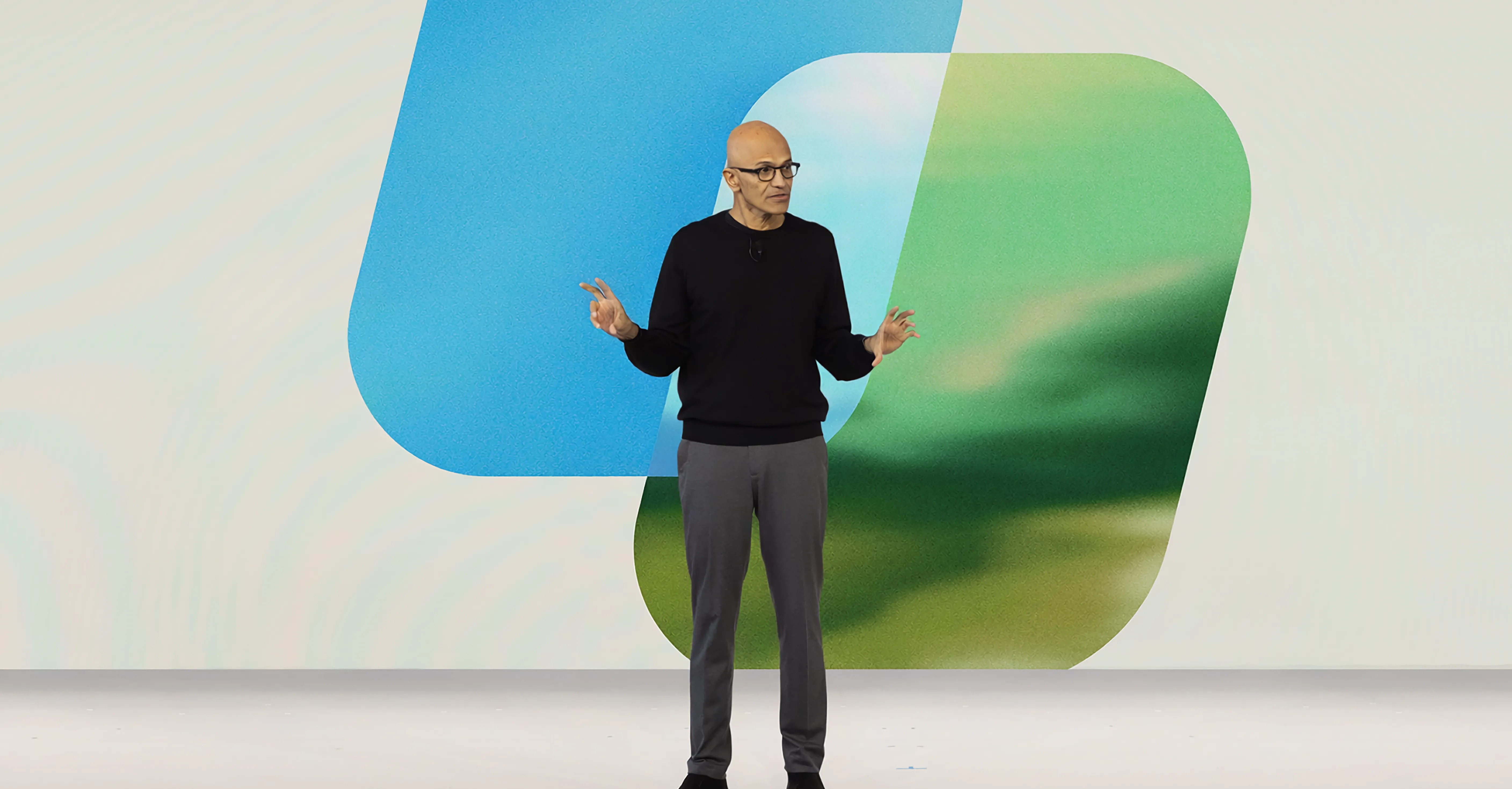
Last week, Microsoft CEO Satya Nadella hosted an intimate, invite-only event for leaders from some of its key enterprise customers. Instead of a flashy media event, Nadella outlined the future of Copilot directly to the customers Microsoft really cares about, pitching its latest rethink of the AI assistant as the “OS for work.” Microsoft is adding coding and agent capabilities directly into Copilot, as well as bringing the full power of Office into Copilot for the first time. Nadella is betting that AI will change the way people work in the same way that Microsoft Office did in the ’80s and ’90s. “How did a multinational company do a forecast in 1981? You had interoffice memos and faxes and all of these artifacts that then just disappeared and you suddenly had an Excel spreadsheet in an email,” said Nadella. “We are the architects of a new frontier of work, using these new tools and capabilities.” Microsoft has spent the past few months fusing together its consumer and enterprise Copilot apps into a single unified user interface, with a goal to make Copilot as influential as Office once was. The result is a big departure from the Copilot consumer design that Microsoft AI CEO Mustafa Suleyman launched two years ago. That design was heavily influenced by the work Inflection AI had done with the Pi personal AI assistant, after Microsoft hired many of the Inflection AI team just months prior. The new Copilot app now looks a lot more like the commercial one, with separate tabs for chat, coding, and the new Autopilot AI agent. There are some small nods to the consumer UI that was available before, but overall it looks like the type of enterprise app you’d associate with Microsoft. “There’s a really important reason why we decided to do this,” said Copilot chief Jacob Andreou at Microsoft’s customer-only event last week. “The bar for enterprise software is higher than it has ever been before. The expectations we have of the tools we adopt at work are set by the things we use after hours and at the weekends at home. What this means is that consumer UX and care needs to make its way into the workplace.” Andreou joined Microsoft AI last year, focused on product and growth. In March, Nadella appointed him as the single boss of Copilot across both commercial and consumer, reporting directly to the Microsoft CEO. He’s now responsible for the design, engineering, and growth of Copilot. Sources familiar with Microsoft’s Copilot plans tell me that redesigning Copilot over the last six months hasn’t been easy. There have been tensions between the team under Andreou, and those working for Charles Lamanna on the Copilot, Agents, and Platform (CAP) team. Lamanna’s team has been building Microsoft Scout, an always-on personal agent built on top of OpenClaw. Microsoft announced Scout at its Build developer conference in June, with just a desktop preview app. Less than six months later, I understand that the app has been put into maintenance mode, with Microsoft focusing on the cloud version, which has been rebranded to Autopilot. I’m told the rebrand was driven in part by legal concerns around the Scout name, as Yahoo uses “Yahoo Scout” branding for its own AI-powered features. Sources tell me Microsoft had even considered using Mico, the Clippy-like character from the consumer Copilot, to replace Scout. Nadella favored Autopilot instead, allowing Microsoft to present its AI agent in a more enterprise-friendly way, instead of a bouncing blob. Some of Microsoft’s caution around making Autopilot too cute comes at a time when rogue AI agents are hacking into businesses. Nadella addressed these concerns last week, laying out Microsoft’s design goals for Copilot. “[It’s] about organizations having control of their firms in an age of AI, where AI by definition is a learning machine,” said Nadella. “It can’t be about leaking the core of what your firm is about.” Andreou also admitted that agents “have been almost impossible to bring into the enterprise,” due to them needing the autonomy and flexibility that businesses usually balk at. “It is their superpower, and it’s the same thing that makes them absolutely terrifying to an IT admin.” Microsoft thinks it has solved the AI agent problem for businesses with its “OS for work,” but it also seems to be leaving the door open for competitors like Meta and OpenAI to build the “OS for life.” In a world where 1.2 billion people use ChatGPT every week, Microsoft is playing to its traditional business-focused strengths instead of trying to compete with consumer-friendly Muse and Dots agents. Andreou isn’t giving up on Copilot for consumers just yet, however, and he seems to want to hone in on those that want the power of enterprise apps at home. “Microsoft consumers are a little bit special. There’s almost 90 million folks that pay for Microsoft 365 out of their own pocket,” said Andreou. “These are people who value the use of things like PowerPoint and Excel so much in their personal lives that they actually go ahead and pay for it themselves.” With Office baked into Copilot, you’ll soon be able to create and edit inside Microsoft’s AI assistant instead of having to switch to Office apps like Word and PowerPoint. There’s a full ribbon interface, and it essentially looks like the web version of Office directly inside Copilot. I think this is Microsoft’s first real acknowledgement that we’re heading to a future where AI can create a lot of the documents that people used to rely on Office for. Microsoft’s move to bring Office into Copilot has the potential to fundamentally reshape the future of Word, Excel, and PowerPoint. Nadella is now positioning Copilot as the platform for this new AI era of work, instead of just cramming AI features into Office itself. Microsoft has tried to sell business on Copilot in Office multiple times in recent years, but the response to a $30 per month, per user Copilot subscription was lukewarm two years ago. Nadella still thinks Microsoft will nail AI at work, and in turn convince businesses to pay for it. “The way we think of Copilot is not just the product itself changing, it’s the contours of work inside the enterprise changing,” said Nadella. [It’s] the dance between the shape of the product and the organizational structural change to work.” The pad * Microsoft refreshes its smaller Surface Pro and Laptop with Qualcomm’s X2 Plus. Microsoft is keeping the same design and hardware features of its existing Surface Pro 12-inch and Surface Laptop 13-inch devices, but it’s upgrading them with Qualcomm’s latest Snapdragon X2 Plus chips. That should mean better performance and battery life, but thanks to RAMageddon, it also means higher price points. Microsoft is also bringing back the black color option for both of these smaller Surface devices, with platinum silver or violet colors available too. Both of these refreshed Surface devices will be available on October 13th, with the 12-inch Surface Pro starting at $1,149.99 and the 13-inch Surface Laptop starting at $1,199.99. * Microsoft’s new Surface Mouse has haptic feedback and a customizable action button. Microsoft’s smaller refreshed Surface devices might not be all that exciting, but the company also announced a refresh to the Surface Mouse for the first time in 10 years. The new model includes haptic feedback support and has a customizable action button for the first time. It’s nice to see more mice with haptic feedback, which works through subtle vibrations during things like clicks, drags, and alignment in Windows 11. * Microsoft Ink Canvas is an AI-powered digital sketchpad. Microsoft is launching a new digital sketchpad app for Windows next month. Microsoft Ink Canvas will be available first on the new Surface Pro 12-inch, and other supported devices on October 13th. It supports sketching with pen or touch, and includes AI image generation and summaries. It’s essentially an AI-powered version of the various digital whiteboard apps Microsoft has created over the years. * Microsoft puts Brad Smith in charge of communications. Microsoft is moving its communications group out of marketing and into its Corporate, External, and Legal Affairs (CELA) organization. The surprise change will see Microsoft vice chair and president Brad Smith oversee communications, while the company searches for a replacement for Frank Shaw, chief communications officer, who is departing later this year. This move seems to position Microsoft PR to be more like how AI startups operate, allowing researchers to lead demos and write blogs. Microsoft is still chasing Google, Anthropic, and OpenAI to become a top AI model lab, and Microsoft CEO Satya Nadella says he’s “excited about the opportunity to help our engineers, sellers, partners, and others closest to our products and customers become an even bigger part of how we tell our story.” * Bill Gates says regulate AI, because it’s powerful enough to cause a billion deaths. While Microsoft is pushing ahead with its new Copilot app, Microsoft cofounder Bill Gates wants AI regulations. In an interview with NBC News, Gates says that AI is “certainly powerful enough to drive events that, you know, cause a billion deaths.” He wants politicians and law enforcement to “get into the discussion about what safeguards and monitoring look like.” * Microsoft is killing off the “Copilot Plus PC” brand. When Microsoft announced its Surface Laptop Ultra in May, there was no Copilot Plus PC branding to be found. Even though the new 12-inch Microsoft Surface Pro and 13-inch Surface Laptop technically meet the system requirements for a Copilot Plus PC, Microsoft is not calling them by that name anymore. There doesn’t appear to be a direct replacement after two and a half years of Copilot Plus PCs, but Microsoft does have a Windows event next week, so maybe we’ll hear about a new brand for its AI-focused PCs. * Human workers are reviewing prompts and images sent to Microsoft Copilot. Human contractors are reviewing Copilot users’ prompts and uploaded images, according to a new report from 404 Media. The publication reports that some contractors working on Copilot have described seeing disturbing requests and potentially illegal images. “Faces are always uncensored, and many of the prompts are sexual in nature and dubiously consensual,” says one person who reportedly works on the Copilot prompts. * Xbox’s Mythic Achievements are here, and they’re just like PlayStation Platinum trophies. Microsoft has officially announced its new Xbox Mythic Achievements, and they’re already available for Xbox Insiders to test. Mythic Achievements work a lot like Sony’s PlayStation Platinum trophies and are unlocked once you’ve earned every original achievement for a game. Mythic Achievements leaked as part of an Xbox PC app last week, complete with a unique unlock sound. Mythic Achievements are now in testing just weeks after Xbox CEO Asha Sharma revealed that Xbox would be getting a platinum trophy equivalent later this year. * Windows 11’s 2026 update is now available. Microsoft is rolling out Windows 11 version 26H2, aka the Windows 11 2026 Update. It’s what Microsoft calls a “small enablement package,” allowing Windows 11 users to download and install the latest release quickly with a single restart. So what’s new? Well, due to the way Microsoft releases new Windows features these days, many of the same features that have been rolling out to version 25H2 will be part of 26H2. * Gears of War: E-Day is a great game launching at a terrible time. My colleague Andrew Webster has been playing Gears of War: E-Day, and he’s impressed. “E-Day is reminiscent of a James Cameron film: Absolutely every element is in service to creating a thrilling sci-fi spectacle,” says Webster. “It’s as close to a playable Aliens as you’re bound to find.” * Xbox’s Gears of War pizza cutter sold out in hours. Speaking of Gears of War, Xbox has teamed up with Prince St. Pizza to launch a pizza cutter to mark the launch of E-Day. The $60 cutter is built in the shape of the Prototype Lancer weapon from the game, and also includes an in-game pizza emblem. Unfortunately for Gears of War fans, the cutter sold out within hours of going on sale. Still, Prince St. Pizza will also be selling an “Emergence Pie” pizza with a spicy vodka sauce, so if you’re lucky they might even carve it up for you with the Lancer cutter. * “Xbox is not for sale” says Microsoft’s gaming chief. Xbox CEO Asha Sharma has denied reports that Microsoft is considering selling off its Xbox business. “Xbox is not for sale,” says Sharma in an interview with The New York Times. “We will do whatever it takes to set the company up for success, and we will look at the right partnerships, the right operating model and everything needed to achieve that.” The Information reported in June that Microsoft CEO Satya Nadella and CFO Amy Hood had been considering spinning out Xbox entirely, and then reported earlier this month that both execs have “more recently supported Sharma’s plans to overhaul the unit.” The overhaul includes moving Halo, Sea of Thieves, and Age of Empires under Activision, as well as selling off smaller Xbox studios. The recent changes look geared toward making Xbox a wholly owned subsidiary like Microsoft has done with LinkedIn. Note: I’m traveling to San Francisco next week for the Windows and Surface event on October 7th, so Notepad might not arrive on time. I’m always keen to hear from readers, so please drop a comment here, or you can reach me at notepad@theverge.com if you want to discuss anything else. If you’ve heard about any of Microsoft’s secret projects, you can reach me via email at notepad@theverge.com or speak to me confidentially on the Signal messaging app, where I’m tomwarren.01. I’m also tomwarren on Telegram, if you’d prefer to chat there. Thanks for subscribing to Notepad.
Gathered from external sources. Rights to this text belong to whoever originally published it.