4 lessons I hope Apple's foldable iPhone takes from the Samsung Galaxy Z Fold 8
If we do get a foldable iPhone soon, I hope it follows Samsung's lead on a few things.
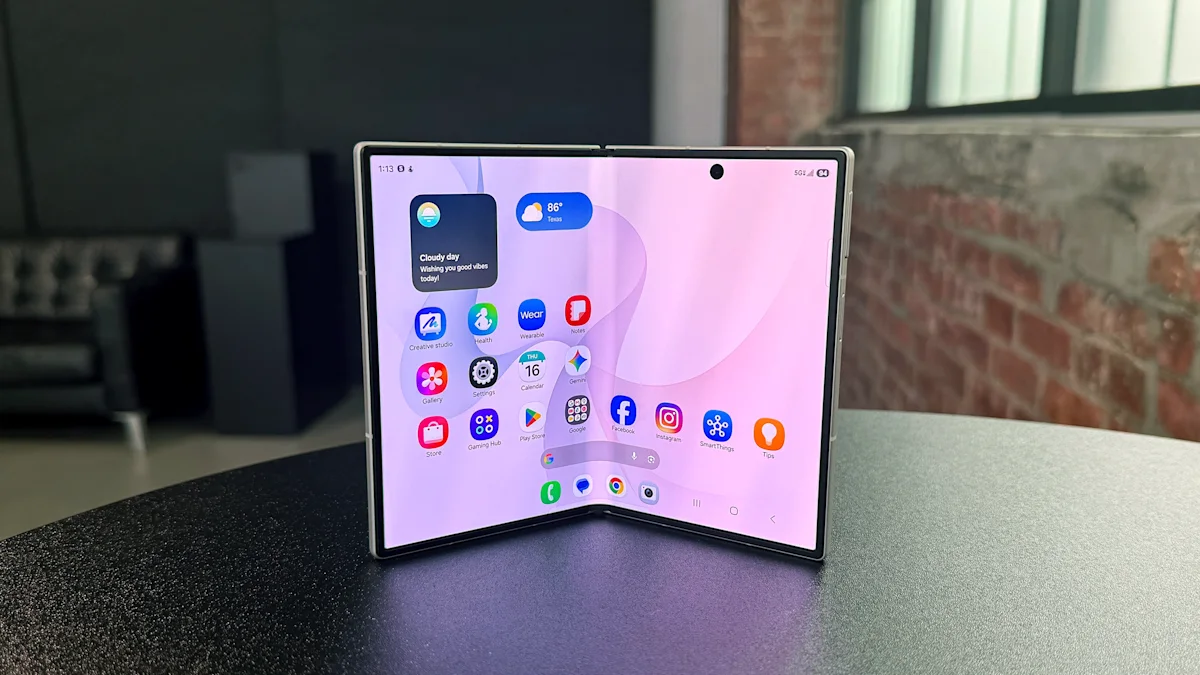
The iPhone launch event is right around the corner on September 9 , and the big rumor is that Apple will reveal its first foldable iPhone this year. If that proves true, Apple will be playing catch up — Samsung, Google, Motorola and others have had foldable phones in their lineups for years. This won't be the first time Apple's coming onto a scene a little late, but I hope it sees this as an opportunity to learn from its peers. Samsung has arguably the strongest foldable lineup right now, and it just added the short-and-stout Galaxy Z Fold 8 this year. That phone impressed me, and I'm hoping Apple can learn a thing or two from Samsung's execution of the Z Fold 8. Here's what I hope Apple takes away from Samsung's newest foldable smartphone.
I loved Flex Mode on previous models of the Galaxy Z Fold and Flip smartphones, but unfortunately, with the Z Fold 8's new hinge design, that feature isn't available. Flex Mode lets you prop up your foldable smartphone in an L-shape so you can use apps both on the top part of the screen and the bottom, or in the case of the camera app, more easily access controls on the bottom part of the screen while using the top part of the screen to frame your shot. It basically gives you two semi-independent displays on a phone that sits upright, allowing you to take better photos and selfies, watch YouTube videos on the top screen while scrolling through comments on the bottom, and more. The built-in stand effect is enough for me to want to use it all the time, and I appreciated how Samsung went out of its way to make sure a lot of its native apps worked with Flex Mode. I would love to see Apple bring this back in its own way.
Lesson 2: App and software compatibility is key.
A big part of any foldable phone is how well its apps and software work across different orientations. Instead of just one, tall, rectangular display, programs will have to work seamlessly across multiple screens of different sizes and aspect ratios. I've been generally impressed with Samsung's execution of this, but of course, they don't control the entire Android ecosystem. Apple, similarly, doesn't control every app in its App Store (as much as it might want to), but I hope that at least most of Apple's native apps will be foldable-ready at launch. A quick way to alienate users to a new smartphone experience is to make their favorite apps more difficult to use on a new device.
Lesson 3: Overall build quality and durability matter.
You might be thinking, "Duh, Apple is known for making great hardware," and you're right. But any first-generation device has the potential to disappoint after it's put through the stress test of actual users. Samsung had seven generations to work out the kinks in its flexible smartphones, and it really shows on its latest devices. Reparability questions aside , the Galaxy Z Fold 8 is the best feeling Samsung foldable to date: the hinge feels strong but not stiff, both the interior and exterior screens look great and don't feel fragile, the interior crease is basically nonexistent, and overall, I don't feel like I have to baby that smartphone when I'm using it. Apple has to match that level of build quality out of the gate.
Smartphones are a given in everyday life now, so by nature, any that are difficult to use won't survive. Not only is the Galaxy Z Fold 8 not that, but it's also actually fun to use — it taps into a type of whimsy that tech has lost over the past 5-10 years, so much so that it makes me want to use it more than my main smartphone. Apple has to make its foldable experience easy to adopt and enjoyable enough that users get some of that early-days wonder back. That means nailing the basics — performance, design, battery life and app compatibility — and putting its own flair on things that will make people stop and think "maybe I do want my next phone to be foldable."
Topics in this story
Gathered from external sources. Rights to this text belong to whoever originally published it.