Is a foldable phone finally practical? Tech experts explain the trade-offs before you upgrade
Chances are, Apple will announce a foldable iPhone next week. Here's what to consider before you buy one.
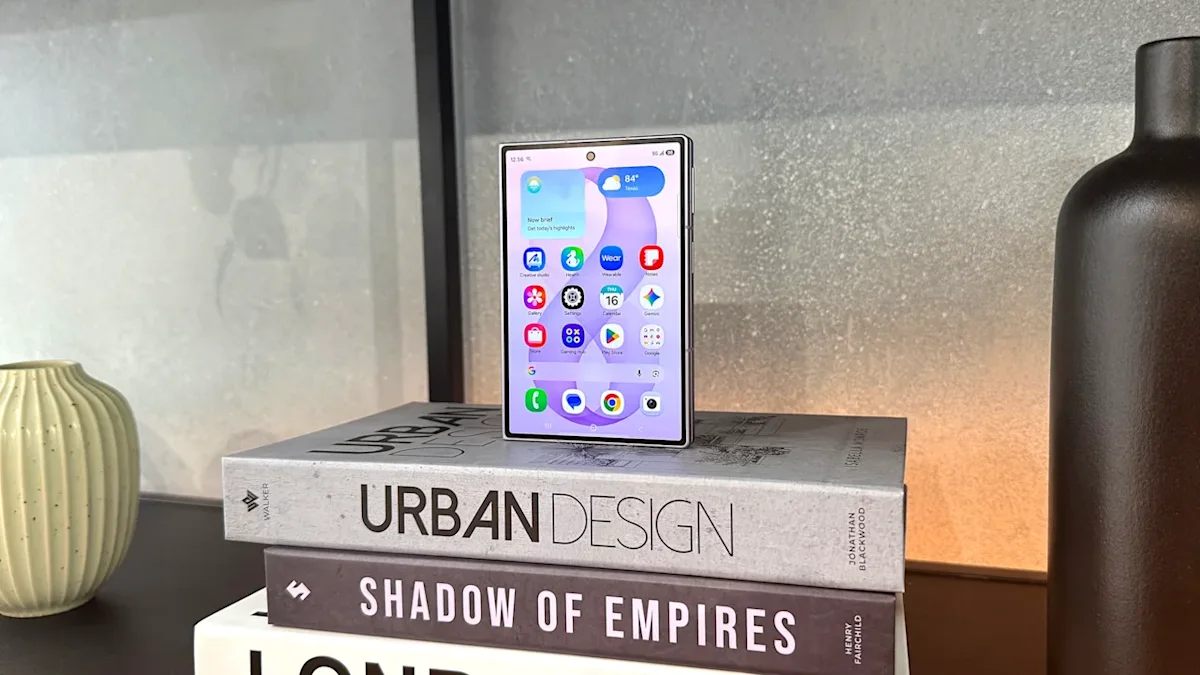
If you have even a passing interest in tech, you've heard the rumor that Apple is brewing up its own folding phone . The format is nothing new; Samsung is currently on its eighth iteration of the Galaxy Z Fold and Google's first Pixel Fold came out in 2023. Still, Apple entering the foldable market is a pretty big deal. Having a phone that unfurls into a small tablet, and then folds in half to fit in your pocket may no longer be a tech-nerd-only purchase. To find out whether foldable phones are finally becoming a practical choice, I asked four technology experts for their opinions. The verdict? Foldable phones are not mainstream just yet… but come September 9 , they'll be a heck of a lot closer than they've ever been.
Given that one out of every two phones sold in the U.S . is an iPhone, an Apple foldable will make a huge impact. "For some people, this will be the first foldable they've ever considered," says Stephen Hackett , co-host of the Connected technology podcast. That checks out anecdotally for me. I'm getting questions about the foldable iPhone from my own friends and family — none of whom have ever spoken to me about folding phones before.
Ironically, when you consider how expensive everyone thinks Apple products are, it might be the one company who can actually sell these things. "I think the dimensions of the new foldable iPhone are going to be pretty similar to an iPad mini," says Ben Hatton , Connected Devices Analyst at FDM CCS Insight, "So, [Apple] can sell what is an expensive device, but effectively sell it as two devices in one. Apple's very good at telling those kinds of stories."
"Apple doesn't need to sell millions of folding iPhones to win (though they definitely will)," Jitesh Ubrani , Director of Worldwide Device Trackers at the market intelligence company IDC told me. "Just by entering the category, it educates an enormous number of consumers on what a foldable even is." And after that education has been received, Apple will deliver a product designed with the benefit of nearly a decade of customer feedback.
Hatton told me he's been using foldable devices for five or six years now and has seen first-hand how far they've come. Things that used to be deal breakers — frightfully un-durable hinges, creased screens and a thickness that felt like "two phones stacked on top of each other in your pocket" — have all been resolved to the point where foldables feel durable and premium with, as Hatton put it, "phenomenal engineering." That lines up with Yahoo Tech's Valentina Palladino's thoughts when she reviewed the new Samsung Galaxy Z Fold 8 .
I asked Liz Lee , Associate Director at the technology market research firm Counterpoint, whether Samsung's new foldables have helped push the category towards the mainstream. "Yes," she said, "especially the wider Galaxy Z Fold 8. The lighter design, wider screen and better everyday usability have addressed some of the issues that made earlier Fold models feel too niche."
Most everyone I spoke with hit on the importance of that wider screen. The new "passport" format, seen on the latest Galaxy Z Fold and expected on the iPhone foldable, gives the phone that two-in-one, phone-plus-tablet utility. "Manufacturers have been trying to work out exactly what is the best kind of shape for these," says Hatton, adding that the passport format is ideal for content consumption. While a more vertical orientation might be better for productivity, the 4:3 aspect ratio produced by the passport format lends itself to flipping through YouTube, streaming TV shows or "watching The Odyssey as Nolan intended ," joked Hackett.
But it's not likely Apple will just copy what's already been road-tested by other brands. "Apple's entry will push the next big gap," Ubrani told me, "Camera quality, which has lagged behind the rest of the smartphone market in foldables." And as always, expect Apple to add some clever, unknowable feature to its foldable — something we won't realize we need until we see it.
So even if Apple takes all the right lessons from years of foldables being in the market, addressing durability, screen crease, aspect ratio and other concerns, will the average Jolene on the street buy one? Probably not. Will Apple sell a ton of folding phones? Yes, but that won't make enough of a difference to the mainstream market.
Hatton shared research from FDM CCS Insight that put worldwide shipments of foldable phones at just under 25 million for 2025. By 2030, his firm expects that number to hit 44 million units. It's a significant increase that'll no doubt be helped by the folding iPhone, but that's still just 4% of the total smart phone market. Those figures are close to the Counterpoint research Lee shared with me, and she added, "The bar-type form factor will remain the mainstream smartphone for the foreseeable future."
And there's one reason for that: Price. Every expert I spoke with stressed that the sky-high price of folding phones will prohibit most of us from buying one. "The expense is going to turn people off," says Hackett. Lee added, "Price is still the biggest barrier to broader adoption." And Hatton summed it up with: "They're very expensive."
Ubrani explained the conundrum every foldable phone manufacturer is facing: "Every gram you shave off a foldable adds cost, and every dollar you save adds weight. That tension between price, durability, and weight is the core problem the category still hasn't solved."
The other tradeoff people will have to consider when going for a foldable phone is the weak trade-in value on foldables. Hatton told me, "When it comes to trading it in after a couple of years, the likelihood is you will probably not get as much money as if you had a 17 Pro Max [or other non-foldable]."
That jibes with my research. Back Market says it'd give me $171 for a Galaxy S21 Ultra that originally cost $1,250. I'd only get $126 for the Galaxy Z Fold 3, which came out the same year and cost $1,800. Back-of-the-napkin math (OK, fine, I asked Gemini) shows that the foldable retained just 7% of its value, and the bar-type phone, twice that. Of course, iPhones historically retain their value better than other brands, but I'd expect a similar depreciation for the folding version.
"The most interesting iPhone season in a long time."
No matter what, Apple will make headlines next week. Even if they end up not announcing a foldable phone, current expectations are so high right now that the absence of an announcement will rock the tech world. There's little hope that Apple will remove the main barrier to widespread adoption of a foldable iPhone — estimates are putting the price tag at $2,000 — but the very fact that the company is entering the segment will change how foldables look and perform from here on out. "It's a watershed moment for the segment," says Hatton. And whether or not you're considering a folding iPhone, this is, as Hackett put it, "the most interesting iPhone season we've come into in a long time."
Topics in this story
Gathered from external sources. Rights to this text belong to whoever originally published it.