Netflix Turns Infamous Stanford Prison Experiment into Reality Show with ‘30 Willing Participants’
The unscripted series, inspired by the controversial 1971 experiment, premieres Oct. 21
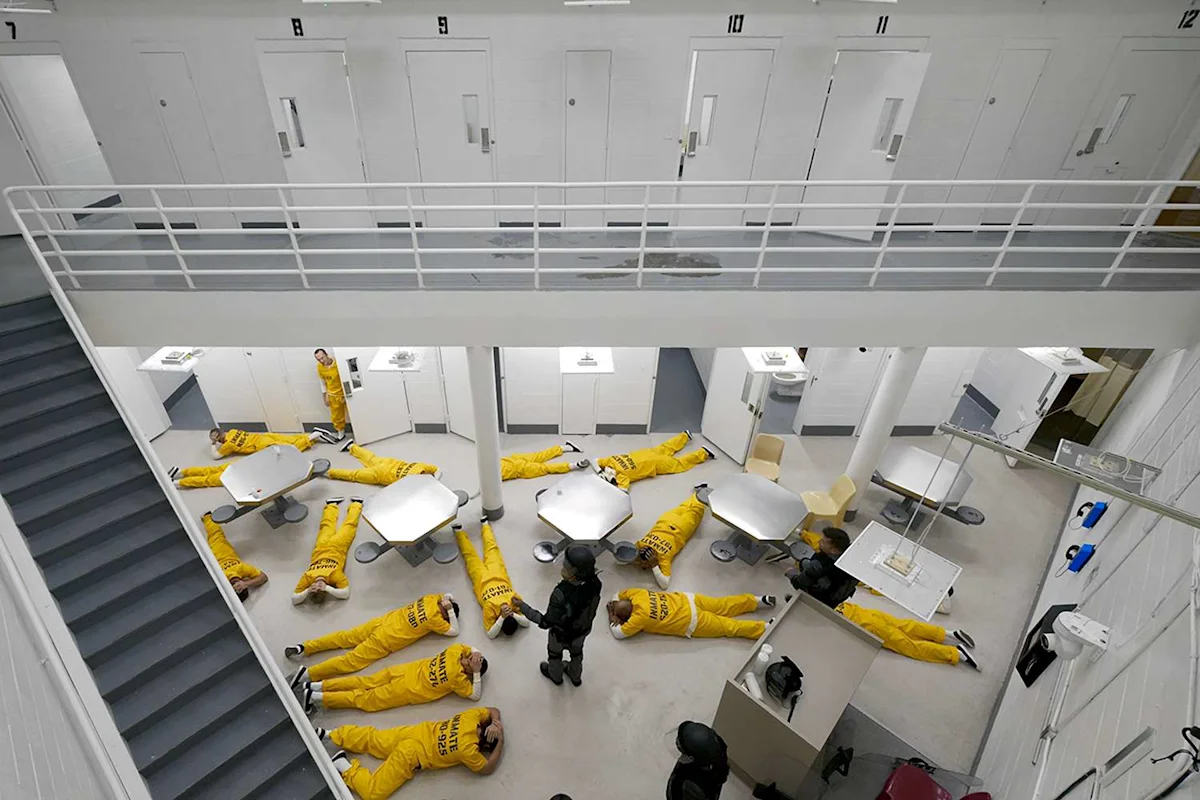
Netflix's new unscripted series will put 30 participants in a real prison as guards and prisoners
The New Stanford Prison Experiment premieres Oct. 21 and will span six episodes
The series is inspired by the controversial 1971 Stanford Prison Experiment
Netflix is putting a reality-TV spin on one of psychology's most infamous experiments.
The streamer is set to debut The New Stanford Prison Experiment , an unscripted series that will place 30 participants inside a real prison and randomly assign them to play either guards or prisoners, per a release shared with PEOPLE.
The six-episode debut season is scheduled to premiere Oct. 21. Alfred Street Industries is producing the series, with Jane Lipsitz, Dan Cutforth, Nan Strait, Dan Volpe, Jeff Grogan and Mike Odair serving as executive producers.
The series will examine what happens when ordinary people are placed within a structured system of power and assigned opposing roles.
"Thirty willing participants enter a real prison and are randomly assigned as guards or prisoners. Thrust into a system of power, hierarchy, and control, they'll discover whether ordinary people inevitably conform to the roles they're given—or whether empathy, morality, and individuality can withstand the forces pushing them in the opposite direction," the synopsis reads, per the release.
"As the pressure builds and the balance of power begins to shift, the central question feels more urgent than ever: Does power corrupt?" the synopsis continues.
For Lipsitz, the project offered an opportunity to revisit a study she had long found compelling.
"The Stanford Prison Experiment has always fascinated me," Lipsitz said. "Despite its serious ethical flaws, it asked a fundamental question that feels even more relevant today: how does power affect ethical choices?"
She described making the series as an intense experience.
"Getting the opportunity to reimagine this social experiment was one of the most intense, exhilarating — and definitely nail-biting — experiences we've ever had," she said.
"Netflix has always been an incredible supporter of ambitious projects that take risks, push boundaries and tell challenging stories, so we were incredibly grateful to have them as our partners on this one," Lipsitz added in the release.
The new series takes its name and central premise from the Stanford Prison Experiment, which was conducted at Stanford University in August 1971. Led by psychology professor Philip G. Zimbardo, the study was designed to examine the psychological effects of authority and powerlessness in a prison setting, according to Stanford University .
Researchers recruited Stanford students through a local newspaper advertisement, ultimately selecting 24 students who were screened and randomly assigned to groups of prisoners and guards, according to the university.
Never miss a story — sign up for PEOPLE's free daily newsletter to stay up-to-date on the best of what PEOPLE has to offer, from celebrity news to compelling human interest stories.
The experiment was initially expected to last one to two weeks but was terminated after just six days as the situation escalated. Prisoners were subjected to cruel and dehumanizing treatment by their fellow students, according to Stanford University.
The experiment became widely known for its findings about the influence of social roles and environments on behavior. Zimbardo described the study as showing how "ordinary college students could do terrible things," according to Stanford University.
A dramatized movie titled The Stanford Prison Experiment was released in 2015, starring Billy Crudup, Michael Angarano and Ezra Miller. The movie was made with Zimbardo's active participation and more closely followed the events of the original study, according to Britannica .
Topics in this story
Gathered from external sources. Rights to this text belong to whoever originally published it.