Meadow lets you leave your smartphone at home without sacrificing the essentials | TechCrunch
“We’re not Luddites... it’s just we don’t want social media, browsing, and that kind of stuff," said 25-year-old founder Shreyas Narlanka.
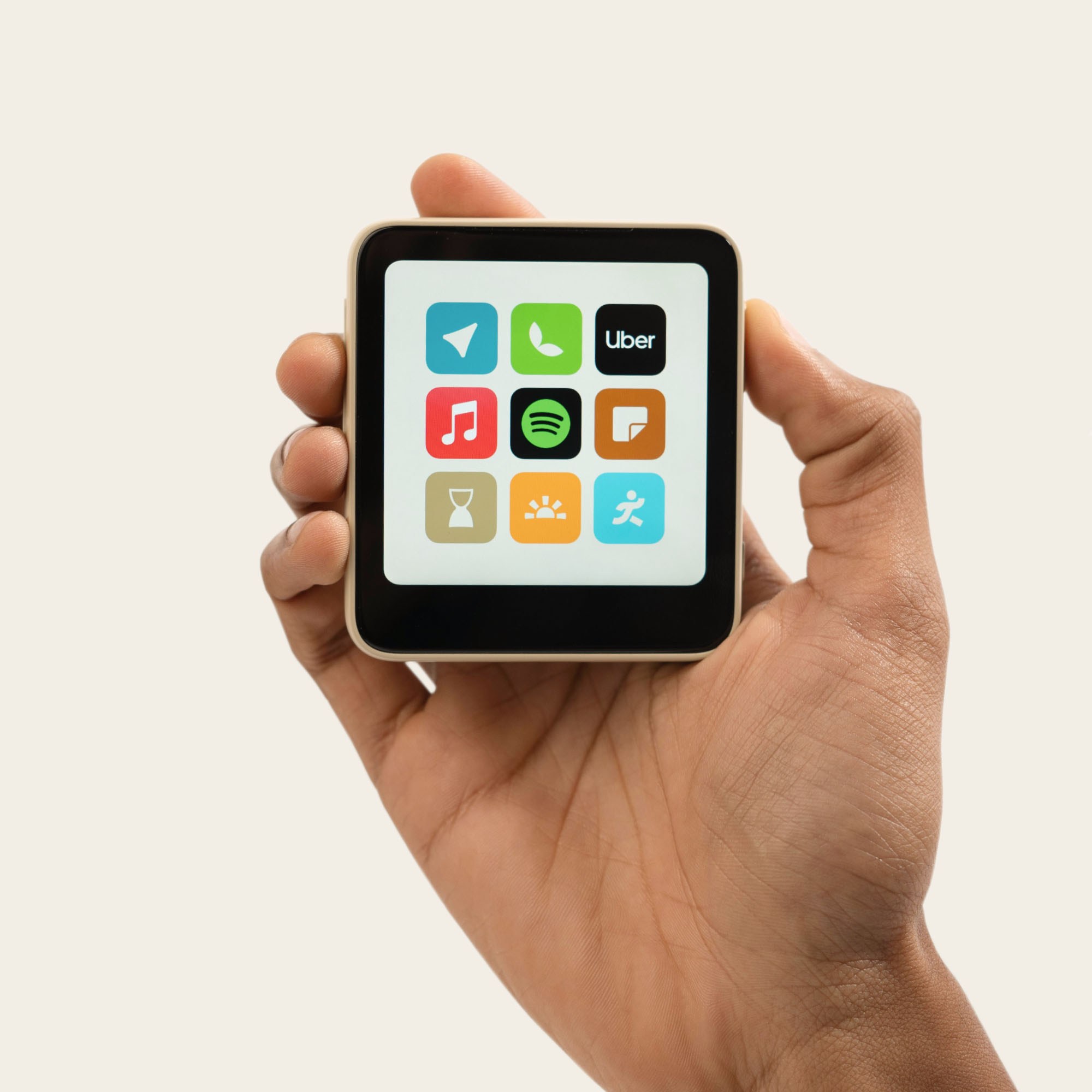
I held my breath as I walked into the concert venue and showed the bouncer a ticket barcode on a three-inch, square screen.
“If it doesn’t go through, I can try something else,” I said quickly, worried that the barcode wouldn’t work. But just as Meadow founder Shreyas Narlanka promised me, the code I scanned onto the startup’s minimalist phone earlier that day worked fine.
“Cool phone,” the bouncer said, ushering me inside.
I’d done it. With Meadow’s bare-bones smartphone, I had called an Uber, streamed Apple Music during the ride, and entered the show. Not once did I need to touch my iPhone, which I only brought with me as a backup in case the ticket scan didn’t work.
“With so many dumb phones, the Brick , and everything, the messaging is like, ‘Slow down, focus on your work’ or whatever,” Narlanka says, explaining why his company chose to build a minimal phone. “But the reason we’re different is because we’re all about getting outside and unplugging and having a sick social life.”
Go online, and you’ll see a growing mass of content and comments from people across the world feeling suffocated by being constantly connected via their smartphones and social media feeds. That’s resulting in a new device category that promises a reprieve. Some of these devices, like the Light Phone , require users to completely give up their smartphone and switch to a simpler device. Others, like the Wisephone , offer a modern touchscreen device with a minimal UI and a few apps. Still others are embracing more tactile form factors, like the Commodore Callback , which is a flip-phone with a touchscreen.
Meadow, meanwhile, is taking the middle road, intending to simply supplement your existing device. It runs Android, and so supports apps like Maps, Strava, Uber, Apple Music, and Spotify. It also has native apps for utilities like the camera, voice memos, notes, camera, text, calling, location sharing, and ticket scanning. It also supports Bluetooth, and you can connect 3.5mm headphones to it using a USB-C-to-3.5mm adapter.
“I knew there were going to be times where I needed my phone,” Narlanka said. “I didn’t want a full replacement.”
You can’t make calls and send texts with your usual phone number, though — you’ll have to set up a new plan through a subscription plan with Meadow, which gives you a separate number to use while you’re on the go.
Narlanka recommends his customers take advantage of the iPhone’s “driving” focus feature, which by default tells your top contacts that you’re on the road — instead, he says, you can customize the text to say you’re out with the Meadow. This way, you might miss the latest chatter in your group chats, but if anyone needs to contact you urgently, they’ll still be able to reach you.
“We’re not Luddites that are going to be like, ‘Streaming’s bad, and this is bad,’” he said. “It’s just we don’t want social media, browsing and that kind of stuff.”
This sentiment has become an increasingly common one. People talk about reducing their screen time as something that’s universally assumed to be good for you, like eating vegetables or flossing. Even ADÉLA , the artist whose concert I attended, used her manager’s phone to publish a celebration post after her debut album hit No. 4 on the Billboard charts.
“I have deleted social media because i want to stay sane!” the 22-year-old pop star wrote on Instagram.
Her fans don’t feel the same way — I saw several people recording the entire show on their iPhones. (There’s nothing wrong with snapping a few photos or a short video for Instagram, but an entire show?)
Speaking of cameras, the one on the Meadow worked well when out and about during the day, but the pictures weren’t great when I tried using it to take photos at the concert.
The camera app also works differently from your usual smartphone fare: You can take as many photos and videos as you want, but you can only see your photos once you get home and use the Meadow app from your main smartphone. And instead of a front-facing camera, Meadow has a tiny mirror beside the camera lens so that you can make sure you’re in the frame of your selfies.
The screen brightness and battery weren’t an issue when taking the Meadow around — if anything, the display can sometimes be a bit too bright in low-lit areas, but that meant it was always very visible outdoors.
In your hand, the small, square device feels a bit unfamiliar, though it does feel functional enough. This isn’t a device that Meadow wants you to use constantly, so it’s not a problem that it feels less comfortable than an iPhone.
Meadow is still new; it’s only shipped its first bulk batch to preorder customers so far. I ran into some small issues, too, like a glitch that showed my Uber ride had not ended for a while after I left the car (for a second I worried I had accidentally ordered a second Uber). Narlanka tells me, though, that this bug has been fixed now.
Overall, if you can handle the discomfort of managing a second phone number, Meadow works well as a device that helps you disconnect without leaving you fully off the grid.
Though Narlanka is only 25-years-old, Meadow isn’t his first startup. He dropped out of UC San Diego in 2020 when his last company, Scoutapp AI, started gaining traction. The inventory management platform for online businesses ended up being acquired by fashion resale platform StockX .
Meadow is Narlanka’s first attempt at making hardware, though his previous success has earned him backing from investors. The company raised funding in December 2024, led by Alana Goyal of basecase capital . Angel investors Terrence Rohan, Discord’s founding CMO Eros Resmini, Vercel founder Guillermo Rauch, and Diagram founder Jordan Singer also participated.
Topics in this story
Gathered from external sources. Rights to this text belong to whoever originally published it.