A $320 Million Hack Exposes the Cracks in Crypto’s Plumbing
The $320 million hack of the Bitcoin-linked Liquid Network is another dent to crypto’s reputation as the industry tries to convince banks and institutional i...
(Bloomberg) -- The $320 million hack of the Bitcoin-linked Liquid Network is another dent to crypto's reputation as the industry tries to convince banks and institutional investors that digital assets can become part of mainstream financial infrastructure.
The damage extends beyond the Bitcoin that was taken. Liquid was built to make the largest cryptocurrency more useful for trading and settlement, and the incident highlights the risks in the layers surrounding a blockchain — the wallets, custody arrangements and transaction infrastructure that users ultimately have to rely on.
"Continued exploits reinforce to global fintechs and institutions that decentralized finance is still not ready for prime time," said Nikhil Raghuveera, chief executive officer of Predicate, a blockchain compliance infrastructure provider. "Blockchains are great for financial settlement but DeFi is not ready for the institutional standards that are taken for granted in legacy markets."
Ongoing hacks are exposing decentralization — once touted as one of crypto's greatest strengths — as a vulnerability. By removing central authorities responsible for reversing mistakes, safeguarding assets and absorbing losses, the system leaves users dependent on fragmented infrastructure that malicious actors continue to find ways to attack.
Hacking incidents are increasing even if the overall amount lost isn't. About $1.4 billion has been taken by hackers so far in 2026 across 250 attacks, compared with $2.7 billion over 146 attacks in 2025, according to DefiLlama data.
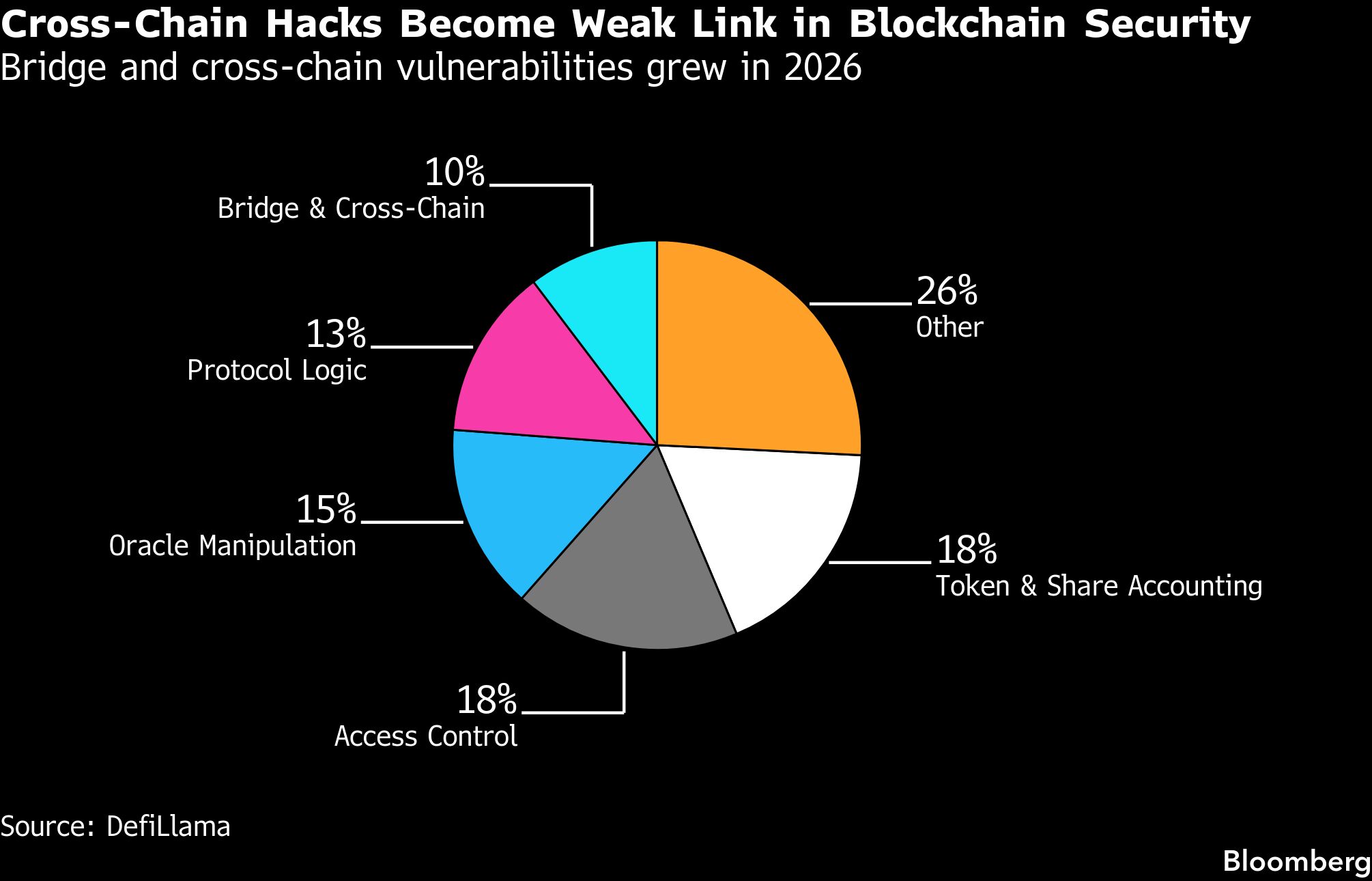
This year, 26 of the assaults, or over 10%, were on bridges and cross-chain infrastructure, connecting tools for users to move tokens or information from one blockchain to another. In 2025, DefiLlama identified only three hacks in this category.
Cross-chain links are a critical component of DeFi, enabling the automation of moving and converting different types of digital assets. But a myriad of cross-chain projects and a limited capacity for cybersecurity vetting has raised risks.
The Liquid Network hack this week is the latest in a spate of breaches targeting decentralized platforms this year, including on Kelp DAO and Drift Protocol that together accounted for $588 million in losses.
Topics in this story
Gathered from external sources. Rights to this text belong to whoever originally published it.