Trump Pushes Crypto Bill, Escalating Industry’s Fight With Banks
Donald Trump welcomed crypto executives to the White House last month with a roll call of flattery: Coinbase Global Inc. Chief Executive Officer Brian Armstr...
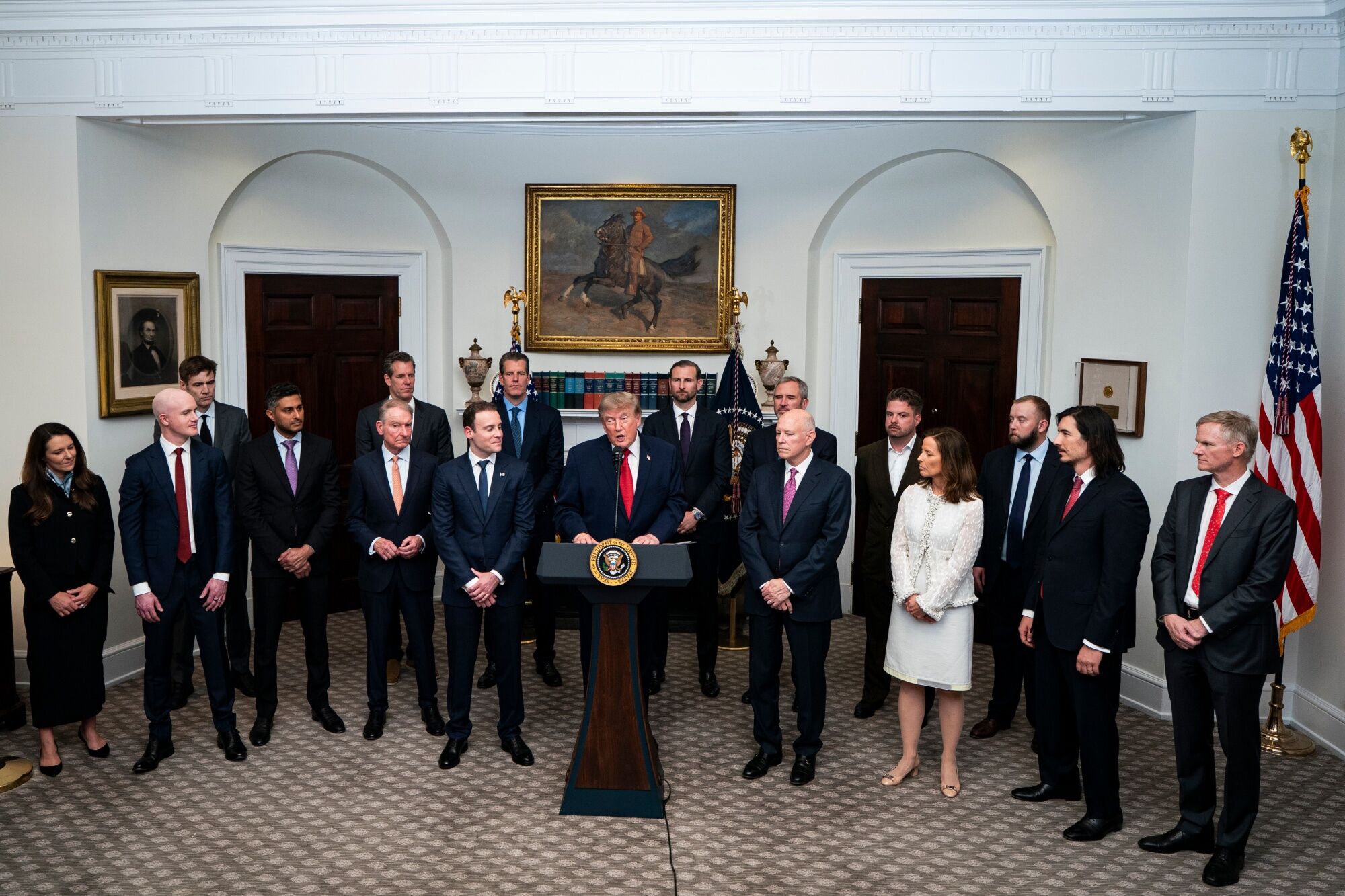
(Bloomberg) -- Donald Trump welcomed crypto executives to the White House last month with a roll call of flattery: Coinbase Global Inc. Chief Executive Officer Brian Armstrong was "one of the greats," the president said, and Gemini Space Station co-founders Cameron and Tyler Winklevoss were "tremendous investors, brilliant people."
It was clear that crypto's top executives had the world's most powerful ally in their corner. But Trump wasn't there just to sing their praises. He was urging Congress to support a landmark bill, the Clarity Act, that could supercharge the virtual-asset industry and further integrate it into the financial mainstream.
"We need Congress to take the next step by passing the Clarity Act, a fair version of the Clarity Act," Trump told the gathering.
Notably absent from the White House event were the nation's banking behemoths and community lenders, who have argued that the bill would let crypto firms continue making interest-like payments on customers' holdings of stablecoins, a type of virtual token tied to a fiat currency. That's a prospect that, according to the banking industry, could mean chunks of its deposits get siphoned away.
Senators have promised to kick off procedural votes later this week. Ahead of that, Republican senators released a final draft of the bill, with changes addressing some of its most contentious points.
The new version would give the Treasury Secretary power to intervene if deposit flight became "detrimental" to community banks. It also added new ethics guard rails for the president and other elected officials holding cryptocurrencies, which had been a sticking point for Democrats. The new ethics rules would force the president to divest from virtual assets or place significant holdings in a blind trust, or else face financial penalties. It also empowered state attorneys general to play a role in enforcing the ethics rules.
It's still far from certain the bill will pass and hand the digital-asset industry its coveted victory. Banking trade groups, which have been caught flat-footed on crypto policy again and again over the past year, earlier managed to help stall a vote that had been threatened before Congress's August recess.
Topics in this story
Gathered from external sources. Rights to this text belong to whoever originally published it.