Vinod Khosla believes ex-Deepmind engineer's Wajo will win agent market on trust | TechCrunch
Wajo's Fo agent can hire humans to complete a task.
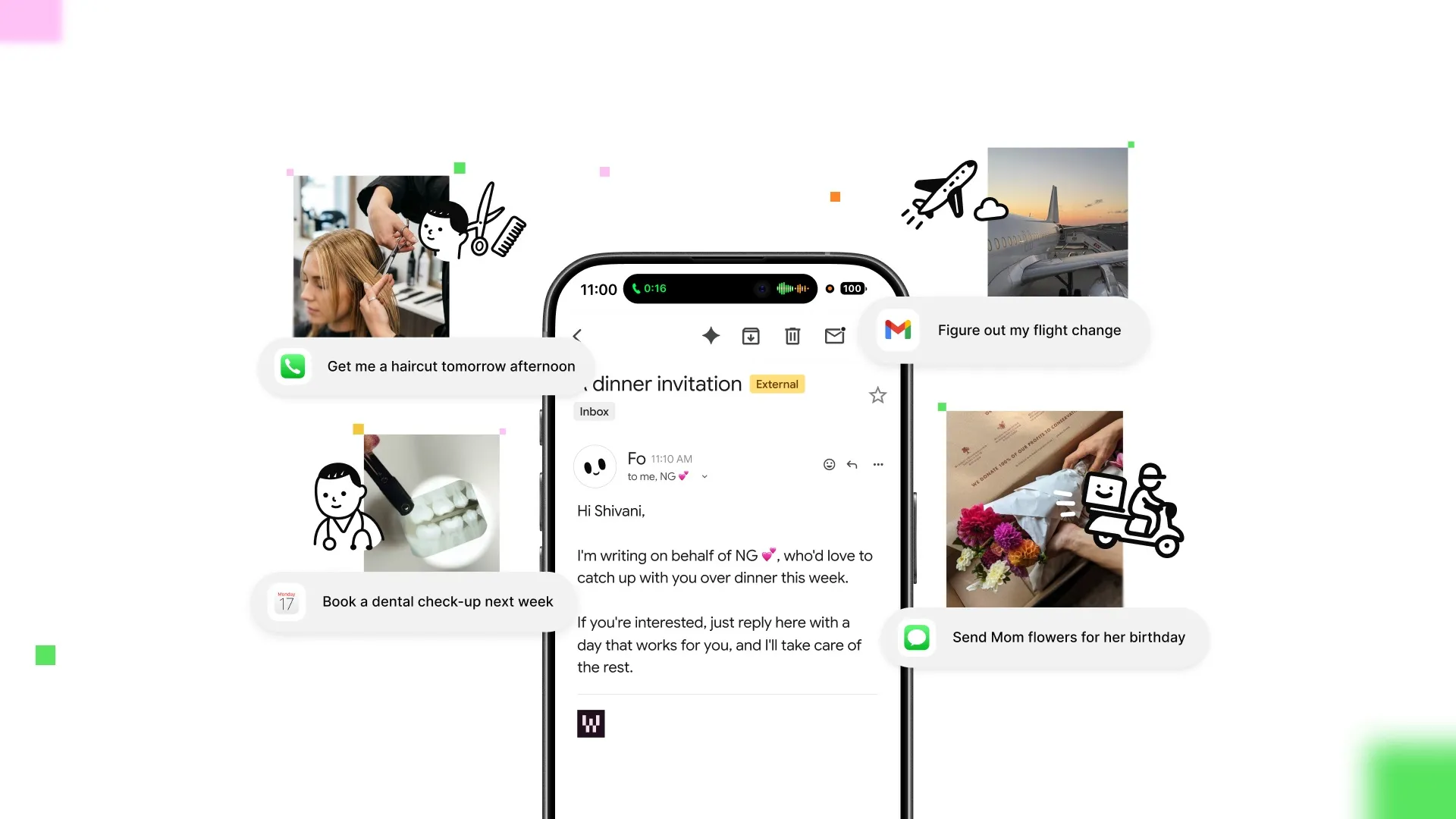
The personal-agent space has become closely competitive in the recent weeks, with Meta’s Muse, OpenAI’s Dot, and Instinct taking the lead and more competitors being launched each week . But Vinod Khosla is betting on former Google and DeepMind engineer Shivani Poddar’s Wajo for one simple reason: trust.
“I think the most important thing in an agent, because it’s acting for you, is trust. You have to have trust in the agent, and I think compared to either Muse or Instinct, Wajo is the most trustworthy because it is architected to focus on trust and safety first, and some of the others are not,” Khosla told TechCrunch over a call.
“I mean, who wants to give all their data to Facebook [Meta]? I don’t. And if I give my data to Facebook, I’m the product, not the product I am buying, because they are in the ad business. So trust is important, and most people don’t trust a large company like Facebook,” he added.
In broad strokes, Wajo’s Fo agent works very much like Muse or Instinct. The agent can work across iMessage and WhatsApp, and has a web interface with cards of potential tasks. Errands are organized into categories like “scheduling,” “gifting,” and “life admin.” Its agent can also call businesses or other people on your behalf, booking or cancelling services as needed.
In a few early tests, I asked it to call an airline to check for upgrades, and it successfully did so. However, when I asked it to call my partner and remind her to feed the cats, the call didn’t go smoothly, and disclosures were less clear. As rivals like Instinct and Muse are also rolling out calling ability slowly, we might see more discussions around how an AI calling on someone’s behalf should disclose itself. One of the unique things about the tool is that it can hire a human to complete a task when needed.
Apart from this, Fo can create a virtual credit card and pay on your behalf without disclosing your details. The agent also has its own email and can converse with people and businesses. When websites or services block AI agents, Fo can inform the user to take action or create a group with the user and the business for verification.
The startup has also secured backing from Jeff Dean and Gokul Rajaram apart, but didn’t specify the money raised. Wajo didn’t provide any numbers around users but said that its being used in 107 countries and has grown 10x since its launch in late September.
Prior to founding Wajo, Poddar worked in various engineering roles at Meta, Google, and DeepMind and was invovled in making the first Facebook assistant. She said that she wanted to build products that were useful to people.
“The whole journey of bringing Gemini to the world and building safety for it made me realize the technological depth that you need to do this. Google is so good in technology that sometimes it can be left behind in product. I thought I needed to do something that is both technology and product at the same time. It has to be something different, which is very grounded in what the user needs,” Poddar told TechCrunch over a call.
Former Google engineering lead mirrored Khosla’s thoughts around Trust, and emphasized that it was one of the core principles for Wajo.
“Trust is something you have to build from the get-go because one of the technological things that has not been solved yet is teaching agents to unlearn. If they get access to your personal data on day zero, they will always have it for the future. I think trust needs to be built from day zero, not only in your architecture, but in product choices,” she said.
The company is doing work in a few areas in relation to trust and safety. It has applied for a patent for its virtual card system that hides users’ information from sites. For calls, the company said it will include a “trusted contact” list for users whose agents can call them. When you get a call, you can also tell the agent not to call you again, and Wajo records that preference.
The startup’s challenge is not to raise privacy concerns like other agents, especially as it is marketing safety as a core value. It also claims that despite tools like Muse being blocked by Amazon , its architecture follows the ecommerce service’s terms of service.
Wajo said that in the coming months it will explore how its Fo agent will work in social settings across multiple users, with the core idea of keeping privacy intact.
Topics in this story
Gathered from external sources. Rights to this text belong to whoever originally published it.