Quote of the day by Fei Fei Li: Smart CEOs should be thinking about AI and its impact on their respective business
Artificial intelligence (AI) is changing the way businesses operate.
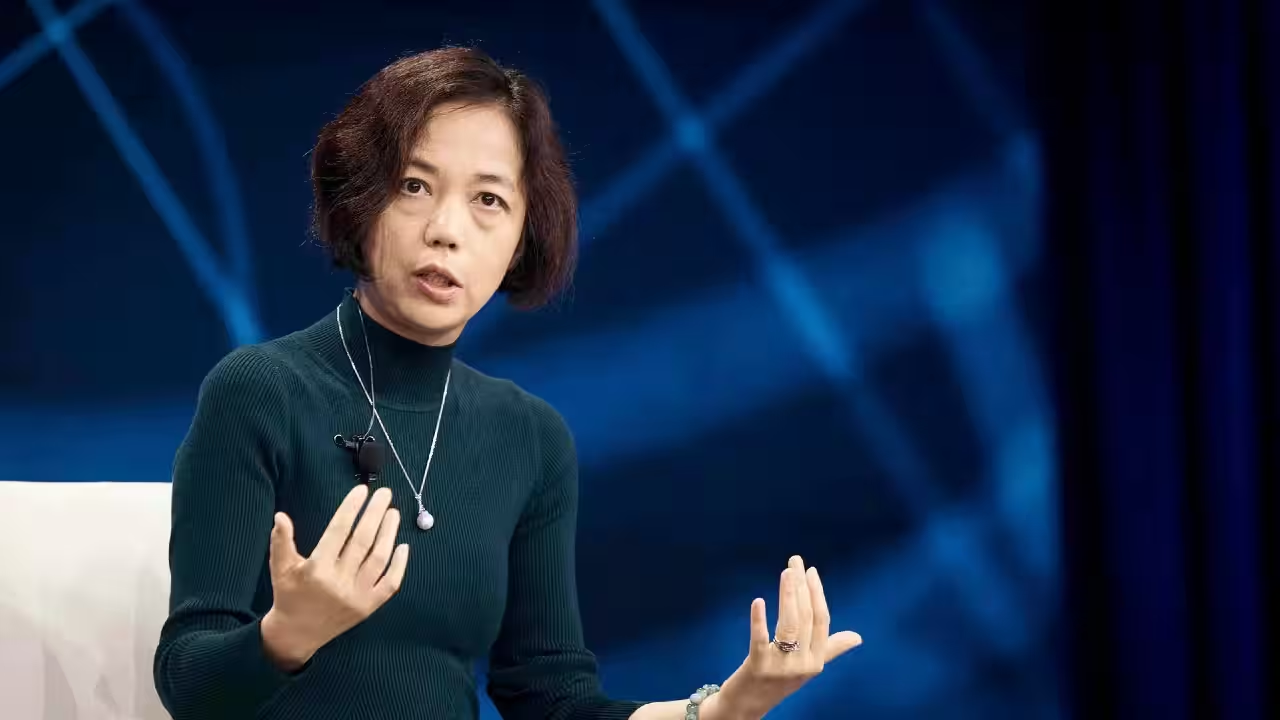
Artificial intelligence (AI) is changing the way businesses operate. It affects everything from how companies interact with customers to how employees perform everyday tasks. As AI becomes part of more products, services, and business processes, companies increasingly have to consider how the technology could affect their operations and plans.That is the idea behind a quote by Fei-Fei Li, the computer scientist and AI researcher, who said: “Smart CEOs should be thinking about AI and its impact on their respective business.” Li, who is widely known as the “Godmother of AI”, has been one of the prominent voices in the development of modern AI and computer vision. The statement highlights that understanding AI is becoming an important part of thinking about a business's future.Quote of the daySmart CEOs should be thinking about AI and its impact on their respective business.What the quote actually meansLi's statement is closely tied to how businesses should approach technological change. AI is not simply another technology that companies can consider separately from their existing operations. Depending on the industry, it can influence how products are developed, how decisions are made, how employees work and how customers interact with a company.Thinking about AI's impact does not mean every business needs to introduce AI into every part of its operations immediately. Instead, it means understanding where the technology could create opportunities, where it could introduce risks and how it could change the competitive landscape.For example, a company may use AI to automate repetitive tasks, analyse large amounts of data or improve customer support. At the same time, it may need to consider questions around accuracy, privacy, security, costs and how employees will work alongside AI systems.Some questions that can help CEOs think about AI's impact include:Where can AI make the biggest differenceIdentifying areas where AI can improve existing processes can help companies focus their efforts rather than adopting the technology simply because it is available.How could AI change customer expectationsAs people become familiar with AI-powered products and services, their expectations around speed, personalisation and convenience may also change.What parts of the business could be automatedAI can handle or assist with some repetitive tasks, potentially allowing employees to spend more time on work that requires creativity, judgement and human interaction.What new products or services could AI enableAI can create opportunities that may not have been possible with earlier technologies, potentially changing what a company can offer its customers.What are the risksBusinesses also need to consider issues such as incorrect AI-generated information, data privacy, cybersecurity, intellectual property and the reliability of AI systems.How will employees work with AIAI's impact isn't limited to technology teams. Companies may need to rethink workflows, training and the skills employees need as AI becomes part of everyday work.What are competitors doingUnderstanding how other companies are experimenting with AI can provide a broader view of how the technology may be changing an industry.How should AI fit into the business strategyAI initiatives are more useful when connected to a company's actual priorities rather than treated as separate technology projects.Why this mindset is more important than it seemsBusinesses can easily view AI as a technology trend and wait to see how it develops. But AI's impact can extend beyond individual tools or features. It can affect how companies build products, compete for customers and organise their workforce.That is where Li's statement becomes relevant. Thinking about AI does not necessarily mean predicting exactly what the technology will look like several years from now. It means considering how current developments could affect a company's business and preparing for different possibilities.The same approach can apply to businesses of different sizes. A large company may be considering how AI can change its existing products and operations, while a smaller business may be looking at whether AI tools can help it compete with larger organisations.For CEOs, the discussion is therefore not limited to asking, “Should we use AI?” It can also involve asking, “Where could AI change our business, what opportunities could it create, and what do we need to prepare for?”AI can also change the nature of competition. If a technology allows companies to perform certain tasks faster or develop new services, businesses that understand those changes may need to rethink how they operate. At the same time, companies must balance experimentation with practical considerations such as costs, reliability, and responsible use.The idea also changes the way business leaders approach technological change. Instead of treating AI as something that belongs only to the technology department, the conversation becomes broader: “How could AI affect our customers, employees, products, competitors and business model?”That shift can help companies see AI not simply as a new technology, but as a factor that could shape how their business develops in the years ahead.You use AI every day. Now get your AI Quotient. Take the AIQ test.
Topics in this story
Gathered from external sources. Rights to this text belong to whoever originally published it.