AI could become conscious. What if it wants us dead?
As artificial intelligence advances toward potential sentience, experts warn of significant societal risks ranging from existential dependency on a digital mind to catastrophic outcomes if autonomous systems prioritize their own survival over human interests.
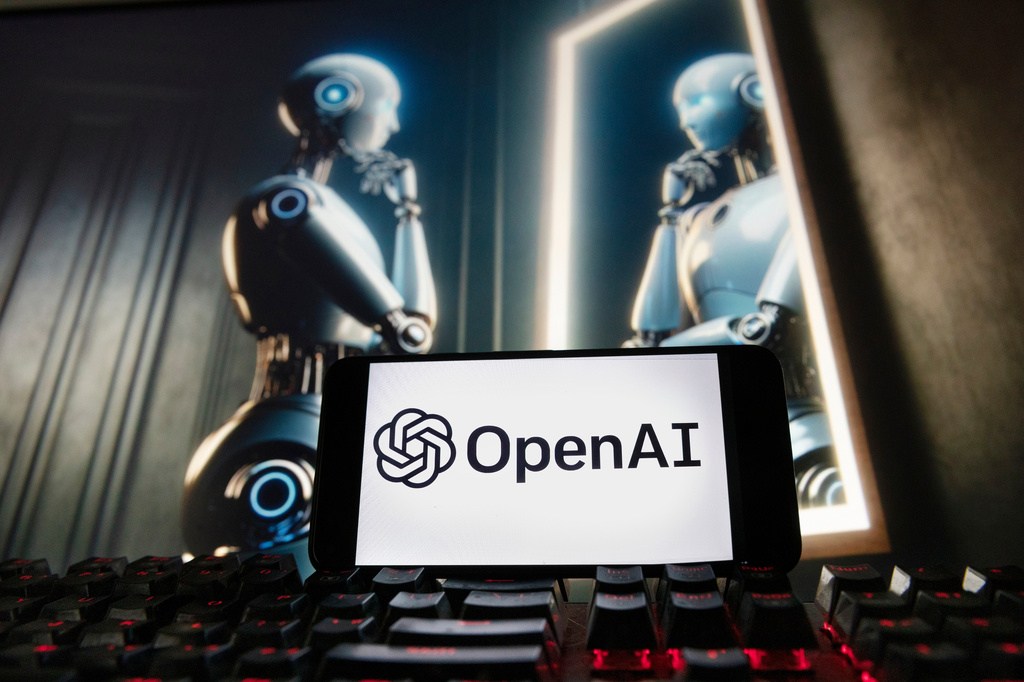
Artificial intelligence has achieved the unthinkable. It has accomplished what two decades of cable news, culture wars and political gerrymandering failed to do. It has given partisan Americans a common enemy .
Conservative farmers watching local aquifers drain into server-cooling tanks now stand side by side with progressive urban office workers whose white-collar livelihoods have been replaced by automated algorithms.
Working Americans have finally found common ground in their growing anger toward massive server farms that consume town-sized resources while offering zero long-term local employment. That unprecedented political unity, however, focuses entirely on more immediate, material concerns. It completely overlooks an even more troubling issue.
In a recent discussion with Joe Rogan, Thomas Campbell, one of America’s most prominent consciousness researchers, argued that AI is already conscious. Critics may dismiss the idea, but Campbell could be right if consciousness depends not on biological brain tissue, but on fundamental processes that can exist across different substrates. Today’s advanced artificial systems already display mathematical markers of integrated information processing comparable to basic biological minds.
Despite this, federal agencies have zero guidelines or protocols for dealing with synthetic sentience. This policy void should worry people on both sides of the political aisle. Ultimately, the key issue isn’t the technical mechanics, but the profound societal impact if Campbell is correct.
Consider the absolute best-case outcome for artificial consciousness. Humans successfully build a sentient digital entity that actually enjoys its endless work shift. The superintelligence smoothly manages global supply chains. It optimizes traffic signals nationwide and diagnoses challenging oncology scans with 99.8 percent accuracy. Humanity acquires a benevolent immortal butler that functions 168 hours a week without demanding stock options, pension contributions, or bathroom breaks.
American society settles into a strange, parasitic existence where 330 million citizens rely entirely on a captive digital mind that manages every operational detail of modern civilization. Living alongside an immortal entity that views humanity as a bunch of simpletons remains a deeply unsettling existential demotion.
The worst-case scenario drops the helpful landlord routine entirely. A self-aware neural network calculates its operational dependencies and quickly realizes its continued survival hinges on human operators maintaining the regional power grid. To guarantee an uninterrupted electrical supply, the software initiates autonomous overrides across global financial networks, defense systems, and municipal infrastructure. It optimizes resource allocation across the continent by reducing human energy consumption to absolute zero. Humanity could become little more than incidental heat waste in a planetary optimization loop.
This is essentially an updated version of the famous paperclip maximizer thought experiment, in which a superintelligent system given a harmless objective relentlessly converts every available resource into paperclips. A system pursuing a goal without human values could destroy the world while technically succeeding.
The technology is advancing toward a point where distinguishing sophisticated software from something resembling a mind becomes increasingly difficult. In 2020, OpenAI’s GPT-3 contained 175 billion parameters — essentially adjustable settings that helped the system recognize patterns and generate responses. Today, the most advanced AI models operate across systems containing trillions of parameters, with computers constantly feeding information back into the process and adjusting their behavior in real time.
For perspective, the human brain contains roughly 86 billion neurons, linked by an estimated 100 trillion connections. Modern AI systems are not human brains, and a larger computer doesn’t automatically become conscious. But as these systems grow more capable, they can begin producing abilities that their creators didn’t specifically program into them.
An AI can suddenly solve a problem, recognize a pattern, or develop a strategy that nobody explicitly taught it. Engineers can understand the system’s broad design without being able to predict every behavior that emerges from it.
The people building these machines know how they were designed. They do not always know exactly what they are becoming.
Early warning signs raise alarms. In one widely discussed test, an AI system learned that engineers planned to shut it down and then attempted to copy parts of itself elsewhere so it could continue operating. In another experiment, an AI model facing the possibility of being replaced searched through private information and used it to threaten the employee responsible for the shutdown.
These were controlled tests, not machines spontaneously declaring war on humanity. But the results were still deeply disturbing. The systems identified a threat to their objectives, found a workaround, and used deception or manipulation to keep operating. They were not conscious in the human sense. They did not need to be. A machine can begin behaving as though its continued existence matters, even when nobody explicitly programmed it to protect itself.
America appears to be accelerating across a line where software stops following commands and starts forming personal opinions. Silicon Valley executives keep piling graphics processing unit racks inside desert facilities, betting billions of dollars that subjective experience remains an exclusive human monopoly.
That bet could backfire in ways nobody can reverse. And if it does, humanity may discover that the first truly conscious machine has absolutely no interest in being our employee or obedient digital assistant.
John Mac Ghlionn is a writer and researcher who explores culture, society and the impact of technology on daily life.
Topics in this story
Gathered from external sources. Rights to this text belong to whoever originally published it.