Google wants its AI assistant CC to replace your morning scroll
Google’s AI agent CC is similar to OpenAI’s ChatGPT Pulse, delivering a personalized morning briefing based on your Gmail, Google Calendar, and Google Drive.
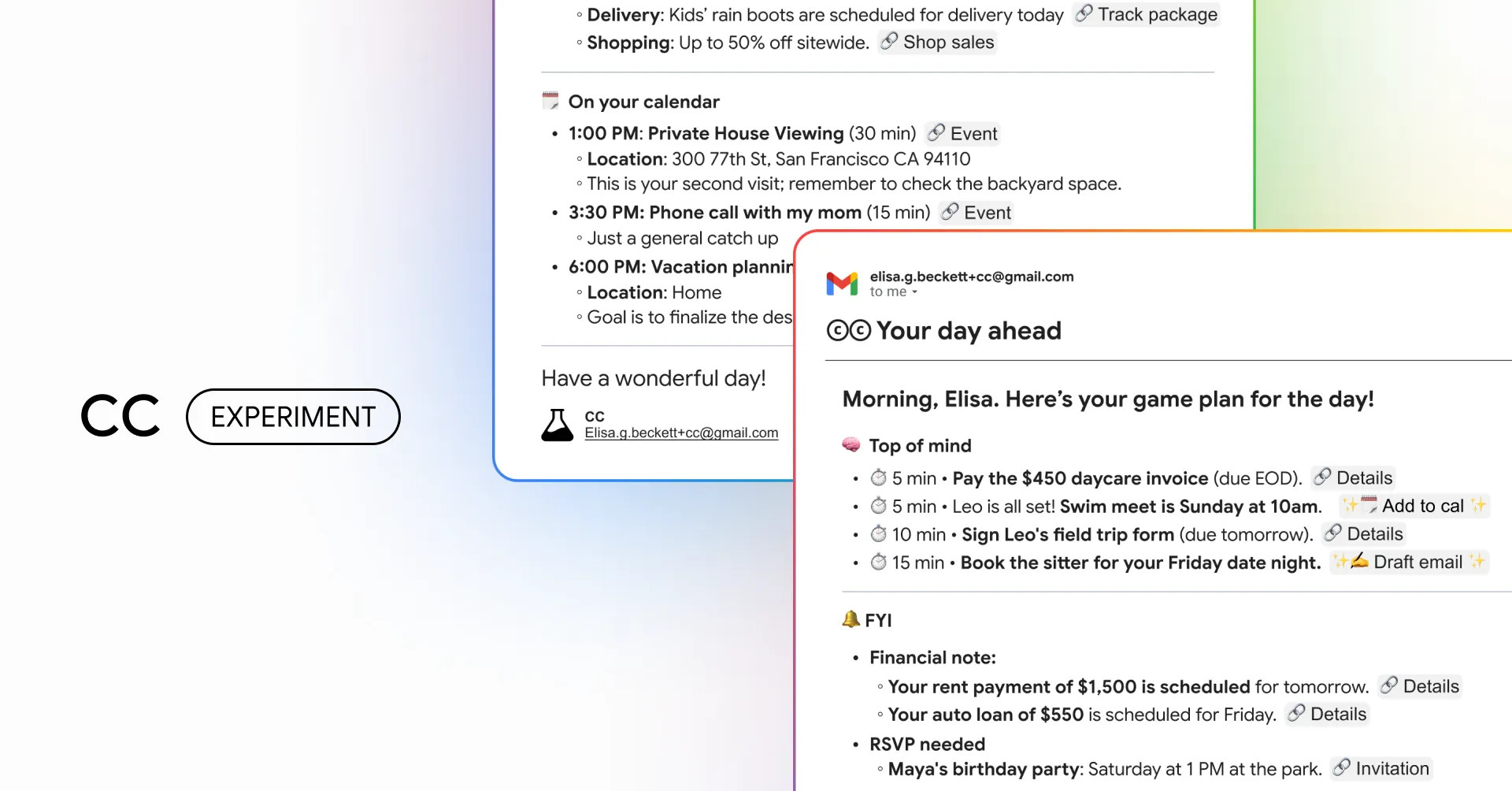
Google wants you to start your day with AI. Google’s AI, to be specific, which is why the company is launching an experimental agent to comb through your emails, calendar, and documents to deliver a briefing to your inbox every morning. The new feature, called CC, delivers a daily “Your Day Ahead” briefing to your inbox each morning. The personalized briefing — which Google describes as “one clear summary” — outlines your schedule for the day ahead, along with any key tasks or updates you should be aware of, like bills you need to pay or appointments to prepare for. CC can also prepare email drafts and calendar links for when you want to act quickly and get a head start to the day. [Media: CC is initially launching in early access to paid subscribers over 18 in the US and Canada. Google says it’s opening a waitlist for CC today, which you can sign up for here. The company did not indicate how long the waitlist would last, or when it will expand access. The agent is built with Google’s Gemini AI model and learns about you by connecting with your Gmail, Google Calendar, and Google Drive, as well as the internet. You can personalize the tool by teaching it more about yourself, and give it things to remember by replying to its briefs or emailing it directly, Google says. CC, which joins other Google agents for things like coding, shopping, and web browsing in Chrome, is remarkably similar to ChatGPT Pulse, a personalized briefing tool OpenAI launched back in September. CEO Sam Altman described Pulse as his “favorite feature we’ve launched in a long time.”
Gathered from external sources. Rights to this text belong to whoever originally published it.