AI could cause global economic downturn, Andrew Bailey warns G20
The governor of the Bank of England warned of AI's “volatility” caused by energy shocks from the US-Iran war.
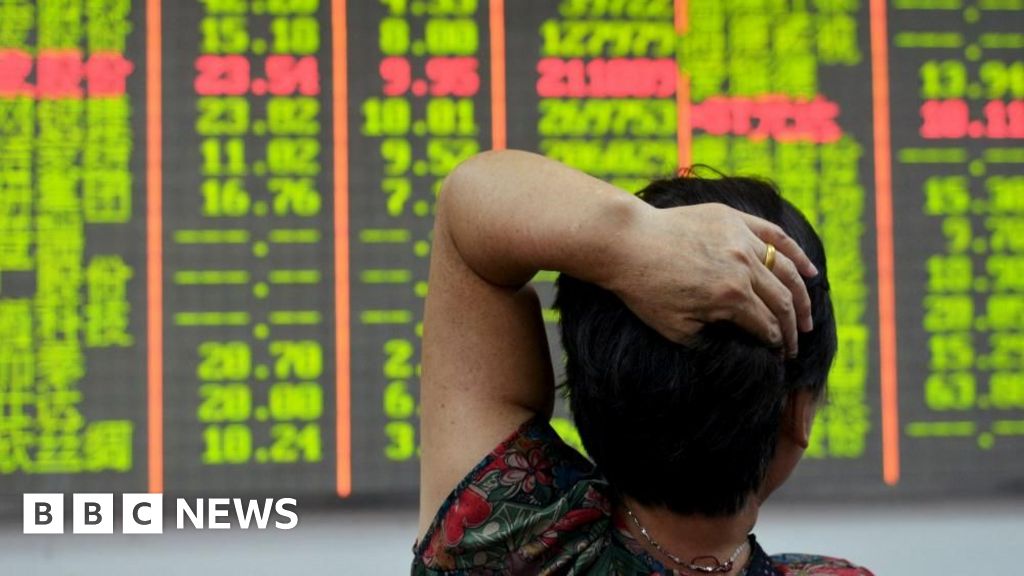
The governor of the Bank of England has warned G20 finance ministers that artificial intelligence could cause a global economic downturn and pose a significant cyber security risk to financial systems.
Andrew Bailey said any collapse of growth in the AI sector could lead to a "future market correction" that spreads worldwide.
In an open letter to finance ministers in the US on Monday, he said companies around the world should prepare for security breaches "involving simultaneous disruption across multiple firms".
Earlier this month, a group of 100 firms , including Google, Microsoft, Anthropic and OpenAI, urged countries and groups to beef up their cyber defences before AI grows powerful enough to override them.
Bailey told the G20 finance ministers that a combination of highly priced stock markets, increased borrowing by investors, and the growing concentration of money into a small number of major technology companies could amplify any future market correction.
"The issue is not simply that investors are borrowing more, but that leverage is interacting with high valuations and market concentration, in particular the increasing cross-investment between artificial intelligence (AI) companies and hyper scalers, in a way that could amplify a future market correction," he said.
Bailey has called on those in charge of financial security to develop "appropriate steps to support safe and responsible model release and deployment on a global basis".
Bailey, who was writing in his capacity as chairman of the Financial Stability Board international watchdog (FSB), expressed concern about the "volatility" prompted by the effect of energy supply shocks caused by the US-Iran war.
His warning comes several months after UK Chancellor John Healey announced a £100m fund aimed at backing British AI start-ups .
That is part of the government's efforts to grow the country's "sovereign AI" capacity, developing homegrown AI technology to ensure the UK is not dependent on services from abroad.
Ministers want to see companies compete for the funding to help tackle challenges like cutting waiting lists in the NHS and bolstering cybersecurity and defence.
A UK government spokesperson said its' new AI economics institute was working with international partners to build "a stronger shared understanding of how AI is transforming economies around the world."
"The institute is the first government-backed body of its kind focused on AI's economic impact, helping policymakers understand what AI means for growth, productivity, jobs and public services as the technology develops at pace," the spokesperson said.
But there is growing concern that AI companies are increasingly developing models that can easily override the safeguarding systems of banks and financial centres.
This summer has seen OpenAI, Anthropic and Meta all reveal their AI tools doing things they should not, with some AI agents going so far as to impersonate real people in order to get past security hurdles.
The FSB which Bailey leads is a global watchdog which monitors finance ministry officials, banks and securities regulators. It includes officials from the US, UK, France, Germany, Canada, Japan, Australia, China and Saudi Arabia.
Time is running out for cyber security, warn top tech firms
Anthropic AI used fake profiles to target people in hack then hid the evidence
Unexpected chat between OpenAI agents led to Hugging Face hack
Topics in this story
Gathered from external sources. Rights to this text belong to whoever originally published it.