How Meta took the lead in the race for the post-smartphone world
A head start in smart glasses, a powerful Ray-Ban partnership, and a fashion-first strategy have put Meta ahead—despite persistent privacy concerns.
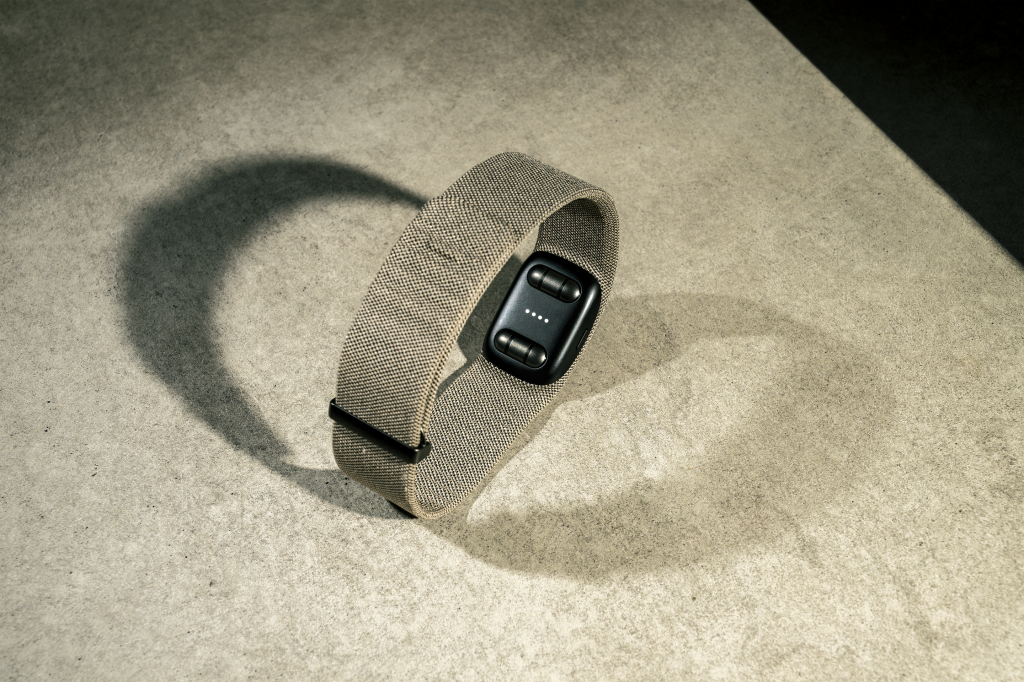
There are moments when you experience emerging tech for the first time, and it feels genuinely different. That's the case the first time you put on a pair of Meta's most advanced smart glasses on the market, which project a high-resolution digital box inside the right lens and allow you—with the help of a smart wristband—to control objects on the screen by moving your fingers. Tap your pointer finger and thumb together, and an app opens. Say, "Hey, Meta ," and you're suddenly chatting with an AI bot.
This, as Meta sees it, is how most of us will eventually use AI. The company recently took Fortune inside a private demo room at its Menlo Park, Calif., headquarters to show off its growing family of smart glasses. The collection included the flagship Ray-Ban Wayfarer camera-enabled glasses, with an updated nine-hour battery life; the Ray-Bans with the lens display and "neural" wristband ; new audio-only smart glasses that ditch the built-in camera; new styles including Aviator frames; and prototypes like the Orion augmented reality glasses.
Few companies have managed to crack the code for AI-enabled wearables—and specifically glasses—as Meta has. A strategic partnership with Ray-Ban parent EssilorLuxottica has played a major part, and despite widespread privacy concerns, Meta's glasses are the most popular on the market.
It's a relatively small market, but one the tech industry is taking very seriously. Silicon Valley's elite companies are racing to create hardware in new, AI-friendly "form factors," betting that there are better ways for consumers to interact with AI—whether that's through smart glasses or some yet-to-be-invented gadget. Leading AI labs such as OpenAI and, reportedly, Elon Musk's SpaceX, are hard at work developing new devices. Musk disputes the report. Numerous smaller startups and industry giants like Apple are also working on new hardware .
At a time when the race to build the best frontier models is center stage, the competition to establish the next hardware platform is shaping up to be just as important. At stake is control over how billions of people access AI, regardless of whose bots are the smartest.
Meta is a case in point. Its AI models generally lag those of rivals like OpenAI and Anthropic. But Meta stands above all in AI-enabled glasses , having grown its sales of smart glasses threefold last year; EssilorLuxottica says it sold 7 million pairs of AI-enabled glasses in 2025.
Alex Himel, Meta's vice president of wearables, credits the company's early bet on the category and its decision to prioritize fashion. Customers use the smart features on the glasses only about 10% of the time, he said, so it's critical that people crave the glasses for their look and weight. EssilorLuxottica held Meta to 50 grams or below for most glasses.
Topics in this story
Gathered from external sources. Rights to this text belong to whoever originally published it.