Can Apple Home’s AI camera features outsmart Amazon’s and Google’s? I put them to the test
I tried the newest AI-powered smart home features from Nest, Ring, and HomeKit. Here’s how they compare and where this technology is headed next.
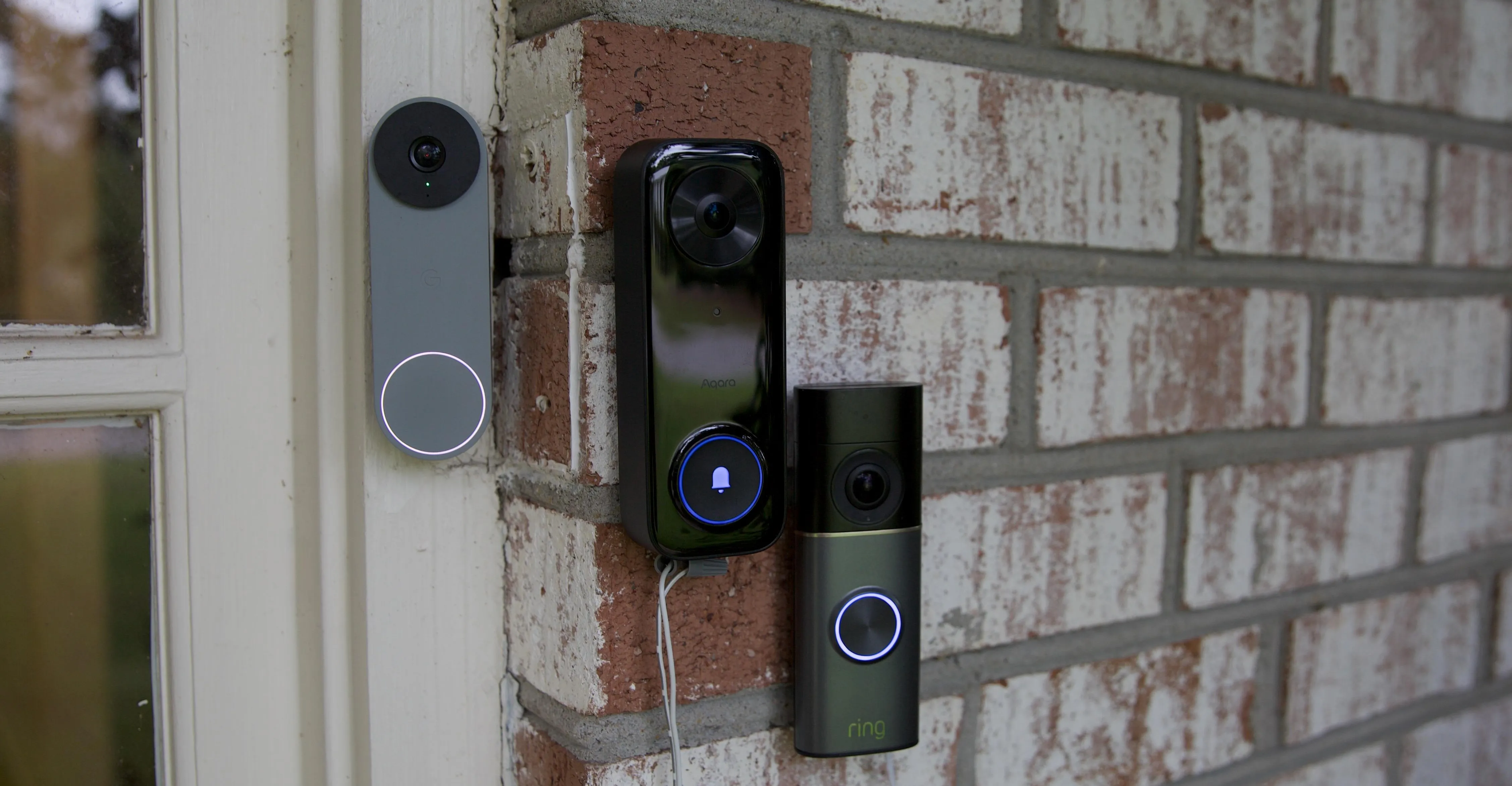
A few years back, I was at a beachside Easter egg hunt, watching my kids dash through sand dunes searching for sweet treats. My phone buzzed in my pocket; I ignored it. A moment later, it buzzed again. I pulled it out, glanced down, and saw a “motion detected” notification from my security camera. “Just my dog in the yard,” I thought, dismissing it. As the colorful eggs piled up in the baskets, my phone kept buzzing. Reluctantly, I pulled it out again and saw several more “motion detected” alerts. I tried to load a video clip, but it just buffered endlessly. When I returned home, I found my four pet chickens dead, killed by my small border terrier. Looking back over the camera footage, I saw that they had pushed open their coop door, which I, in a rush to get to the Easter festivities, hadn’t properly secured. If instead of “motion detected,” that first notification had read “small dog chasing a chicken,” I would have raced back home and maybe saved them. Today, that type of notification is possible. With AI-generated text descriptions, a short message describing what the camera saw can arrive almost instantly, well before a video feed loads, painting the whole scene in a sentence. Most major security camera companies now offer text descriptions, which combine traditional motion triggers with Vision Language Models, including Ring, Google Nest, Blink, Wyze, and Arlo. This month, with iOS 27, Apple finally brought the capability to its HomeKit Secure Video service with the launch of Apple Intelligence for Home. The surprise is that Apple is charging up to three times as much as its competition for the feature. Is it worth it? And are security cameras getting better at telling us about what actually matters? [Image: You’d think no one can get past my door without me knowing about it. I’ve been testing Apple Intelligence for Home since it launched in beta this summer, alongside Amazon Ring’s and Google Nest’s AI camera features introduced last year. I installed several cameras for each, but for this piece, I focused mainly on video doorbells — which I set up when iOS 27 officially arrived on September 14th. I tested a Ring Wired Doorbell Pro ($249.99), Google Nest Doorbell 2K ($199.99), and for Apple, the HomeKit Secure Video-compatible Aqara Doorbell Camera G400 ($99). I focused on how quickly each service sent the AI-powered notifications, how accurate and useful the descriptions were at telling me what happened, and how reliably it captured and notified me about activity. I also tested other AI-powered features each platform offers, including Apple’s ability to search and stitch together activity across multiple cameras, Ring’s Unusual Event that distinguished normal activity from out-of-the-ordinary events, and Google’s ability to trigger automations based on what a camera sees. The AI features on all three platforms are a significant improvement over their basic smart alerts. It’s now easier to understand what’s happening at a glance and decide whether to react, and security cameras feel more useful and less annoying overall. Ultimately, the real value of AI in cameras isn’t in describing what they see, but in using that knowledge to figure out what you actually need to know, and eventually what your home should do about it. What Apple Intelligence provides, at what price --- How to use Apple Intelligence for Home You need an iCloud Plus plan, a HomeKit Secure Video-compatible camera, an Apple Home Hub running HomePod/tvOS 27, and an AI-capable iPhone running iOS 27. Three iCloud Plus tiers support Apple Intelligence on one or more cameras: * 2TB plan: $9.99 a month (or Apple One / $39.95 a month) for one camera * 6TB plan: $29.99 a month for two cameras * 12TB plan: $59.99 a month for up to five cameras * No tier supports more than five cameras. Note: standard HomeKit Secure Video recording also requires an iCloud Plus plan, starting at $0.99 for one camera (50GB plan), $2.99 for five (200GB), and $9.99 for unlimited (2TB). All tiers that include Apple Intelligence support basic HKSV features on unlimited cameras. Apple Intelligence is on by default for Reduce Notifications and off by default for Summarize Videos. To adjust, go to Settings in the Home app, scroll down to Apple Intelligence, toggle on Summarize Video, and select participating cameras. --- With Apple Intelligence, a compatible camera connected to Apple’s HomeKit Secure Video service can send you text descriptions through the Apple Home app: “A dog sat on the floor,” “a cat played in the room,” “someone delivered a package.” It also enables natural-language video search, surfaces “noteworthy” events, stitches relevant clips together, and adds a reduce notifications feature that combines related events into a single alert that updates. This is in addition to the existing smart alerts, facial recognition, and 10 days of video storage available with HomeKit Secure Video. Pricing is where it gets tricky. Apple Intelligence for Home is bundled into iCloud Plus: $10 a month covers one camera, $30 covers two, and $60 up to five (see sidebar). No tier supports more than five cameras. By comparison, Google Home’s Nest cameras offer Gemini-powered text descriptions, video search, facial recognition, and a daily Home Brief digest — which summarizes the day’s activity in a short paragraph (sometimes with a fictional slant) — for $20 a month, covering unlimited cameras and 24/7 recording on wired models. Amazon’s Ring also charges $20 a month for its AI text descriptions, video search, facial recognition, unusual events alerts, and clip recording on unlimited cameras, with 24/7 costing an extra $3 per camera on wired models. Ring has its own reduced notification option that rolls similar events from the same camera into one notification, such as “Brian is mowing the lawn.” Apple says the least Text descriptions are a game changer for security cameras. For me, getting an alert that says “A FedEx delivery person is walking on the lawn” rather than “person detected at front door” is the difference between getting up and going downstairs or carrying on working. But quality and accuracy vary wildly, even within a single provider. Sometimes I get useful details, other times a few words that tell me almost nothing. Then there were the times when the descriptions were detailed, but laughably wrong: “A tennis serve simulator is rolling on the walkway,” “A gray hoverboard is driving on the pathway” — both misidentifications of a robot lawn mower. [Image: [Image: [Image: In my testing, text alerts from Google and Ring provided the most context and specificity, and Apple often didn’t try, saying “someone” rather than providing any detail. For example, it would say “someone is walking in the yard,” whereas Ring and Google provided more context: a delivery person is walking in the yard, a person in uniform, someone carrying a bag, and so on. Apple was also the briefest. For example, when my cat was on the front porch, Apple said, “A cat sat on the porch.” Ring went with “A cat is standing on the pathway outside the porch.” Google Home told me which cat: “A black and white cat walks across the porch.” All three identified delivery trucks, correctly flagging UPS and FedEx vehicles driving past, as well as delivery people approaching the door. Apple was the only one to ID the USPS van pulling up to my mailbox, although not consistently. Google was the most descriptive with vehicles — “a light-colored car drives by on the street” or “a white van,” “a dark-colored SUV” — Apple and Ring mostly said “a vehicle drove by,” sometimes with a type (van, car, truck). [Image: [Image: Apple’s descriptions were the hardest to digest at a glance, particularly the combined ones through reduce notifications. For example, “Someone seen. Someone carried a box” is clunky. Ring and Google merge the events more fluidly into “a person carried a box up the driveway.” In fairness, Apple Intelligence in Home only officially launched this month, so I expect this to improve, but as things stand, Ring’s and Google’s are more useful and cost less. Finicky facial recognition and alerts For a doorbell camera, the real advantage of AI descriptions is knowing who’s there right away. All three offer facial recognition alongside the ability to spot a UPS driver or similar. Ring was the most consistently accurate, identifying me every time I approached the door. Apple hedged its bets, sometimes identifying me, sometimes saying “Someone who may be Jennifer Pattison Tuohy,” and other times just “Someone.” Google got it right about half the time; the other half it thought I was my daughter’s best mate (a change from the UPS driver it pegged me as for most of last year). [Image: [Image: Text descriptions are more useful if they show up, and quickly. But on the doorbell camera I was testing, Apple’s often didn’t. Apple Home reliably alerted me when someone pressed the doorbell, and it recorded every event, but notifications about other motion events were inconsistent. A potential issue here is that, unlike its competition, Apple doesn’t control the whole experience. HomeKit Secure Video only works with third-party hardware — there are no Apple cameras yet. I was using the G400, Aqara’s latest wired doorbell camera. When I first set it up, alerts arrived in Apple Home with no issues, but at some point they stopped, and no amount of troubleshooting brought them back. However, alerts kept coming through in the Aqara app. I also still got doorbell ring alerts in the Home app, and notifications from other Aqara cameras continued to work. The Google Nest doorbell captured everything and was consistently first to notify me of an event. Ring was also fast and mostly reliable; its notifications showed up just after Google’s, though I’d occasionally get “This video is unavailable” when trying to play back footage. Reliability is Apple’s biggest fix, plus some innovation The good news is that recording in HomeKit Secure Video has improved significantly with iOS 27. Apple said it completely rearchitected the system, which addresses a long-standing problem with missing clips. I’ve noticed that cameras load faster, are more stable, and no longer miss recordings. An Eve outdoor camera that was almost always offline has been stable since the upgrade, and the Aqara Camera Hub G5 outdoor camera and G350 indoor camera have also been solid. The G400 doorbell camera has been the only problem child, with missing notifications, but it records consistently. [Video: Apple Intelligence in Home testing] All the other HomeKit cameras I tested reliably sent alerts; only the Aqara doorbell camera had the issue, but even when I didn’t get alerts, I could use video search to find events. Typing “When did the USPS truck come” in the Apple Home app pulled up every instance the Aqara doorbell spotted the mail delivery. In comparison, while the Nest Cam didn’t identify the USPS truck as often, its video search results contained more specifics, including an event where the mail person dropped off an Amazon package. Of the three, Google’s video search was the most useful, followed by Ring’s, then Apple’s, which directly correlates with the amount of detail each provides in the text descriptions. Apple has two features Ring and Google don’t offer. The first is clip stitching, where Apple Intelligence identifies someone or something on one camera, recognizes it again on another, understands these are related, and plays the sequence as a single video in the Home app. I haven’t found a real use for this so far, but it’s been fun for tracking my dog around the house when I’m out. The second feature is bringing events that Apple judges important to the top of the search box. In the last two weeks, it’s only highlighted the trash pickup ━ I guess my life just isn’t that noteworthy. Here’s where Ring wins One of the biggest problems with security cameras is filtering out the important info from the sheer volume of everything they see. Even with AI notifications turned on, I still get a stream of alerts from Apple Home and Google Home. Some are more useful than they used to be, but overload is still an issue. [Image: [Image: While Apple’s noteworthy events feature shows promise, Ring’s Unusual Event feature is the best solution I’ve seen. It learns what normal traffic looks like for each camera, then notifies you only when something isn’t normal. This summer, I cut my Ring notifications down from around 40 a day to just two or three. Instead of getting an alert every time my cat is on my porch, I only get one when a raccoon or possum walks by. It doesn’t send alerts when my son comes home from school, but it does when he comes home at 2AM. The camera by my chicken coop no longer sends a series of notifications when someone is feeding them or collecting eggs — but it does alert me when I am out there at midnight with a flashlight to wrestle a snake. What’s next: cameras that can act [Image: The cats were a big fan of Google Home’s inability to tell them apart, as it meant more kibble. (This is not Smokey). The natural progression here is automations triggered by the camera understanding what it sees. Turn on the sprinklers if there’s a raccoon in the backyard, but not if it’s just my dog. A cat at the back door broadcasts an alert through my smart speakers so someone can let them in. The trash truck rolling past without stopping sends an urgent notification to put the bins out before it comes back the other way. This is where cameras move beyond being simply security devices to become intelligent smart-home sensors that can understand what’s happening and potentially act on it. Google Home recently added the ability to trigger automations from camera alerts, although in my early testing, it’s not reliable enough. I tried it with my three cats and a pet feeder using Google’s new Pet Memory feature. But instead of only dispensing food for one specific cat as I asked, it triggered every time it saw a cat. At least the cats were happy. The problem is accuracy. When AI can’t reliably identify the subject, the automations can’t respond reliably. So, my earlier example of Apple accurately recognizing the USPS van half the time would mean any automation I set up to alert me the mail is here would only work half the time. Today, Apple doesn’t have this capability, but if the rumors that the company is developing its own video doorbell and security camera are true, I would expect to see a feature like this come to Apple Home. The privacy tradeoff The smarter cameras become, the more they need to know about your home. For a system to understand what’s normal, it needs to learn who lives there, when they come and go, which pets are around, and which vehicles belong. This raises very real concerns around privacy and surveillance. Ring has faced particular scrutiny over its cloud-based architecture and partnerships with law enforcement. Where Google and Apple can start with local processing, Ring processes all footage in the cloud by default. Last month, Ring announced an overhaul to that model, introducing a new default encryption system called TAKE. This rotates encryption keys for cloud-stored video and deletes Ring’s copy after 24 hours. Among other privacy protections, including no admin access, Ring says this means it can no longer hand over decrypted footage to the police. However, it can still be compelled to provide encrypted files. With Apple’s standard HomeKit Secure Video, your home hub processes footage locally and encrypts it end-to-end before sending it to the cloud for storage. But adding Apple Intelligence changes that: Video summaries are now processed in the cloud using Apple’s Private Cloud Compute (PCC), where they are unencrypted for processing. According to Apple, PCC writes the captions, sends them back, and then “permanently deletes the data from PCC.” Apple support docs also state that there is no admin access, and nothing identifies who the footage belongs to. Google takes a similar approach to Apple, but without end-to-end encryption; footage is encrypted in transit and at rest. Gemini for Home-enabled Nest cameras can use some on-device processing, but the heavy work is done in the Gemini cloud, in line with Google Home’s privacy practices. A big question for me is whether all this intelligence has to live on someone else’s computers. There’s real benefit in a system knowing everything about my home — I’d just prefer to be the only one who knows it. For privacy, security, and potentially speed, local AI processing and storage feels like the right answer. Manufacturers including Anker Eufy, Reolink, Ubiquiti UniFi, and UGreen already have or have announced products that do this. With a new Apple TV, HomePod, and a possible smart display all rumored to be imminent, Apple’s next generation of hardware might shift more processing back into the house — which could mean paying less every month for the privilege. [Image: When Ghostface is at my door, I want Apple Home to tell me. Is Apple Intelligence worth it? Based on my testing of the beta and the initial full release, Apple Intelligence in Home has brought substantial improvements, finally putting HomeKit Secure Video in contention with Ring and Google. Whether it’s worth the price depends on how many cameras you own. If you have one — say, a video doorbell — Apple Intelligence is a reasonable deal at $10 a month if you also need 2TB of iCloud storage. You get competent descriptions, better video search, and Apple’s privacy position. Even with multiple cameras, you can get some benefit by enabling it on just one. However, if you want AI capabilities across your home, including clip stitching, the math gets bad fast. At five cameras, you’re paying $60 a month for Apple to tell you “a cat sat on the porch” or “a vehicle drove by.” The competition gives you more detailed descriptions on as many cameras as you own for $20 a month. Today, you’re paying an Apple premium for less. But this is Apple’s first move, and I expect it to improve. AI has unlocked genuine utility here, making security cameras better at telling us what’s happening; next, let’s make them better at telling us what actually matters. A few years ago, a “motion detected” alert wasn’t enough to tell me that my chickens were in trouble. Today, AI can tell me it’s a dog chasing a chicken. The next step is for it to understand that this is something I need to know right now and make sure I get that information quickly enough to act. Eventually, an intelligent home might actually be able to do something about it, too. That’s the smart home I want. But we’re not there yet. Photos and screenshots by Jennifer Pattison Tuohy / The Verge
Topics in this story
Gathered from external sources. Rights to this text belong to whoever originally published it.