Why not knowing may be your greatest strength: Santhosh Jayaram’s book challenges conventional ideas of intelligence and leadership
What if admitting “I don't know” is not a sign of weakness but the beginning of meaningful learning?
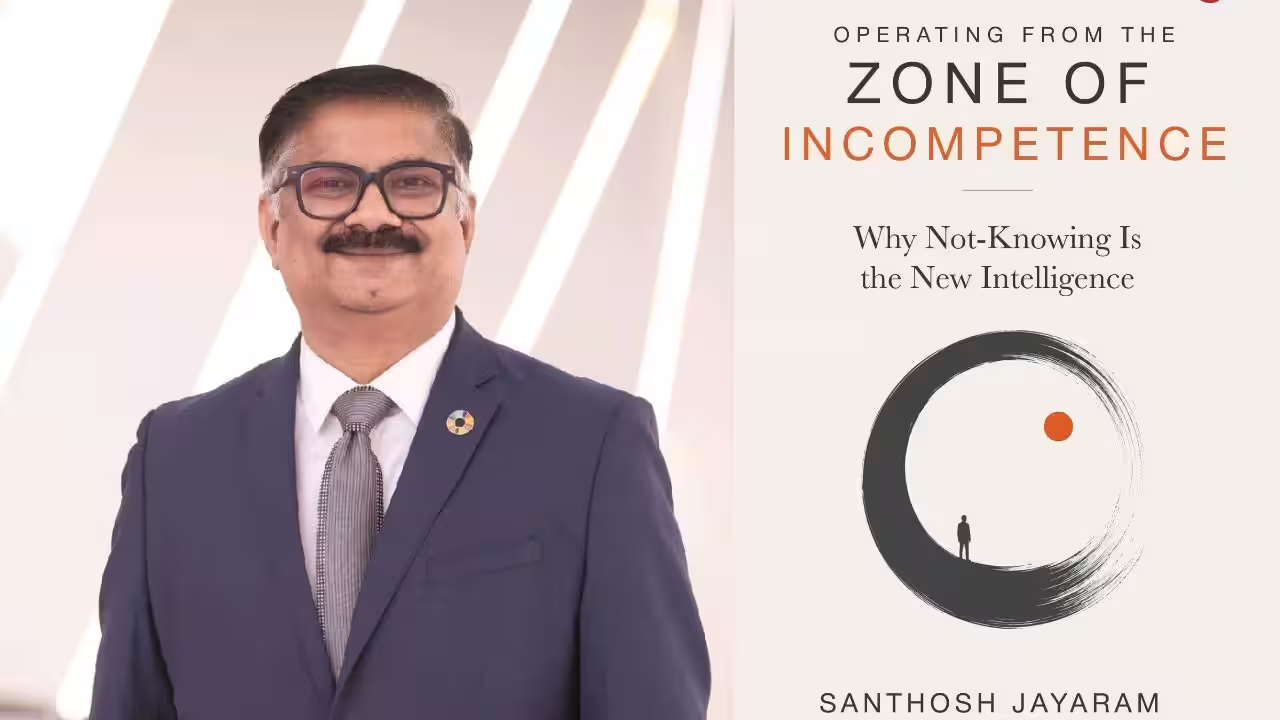
What if admitting “I don't know” is not a sign of weakness but the beginning of meaningful learning? In a world where artificial intelligence can produce answers in seconds and professional knowledge can quickly become outdated, Santhosh Jayaram’s 'Operating from the Zone of Incompetence: Why Not-Knowing Is the New Intelligence' arrives with a timely question: how do we keep learning when what we already know is no longer enough?Published by Rupa Publications in 2026, the non-fiction book challenges the assumption that expertise alone is the key to progress. Rather than dismissing competence, Jayaram asks readers to consider what happens when they become too comfortable with their existing knowledge. The book’s central idea is that intellectual humility, curiosity and a willingness to unlearn may be essential abilities in a rapidly changing world. Drawing on the themes outlined in his announcement of the book, Jayaram positions learning as a continuous process rather than a destination. The premise is particularly relevant to professionals, leaders and anyone navigating a workplace increasingly shaped by technology and artificial intelligence.Why the comfort of expertise can become a limitationBeing good at something often brings confidence, recognition and a sense of security. But that confidence can also make it harder to question familiar methods or recognise when circumstances have changed. Jayaram’s title captures this tension. Operating from a “zone of incompetence” does not mean abandoning skills or celebrating ignorance. Instead, it suggests being willing to enter unfamiliar territory, ask questions and accept that there is more to learn.This idea challenges a common professional instinct: the pressure to appear knowledgeable at all times. In workplaces where leaders are expected to have answers and employees may fear looking inexperienced, admitting uncertainty can feel risky. Yet refusing to acknowledge knowledge gaps can make people less receptive to new ideas. The book explores what happens when expertise expires, why unlearning can be difficult and how people can continue learning even after achieving professional success. These questions give its central argument practical relevance, especially for people whose careers depend on adapting to changing technologies, expectations and ways of working.Unlearning, leadership and the age of AIOne of the book’s key themes is the importance of unlearning. Acquiring new information is only part of learning; people must sometimes question assumptions, habits and beliefs that once helped them succeed but may no longer be useful. Jayaram traces the beginning of the book to advice from Professor Deepak Gupta, who told him during the early stages of his PhD journey: “You can't learn anything new until you de-learn.” Jayaram said the conversation planted the seed for the book. The title came from a phrase used by Dr R Balasubramaniam during a talk. Jayaram asked to use it, and Balasubramaniam agreed. Both later contributed forewords to the book.The focus on unlearning also connects to the book’s questions about leadership. A leader who believes they must always be right may struggle to invite disagreement or acknowledge changing realities. By contrast, a leader who can say “I don't know. Yet” creates room for inquiry, collaboration and better-informed decisions. This is especially pertinent in the age of AI. As technology makes information easier to access and generate, the ability to ask useful questions, evaluate answers and recognise limitations becomes increasingly important. Access to information does not automatically translate into sound judgement.A reminder to remain an infinite learnerJayaram describes the book as an exploration of intellectual humility, curiosity, adaptability and becoming an “infinite learner”. Rather than telling readers what they should know, he says he wants to change how they relate to what they do not know. That distinction is the book’s most compelling promise. It shifts the focus from collecting qualifications or accumulating expertise to developing an attitude that remains open to revision. For students, this could mean treating mistakes as opportunities to improve. For professionals, it could mean questioning familiar routines. For leaders, it could mean making space for people who challenge established thinking.The idea is not entirely new: lifelong learning and intellectual humility have long been discussed in education and leadership. The strength of Jayaram’s framing lies in placing these ideas against a contemporary backdrop of rapid technological change and the growing uncertainty around which skills will remain relevant. A critical assessment of how successfully the book develops its arguments, supports them with examples and translates them into practical guidance would require examining the full text. Based on its stated themes, however, it offers a useful starting point for readers willing to question the pressure to appear competent all the time.Operating from the Zone of Incompetence ultimately invites readers to see uncertainty not as a dead end, but as an opening. Its message is simple: intelligence is not only about what we know, but also about how honestly we recognise what we have yet to learn.You use AI every day. Now get your AI Quotient. Take the AIQ testGet the latest Lifestyle News and more. Download the TOI app.
Topics in this story
Gathered from external sources. Rights to this text belong to whoever originally published it.