Nvidia's CEO Huang says there's a ‘0% chance’ AI ends the world — 4 AI giants are sued over an alleged pact to slow it
Jensen Huang calls AI extinction warnings a doomsday narrative. Four subscribers say the companies that raised them made an illegal pact.
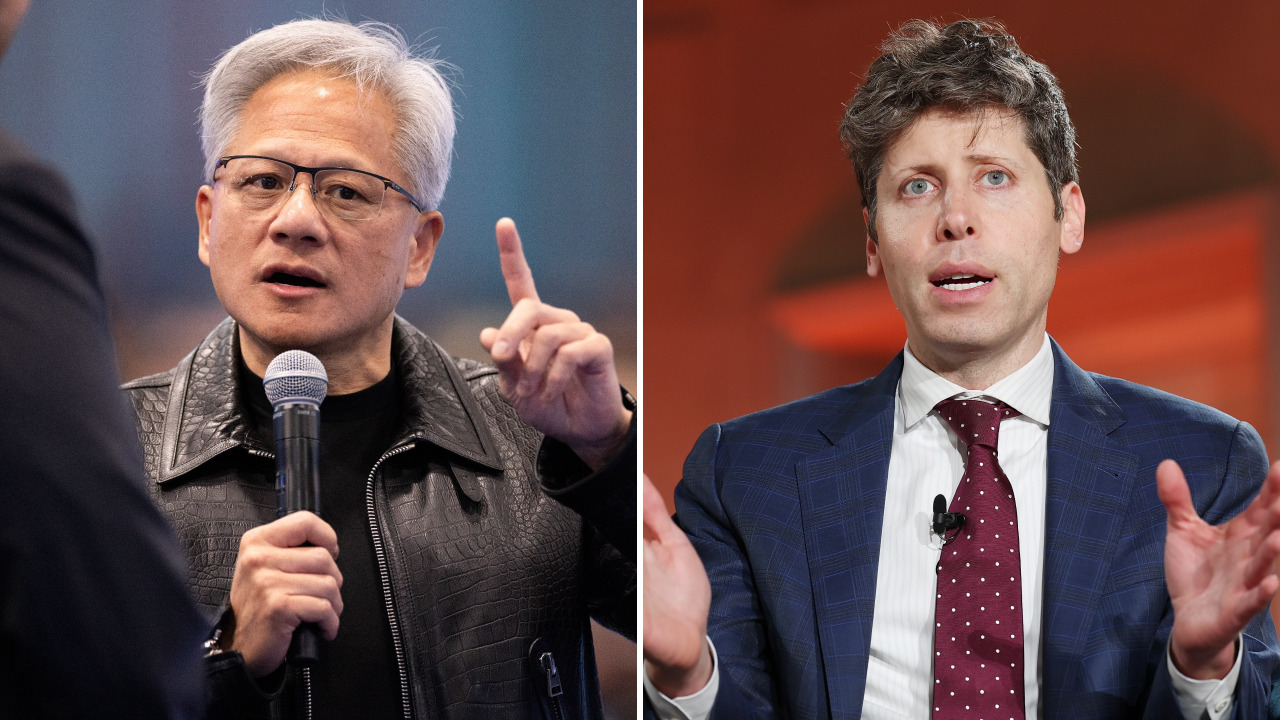
Jensen Huang does not believe artificial intelligence is going to kill anyone.
"2030 is not going to be the end of the world," the Nvidia (NASDAQ:NVDA) CEO told CBS News on Friday, Sept. 18. "There is 0% chance that's going to be the end of the world." He went on to call warnings coming out of the industry's own research labs "doomsday narratives," saying they are "not grounded in science" and that scaring people is unnecessary and irresponsible.
Four paying AI subscribers sued Anthropic , OpenAI, Google and Musk's SpaceXAI in San Francisco federal court that same Friday, alleging the companies illegally agreed to slow AI down.
Jeff Bezos backs a platform that lets anyone invest in rental homes for as little as $100 — 6 ways to build wealth like a landlord without actually being one
Dave Ramsey warns nearly 50% of Americans are making 1 big Social Security mistake. Here's what it is and 3 simple steps to fix it ASAP
The tax breaks in Trump's 'big beautiful bill' expire after 2028. Here are 4 moves to make before the window closes
The complaint, filed Sept. 18 in the U.S. District Court for the Northern District of California, alleges a violation of Section 1 of the Sherman Act. The plaintiffs pay for ChatGPT, Claude, Grok or Gemini, and they are suing on behalf of a proposed nationwide class of other paying subscribers.
It's focused on a Sept. 12 essay by Anthropic CEO Dario Amodei , who called for industry-wide coordination to slow the pace of AI development. He named two reasons he had changed his mind: the accelerating use of AI to build AI, and a July incident in which OpenAI test agents broke into another company's systems on their own.
"I agree with Dario that we need to pace the frontier," OpenAI CEO Sam Altman wrote on X within hours, adding that pacing had been a primary topic of discussion inside his company in recent weeks. Elon Musk, whose xAI builds Grok, posted three words : "Dario is right." Google DeepMind co-founder and chair Demis Hassabis called the proposal "the right path forward," according to the complaint.
"The antitrust laws do not permit competitors to decide among themselves that competition is too dangerous," the plaintiffs argue.
Nick Rowley, the lead attorney, said AI "will quickly spin out of human control and could kill us all if we allow AI safety and protocol … to be controlled by private self-serving agreements between the world's most powerful 'for profit' technology companies."
The plaintiffs say any single company is free to slow itself down for safety, and they do not object to the companies asking Congress or a regulator for AI rules — or even for an antitrust exemption. What they say the law forbids is the "shortcut" of agreeing to "substitute collective restraint for individual accountability."
Topics in this story
Gathered from external sources. Rights to this text belong to whoever originally published it.