Nvidia stock falls after investigation into CEO, bucking market rally
Wall Street rallied sharply on Monday, despite a 5% decline in Nvidia shares, as markets continued to rebound from last week’s sharp tech sell-off.
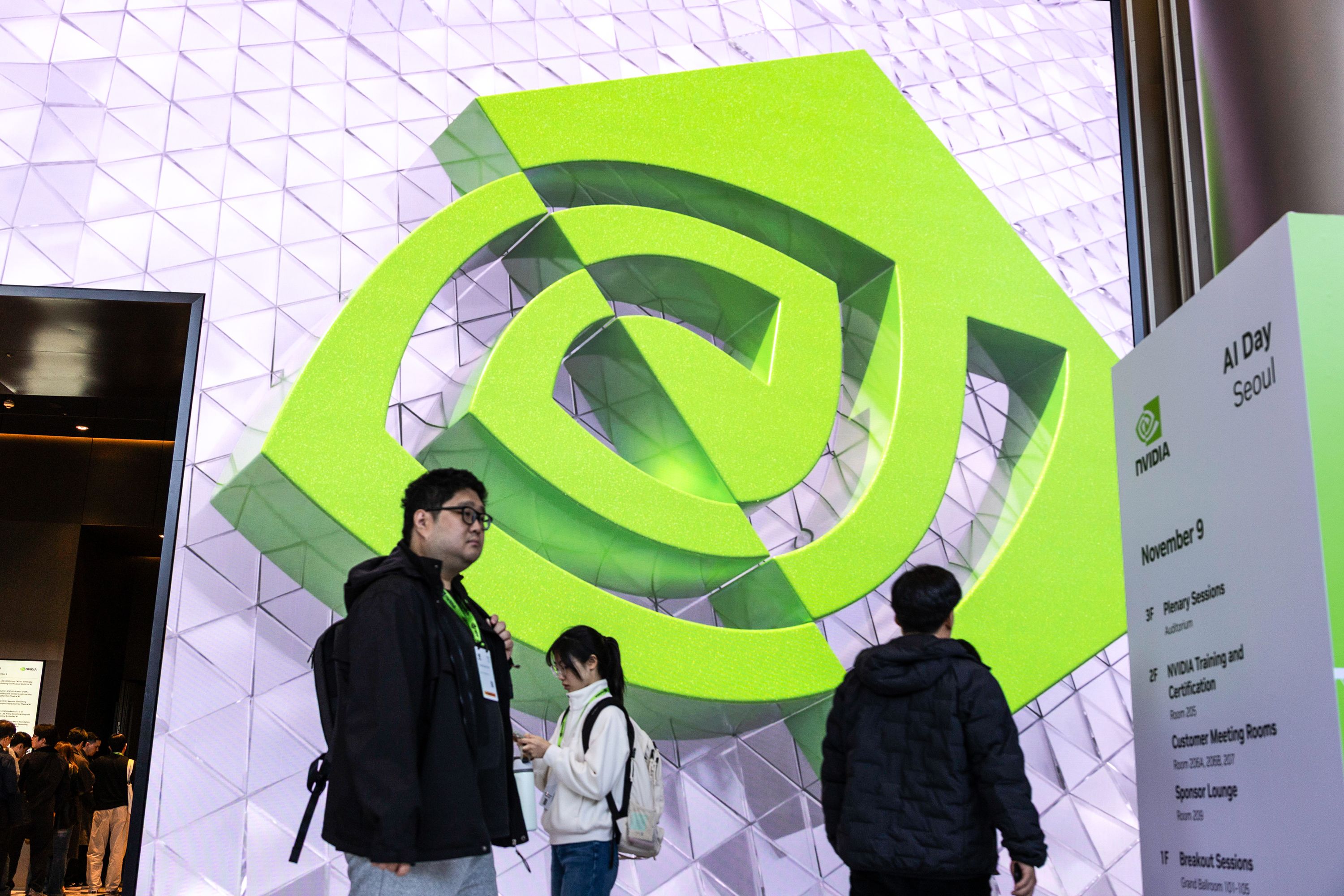
Wall Street rallied sharply on Monday, despite a 5% decline in Nvidia shares, as markets continued to rebound from last week’s sharp tech sell-off. The Dow, S&P 500 and Nasdaq surged to start the week, buoyed by gains in shares across sectors, from tech to industrials. The Nasdaq soared 3%, set for its best day in months. Meanwhile, Nvidia shares dropped, extending a recent bout of weakness, after CEO Jensen Huang admitted to having an extramarital affair and the company said it was investigating reports he was the “target of a foreign intelligence effort.” The developments come at a rocky moment for the AI boom, with volatility rising in recent weeks over concerns about the sustainability of the data center buildout. Nvidia shares (NVDA) are down more than 20% from their peak a month ago and last week erased their gains for this year. The tech-heavy Nasdaq Composite on Thursday closed in correction, down more than 10% from its peak one month ago. Nvidia, which makes semiconductor chips, has been at the heart of the AI bull market over the past four years. Huang has been one of AI’s main cheerleaders, with enormous influence over Wall Street’s outlook for the boom. The investigation into Huang and allegations of a foreign intelligence effort raise serious questions for the company at the center of the buildout with deals across major tech companies and adds to heightened tensions between the United States and China. “While the Board has no reason to believe that either national security or NVIDIA secrets were compromised, the Board’s inquiry will examine all available information,” Nvidia said in a statement Sunday. “I am committed to protecting NVIDIA and supporting America’s national security,” Huang said in a separate note to Nvidia staff. The key questions for investors are whether the board’s investigation will uncover anything more serious that could jeopardize Huang’s role as CEO as well as potential regulatory implications that could constrain sales, analysts at Citi wrote in a note. The heightened uncertainty comes after the Democrat sweep in the midterm elections is forcing investors to reckon with the risk of a slowdown to the data center buildout. Tech stocks in recent weeks had already tumbled over nerves about massive AI spending and demands to see more returns on investment. Investors are on edge about the AI boom, and volatility in Nvidia can add to the jitters. Star of the AI boom Huang founded Nvidia in 1993, took the company public in 1999 and presided over its transition into being a central pillar of the AI boom. Nvidia pioneered graphics processing units, which are semiconductor chips. The company’s chips were built to innovate in the gaming industry, providing enhanced computing power and visuals. By the 2010s, researchers began to use the powerful chips for budding AI technology. Nvidia in 2016 delivered a supercomputer powered by its chips to OpenAI, which launched ChatGPT to the public in 2022. The company positioned itself as the core provider of GPUs for tech companies, and its stock has skyrocketed alongside the AI boom, lifting the broader stock market to record highs. Nvidia shares are up 1,250% over the past four years, since the month OpenAI first released ChatGPT to the public. Nvidia last year became the first company in the world to surpass $5 trillion in market value, and it accounts for roughly 7% of the S&P 500. Nvidia’s chips are used across the industry to power AI models, from Anthropic’s Claude to Meta’s Muse. The company has also emerged as a key player in backing massive infrastructure deals for the AI buildout. Nvidia’s earnings reports have become known as investors’ Super Bowl, and comments from Huang have ignited major market moves in recent years. The CEO, known for his bold vision and unique style, has also been championed by retail investors. His importance for the company and the stock is raising the stakes over uncertainty about the investigation. “Jensen is the core DNA of Nvidia and its AI success and ambitions are heavily tied to him staying on as CEO,” Dan Ives, partner and senior managing director at Yorkville Ives & Co., wrote in a note. “Jensen is not replaceable,” Ives added. But investors are still discerning whether the personal crisis will have significant impacts on the company’s outlook, and are waiting to see whether the board’s investigation will glean any further critical insights for the company and AI boom. The broader market rallied sharply on Monday despite Nvidia’s decline. “This is, for now at least, a personal scandal,” Nigel Green, CEO at deVere Group, wrote in a note. “If the probe finds anything more serious, the selloff could deepen, so investors need to weigh these risks carefully,” Green added. Nvidia’s stock had been losing some luster this year, lagging behind other chipmakers like Micron Technology (MU) and Marvell Technology (MRVL). But that’s only after Nvidia posted enormous returns in recent years. The company remains a central part of the AI boom, and the Huang investigation is just one more factor for investors to weigh. Keeping an eye on the stock is critical for gauging the outlook for the broader market. “Jensen is much more than just a CEO — like Elon Musk, he is the face of the firm,” David Rosenberg, founder and president at Rosenberg Research, wrote in a Monday note. “It would not be a stretch to suggest that this is the deepest crisis the chip giant has found itself in during its three-decade history,” Rosenberg wrote. Nvidia is expected to report quarterly earnings on November 17. “Nvidia is huge and at the heart of the AI supply chain, so what happens to this stock matters to the rest of the market,” Neil Wilson, a strategist at Saxo Markets, wrote in a note.
Topics in this story
Gathered from external sources. Rights to this text belong to whoever originally published it.