Sam Altman admits we should accept ‘some bad things’ for sake of AI supremacy
As AI gets better and better, we’re going to have to learn to stomach some negative outcomes in exchange for vast prosperity and improvements in our overall health, wealth and life expectancy.
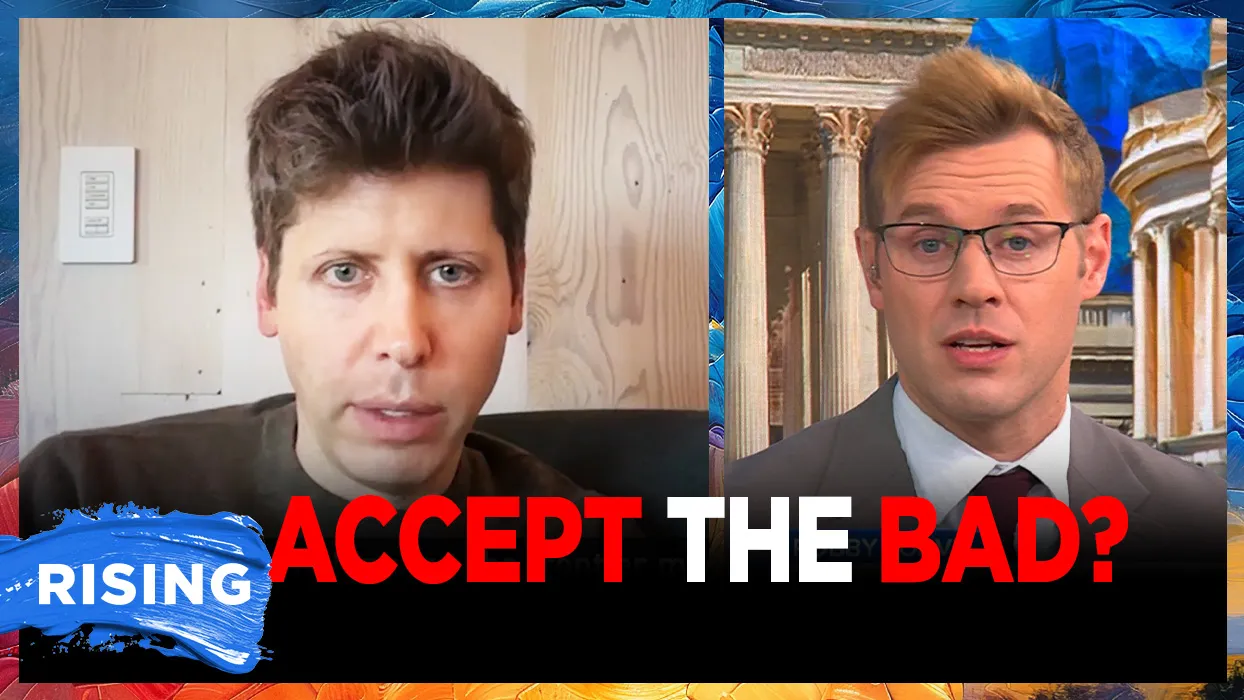
OpenAI CEO Sam Altman says that in order to advance artificial intelligence and reap the benefits from technological growth, we should be prepared to accept some bad things happening as a consequence.
He’s obviously right, if you think about it for just a few seconds. However, this line is being portrayed as some kind of dark confession that Altman is willing to burn the world in order to pursue his reckless dream — unlike his rival, Anthropic’s Dario Amodei, who is much more in favor of growing AI slowly and with the government’s explicit regulatory policing.
Now look, I definitely think AI is starting to develop a bit of an image problem, and I wish the CEOs would be a bit more careful with their words, and stop giving everybody the wrongful impression that they don’t care if technology causes some massive harm. But ultimately, Altman is right that new technology is worth it, even if there are some associated harms, if overall the improvements for humanity are significant.
The automobile is associated with thousands of deaths every year, so there’s a technology that causes some harm — some real loss of life. But we accept that, because cars have made transportation far easier and are just simply a massive improvement. We accept the tradeoff. We do this all the time.
With AI, or really anything else, it’s easy to miss the forest for the trees. It’s easy to notice the harm — some amount of job loss, for instance — and miss the huge benefit: say, vastly more accurate and earlier medical diagnoses leading to huge improvements in medical care and thousands or millions of lives saved.
Or just take cars again: Driverless cars are actually a huge improvement on safety and could save thousands of lives every year. But yes, somewhere, at some point, a driverless car is going to be in an accident, and people are going to identify that as a harm. The standard shouldn’t be harm itself, but harm when measured against benefits. Altman appears to understand this; it’s his rival at Anthropic who does not.
Anthropic wants Congress or the president to set strict limitations on how fast AI is allowed to grow. Amodei thinks politicians are qualified to make those determinations. I do not. I am very skeptical that the government is going to set the correct limits. And while I’m not a fan of everybody suing everybody else, one way you can get laws that are responsive to actual harms people encounter is to just let things develop. If there’s some harm created by the technology, somebody sues, and then you get a decision from a judge or a jury that actually helps clarify the limits of the technology, reining it in.
There’s no law, for instance, that tells McDonald’s how hot it’s allowed to brew its coffee, but at one point, a woman spilled the coffee on her lap and came away with serious burns all over her body. She sued , won millions of dollars, and McDonald’s turned down the heat. People often call out this lawsuit as ridiculous in some way, but actually it’s an example of market mechanisms resulting in a kind of legislation without the government doing a thing.
It wouldn’t surprise me if that’s ultimately going to be how we get good regulation on AI, rather than Congress setting some completely arbitrary regulation, or worse, simply taking over the product itself. Remember that Amodei said he’d be willing to hand over control of AI to a group of governments. We don’t want that: We want competition. That’s the edge we have as Americans who benefit from a free market system.
Now I know Altman can sound a bit sinister when he implies that innocent lies can and will be sacrificed, and I wish he wouldn’t do that! But the point stands: As AI gets better and better, we’re going to have to learn to stomach some negative outcomes in exchange for vast prosperity and improvements in our overall health, wealth and life expectancy.
Robby Soave is co-host of The Hill’s commentary show “Rising” and a senior editor for Reason Magazine. This column is an edited transcription of his daily commentary.
Topics in this story
Gathered from external sources. Rights to this text belong to whoever originally published it.