Nvidia CEO has a blunt message for Americans fearing AI
A growing Silicon Valley divide takes a more personal turn
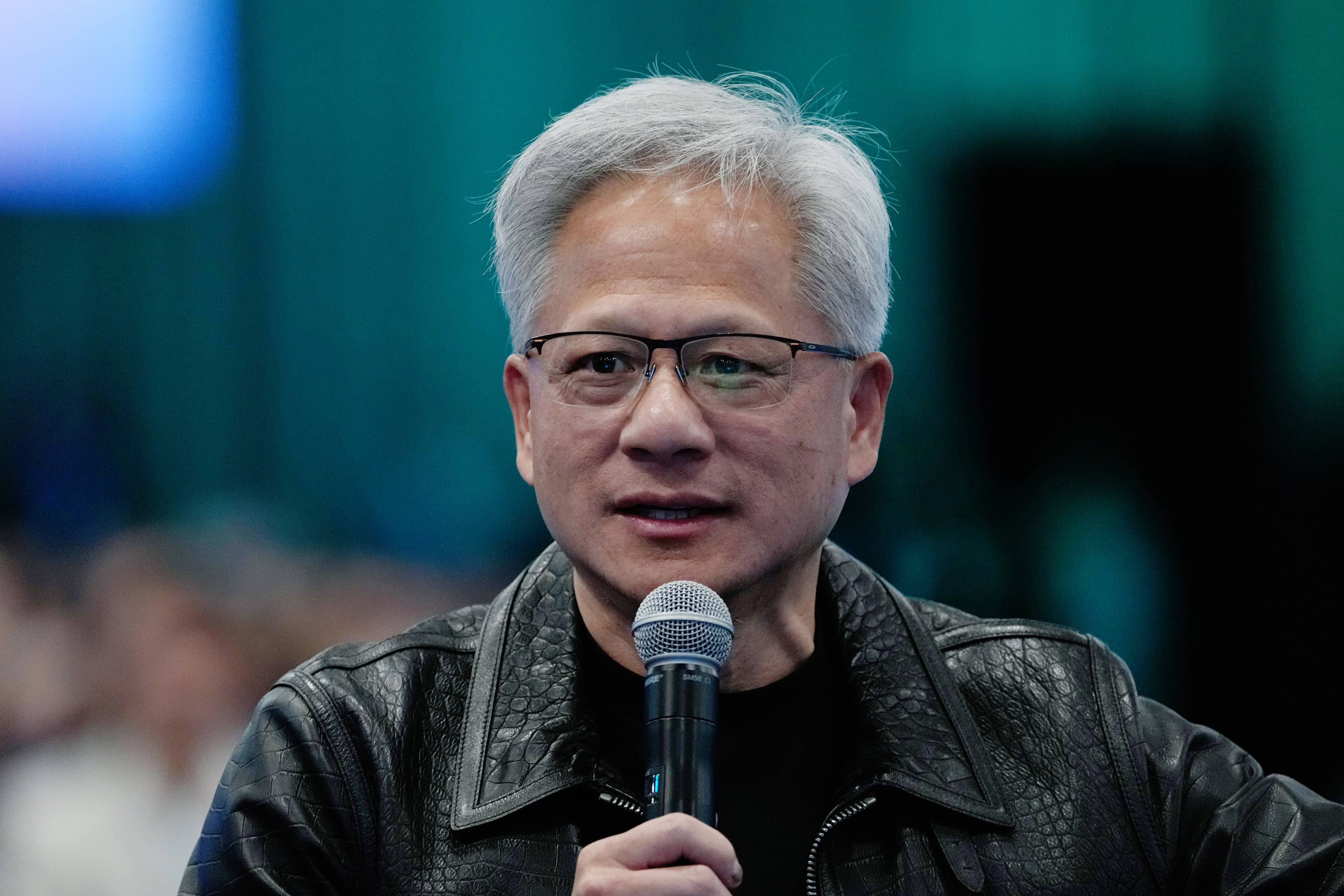
Nvidia ( NVDA ) CEO Jensen Huang is challenging the people warning that AI could end humanity, suggesting their alarming predictions may serve another purpose.
Speaking with CBS News , Huang rejected the 'AI apocalypse' debate and questioned the motives behind those spreading that fear, adding a sharper edge to an increasingly public industry split.
OpenAI and Anthropic leaders, alongside Elon Musk, have backed calls to slow advanced AI development over safety concerns and fears that the technology might be advancing quicker than companies can control it, as reported by Financial Times .
For Nvidia investors, that debate carries financial weight. Shares have returned 20% year-to-date and 23% over the six months, according to Seeking Alpha data .
A coordinated slowdown could complicate the spending boom supporting its chip business. Huang's response, however, reaches beyond defending continued investment.
Jensen Huang questions the motives behind AI doomsday warnings
Huang believes that the people predicting an AI apocalypse may have reasons beyond protecting the public. In his CBS interview, Nvidia's CEO questioned their motives while rejecting a specific prediction of catastrophe by 2030.
"I believe the claims of the end of the world, stirring fear across America, and doing it by the people who are doing it make no sense to me," Huang said.
"So they must be doing it for ulterior reasons."
That moves the argument beyond whether powerful AI needs safeguards. Huang is questioning why people involved in developing the technology are presenting its future in such alarming terms.
His explanations were speculative, however. He offered possible motives without establishing which, if any, applied.
"Maybe it's political, maybe it's otherwise, maybe it's just attention grabbing," he said, adding, "I don't know what the reason is for it."
On the prediction itself, Huang left little room for interpretation.
"2030 is not going to be the end of the world," he said. "There is 0% chance that's going to be the end of the world."
That certainty has a specific scope, though. It addresses an end-of-the-world scenario by 2030, which leaves other questions of cyberattacks, disruptive failures and control over increasingly capable systems unresolved.
His challenge is directed at the doomsday narrative and the people promoting it.
AI's everyday failures complicate the doomsday debate
Topics in this story
Gathered from external sources. Rights to this text belong to whoever originally published it.