“Chinese” AI Is Very American, And “American” AI Is Very Chinese
China and the U.S. aren't in an artificial intelligence "war" with each other, rather they're joined at the hip to the certain betterment of AI.
There's no "American" artificial intelligence (AI). There's no "Chinese" AI either.
In truth, there's remarkable tessellation of technological talent in both the United States and China, and much of that talent is presently focused on achieving enormous AI strides. What's important is that this isn't the U.S. and China at commercial war with one another as much as the Chinese very much admire and work in U.S.-based AI endeavors, while Americans very much admire China-based technological concepts that their investment has substantially driven the development of.
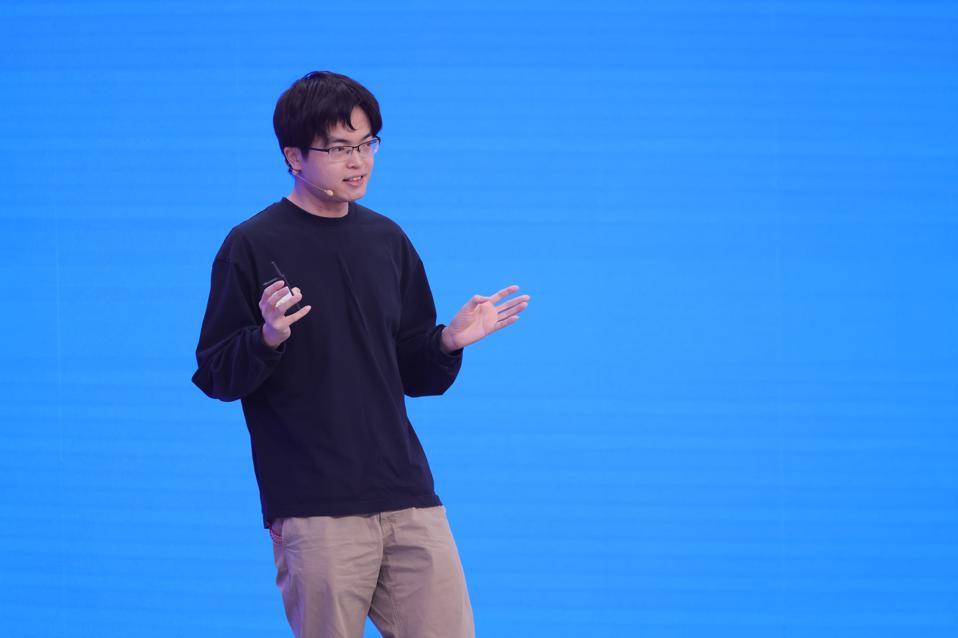
To offer up but one of many examples supporting the above claim, consider Beijing-based Moonshot AI. According to a report in the Washington Post , founder Yang Zhilin earned his doctorate at Carnegie-Mellon, he's given Moonshot's AI models his westernized nickname (Kimi), not to mention that Moonshot's meeting rooms at the company's HQ are named after American hard rock giants like Metallica. And that's just Moonshot.
Pivoting to AI investment, there's a distinctly United States-based flavor to it. Even though it's illegal for foreign investors to own Chinese companies that operate websites, among others, it's not illegal for Chinese companies to float shares offshore in locales like the Cayman Islands. As Sebastian Mallaby, author of the 2022 book The Power Law explained it, "China's technology boom was forged to a remarkable extent by American investors." Yes, precisely.
Which is why it's always puzzling when American politicians and pundits write negatively about the alleged threats from "Chinese" technology companies, and how the owners of those companies may ultimately have an allegiance to the Chinese Communist Party (CCP). The owners are frequently American, even though the dollars don't directly come from the United States. Said another way, a dollar is a dollar is a dollar, and U.S. dollars frequently find their way to Chinese tech concepts.
That's why it was if anything comical when last July the Trump administration contemplated banning Moonshot with "national security" top of mind. The protectionist act not only would have almost certainly been felt by American investors had it come to bitter fruition, it's worth adding that according to the Post , "a coalition of nearly 300 domestic companies loudly objected."
Still, it remains true that China-based AI lacks the abundant capital enjoyed by the U.S. AI sector, and it by extension lacks "compute." According once again to David Lynch at the Post , U.S. AI concepts "enjoy a 10-to-1 advantage in the processing power needed to develop, test and run AI models." Which further explains the strong ties between U.S. and China AI that overwhelm the politics of it from Washington and Beijing.
Topics in this story
Gathered from external sources. Rights to this text belong to whoever originally published it.