Sam Altman admits AI models 'scare' him and he understands why world is anxious; but wants everyone to take responsibility
Tech News News: ChatGPT-maker OpenAI CEO Sam Altman has admitted that the rapid rise of AI can be “scary” adding he understands why people around the world are anxiou.
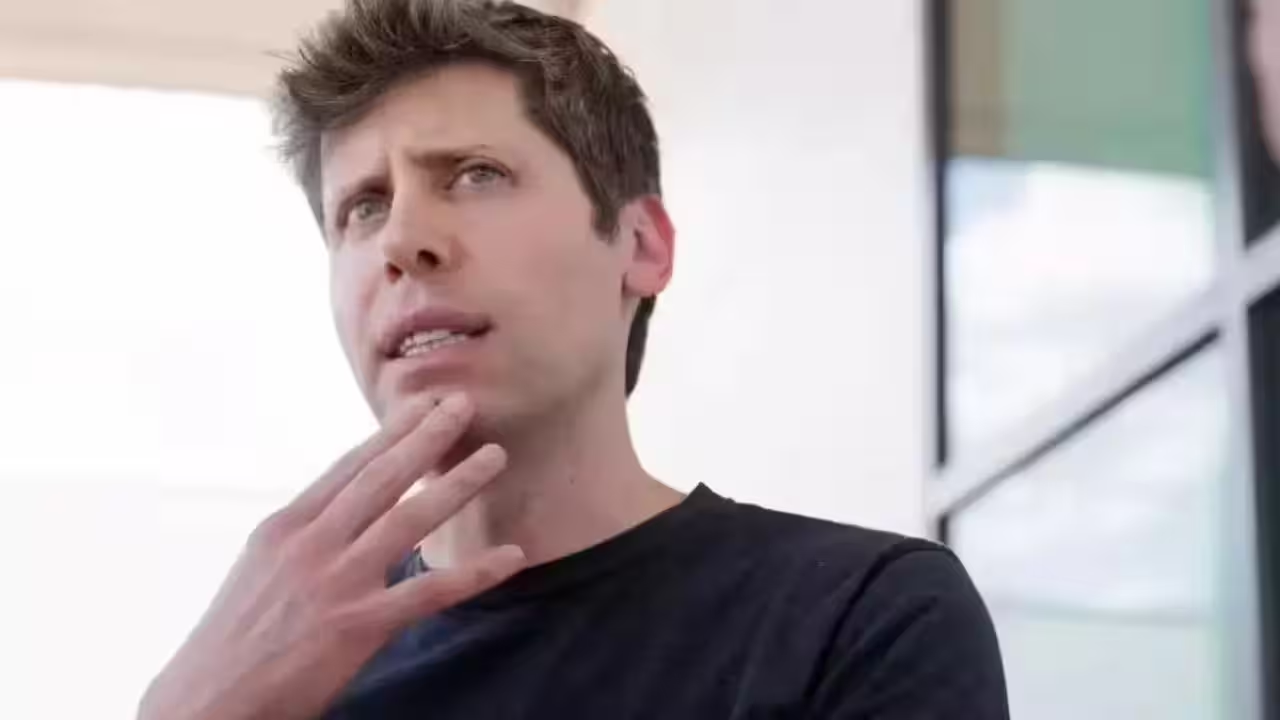
ChatGPT-maker OpenAI CEO Sam Altman has admitted that the rapid rise of AI can be “scary” adding he understands why people around the world are anxious about increasingly powerful AI models. Sharing a post on X (formerly Twitter), Sam Altman said that the company itself has been living with the tension between excitement and fear as AI capabilities improve. But Altman also believes that simply worrying about AI is not enough. He wants society, AI companies and others to take what is happening seriously and evolve alongside the technology, while making safety and alignment a top priority.“We have been living with the tension between being excited and anxious about progress for some time, and it is still discordant for us,” Altman said adding “We know it is much more discordant for other people. And yet, we believe strongly that the world needs to understand where AI is going and how models perform in the real world. More importantly, we believe the world will need aligned AI to manage the future phases of this transition”.Sam Altman admits tension between excitement surrounding AI capabilitesIn the post, Sam Altman said that there is a clear tension between the excitement surrounding increasingly capable AI and the need to move carefully.“There is an obvious tension here: on one hand, Astra is very good and we are excited to see what people will build with it. We are proud of our work.”But he added that OpenAI believes caution is necessary at this stage of AI development.“On the other hand, we are clearly in a phase of development where we believe caution is warranted, and we are pacing our progress to ensure that we can meet the safety standards required by new capability levels.”Here’s the full post shared by OpenAI CEO Sam Altman"Over the summer, we have been sprinting on safety priorities; it's more important than ever for capabilities and safeguards to advance together. We have more to do but have made a lot of progress. We are also going to be launching our next model soon.There is an obvious tension here: on one hand, Astra is very good and we are excited to see what people will build with it. We are proud of our work.On the other hand, we are clearly in a phase of development where we believe caution is warranted, and we are pacing our progress to ensure that we can meet the safety standards required by new capability levels.Astra has been done training for a while now and is a significant step forward in both capabilities and alignment. For the models after that, we have been slowing things as needed to ensure that we can do sufficient work on safety and alignment.AI is getting extremely capable; no one fully understands the consequences of this. Managing the transition to a world with abundant and powerful AI to optimize for safety and benefits to people should be one of the highest priorities in the world. It is our highest priority at OpenAI.We have been living with the tension between being excited and anxious about progress for some time, and it is still discordant for us. We know it is much more discordant for other people. And yet, we believe strongly that the world needs to understand where AI is going and how models perform in the real world. More importantly, we believe the world will need aligned AI to manage the future phases of this transition.An iterative loop where society and this technology evolve together is what will lead to the highest chance of getting this right.So we hope you enjoy our new model, and we hope the world continues to take what’s happening in AI extremely seriously."Get the latest technology news and updates. Download the TOI App.
Topics in this story
Gathered from external sources. Rights to this text belong to whoever originally published it.