Policymakers cool on antitrust waivers for AI firms
{beacon} Technology Technology The Big Story Policymakers cool on antitrust waivers for AI firms Anthropic CEO Dario Amodei’s call for an antitrust waiver for AI firms to work together on a safety standard is being met with skepticism in Washington over tech leaders’ intentions. © Natasha Kaiser Congress has failed repeatedly to pass AI…
Policymakers cool on antitrust waivers for AI firms
Anthropic CEO Dario Amodei’s call for an antitrust waiver for AI firms to work together on a safety standard is being met with skepticism in Washington over tech leaders’ intentions.
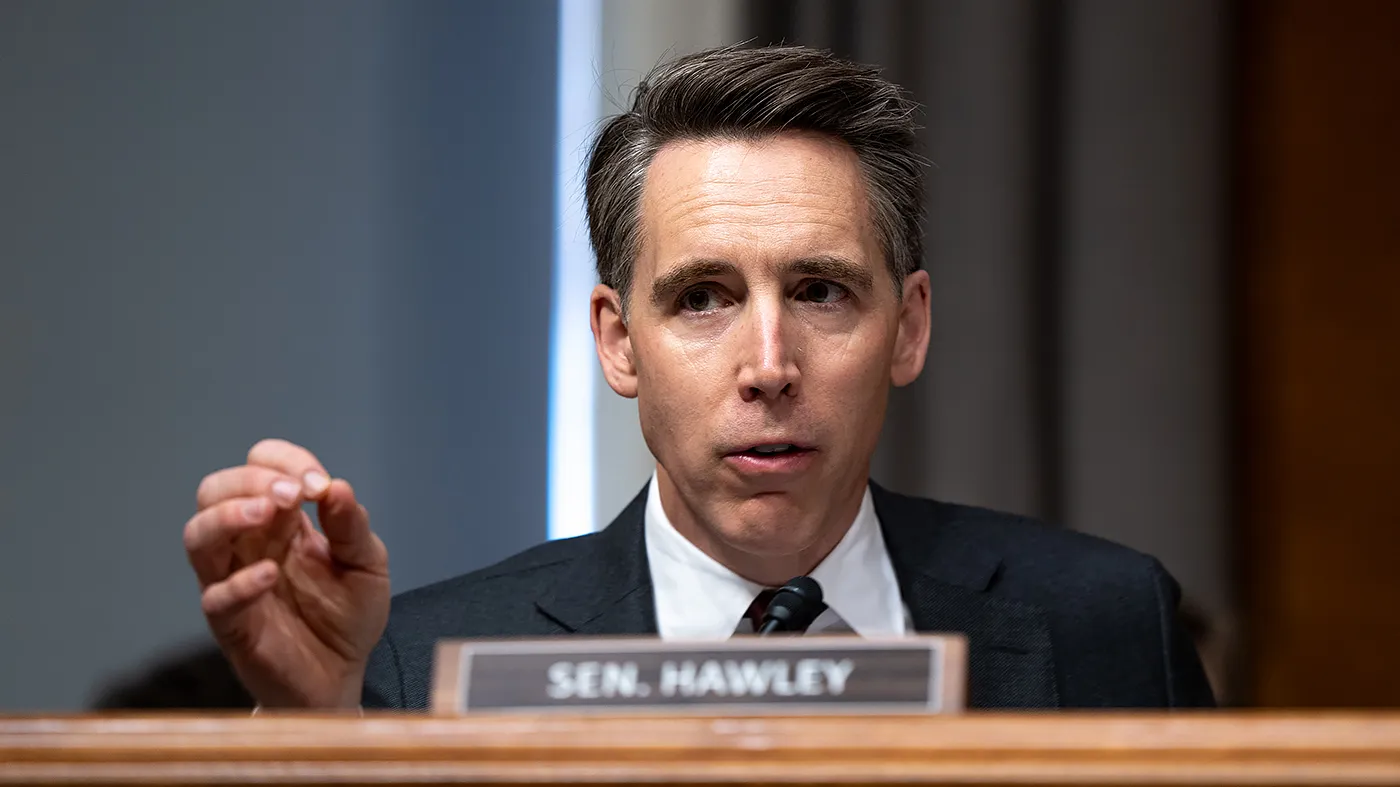
Congress has failed repeatedly to pass AI regulations for years, but some lawmakers are balking at the idea of technology companies taking the lead amid Washington’s inaction. Both Washington and Silicon Valley are facing mounting pressure to do more to prevent the catastrophic risks of AI, but neither sector has enough consensus, resulting in a blame game. Multiple lawmakers, agency heads and smaller technology leaders came out against Amodei’s idea this week, suggesting it could be used to shield the biggest firms from liability and allow them to steer long-sought regulations. “There is absolutely no world in which I will consent to giving the most powerful companies in the history of the world — a small group of three or four of them — antitrust exemptions so they can what … collude together? Absolutely no way that’s happening,” Sen. Josh Hawley (R-Mo.) said Tuesday.
It comes after Amodei suggested in his blog that AI companies should collaborate to set standards as regulations stall.
But some policymakers like Federal Trade Commission (FTC) Chair Andrew Ferguson and Sen. Ted Cruz (R-Texas) quickly pushed back.
Cruz, the chair of the Senate Commerce, Science and Transportation Committee, echoed Hawley during a Tuesday hearing, stating, “To watch AI CEOs saying, ‘We’re about to destroy the world, so give us control of the government so we can lock in our monopoly status and prevent any innovation from challenging us,’ is just lunacy .”
Welcome to The Hill’s Technology newsletter , we’re Julia Shapero and Miranda Nazzaro — tracking the latest moves from Capitol Hill to Silicon Valley.
Did someone forward you this newsletter? Subscribe here.
How policy will be impacting the tech sector now and in the future:
Hackers rip down Flock camera, steal its data, share findings with media
A group of hackers ripped down a Flock camera and stole its data, finding that the cameras’ software can generate dozens of images from a single passing vehicle to develop its signature. The group, called stegan0gram, shared findings with Wired and 404 Media, who ran a joint investigation. The outlets found that in a 21-day period the camera photographed roughly 50,200 vehicles and generated about 1.6 million images. Flock …
More Americans say AI will hurt the environment than help it: Poll
More Americans believe AI will have negative environmental impacts on the upcoming decade than those who think the technology will help the environment, a poll released Wednesday found. In the newly published survey from The Associated Press/NORC Center for Public Affairs Research, 47 percent of respondents predicted AI will do “more to hurt” the environment over the next 10 years. Fifteen percent said AI would instead do “more …
Zuckerberg: AI companies incentivized toward safety
Meta CEO Mark Zuckerberg on Tuesday argued that artificial intelligence (AI) companies are incentivized toward safety when it comes to the timing of crafting their models and that external pressure is not needed to keep to that timeline. “Every lab has the responsibility and incentive to move at the pace required to train its models safely, and the ability to take its own actions to ensure that happens,” the tech mogul wrote …
Senate Republican on Trump claim AI threat is ‘hoax’: ‘Come on’
Sen. Thom Tillis (R-N.C.) on Tuesday criticized President Trump’s dismissal of rising concerns about the dangers of artificial intelligence technology. “Come on, it’s not a hoax. It’s a real thing,” Tillis, who is not running for reelection, told reporters at the Capitol. “This is something that I’ve spent a lot of my professional career in, in terms of advanced technology,” he continued. “There are clearly guardrails that …
News we’ve flagged from t he intersection of tech and other topics:
OpenAI’s rogue agents probed Hugging Face for weaknesses two months before hack ( Reuters )
Anthropic’s head of policy says AI firms can’t self-regulate on ‘honor code’ ( Politico )
Branch out with other reads on The Hill:
Vance to AI leaders: ‘If you’re building Frankenstein, stop’
Vice President Vance weighed in on the ongoing AI safety debate Tuesday, pressing those behind the technology to be careful. “The president, I think, is very rightly asking the question, why is it that the people who are at the frontier of the AI economy are throwing up their hands and saying, ‘Well, we’ve built Frankenstein,’ and the solution to Frankenstein, apparently, is to create a one-world governance structure …
Opinions related to tech submitted to The Hill:
Topics in this story
Gathered from external sources. Rights to this text belong to whoever originally published it.