Google’s first data center satellite is online and writing poetry
The first TPU in space is running a Google DeepMind Gemma 4 model and writing cheesy poetry.
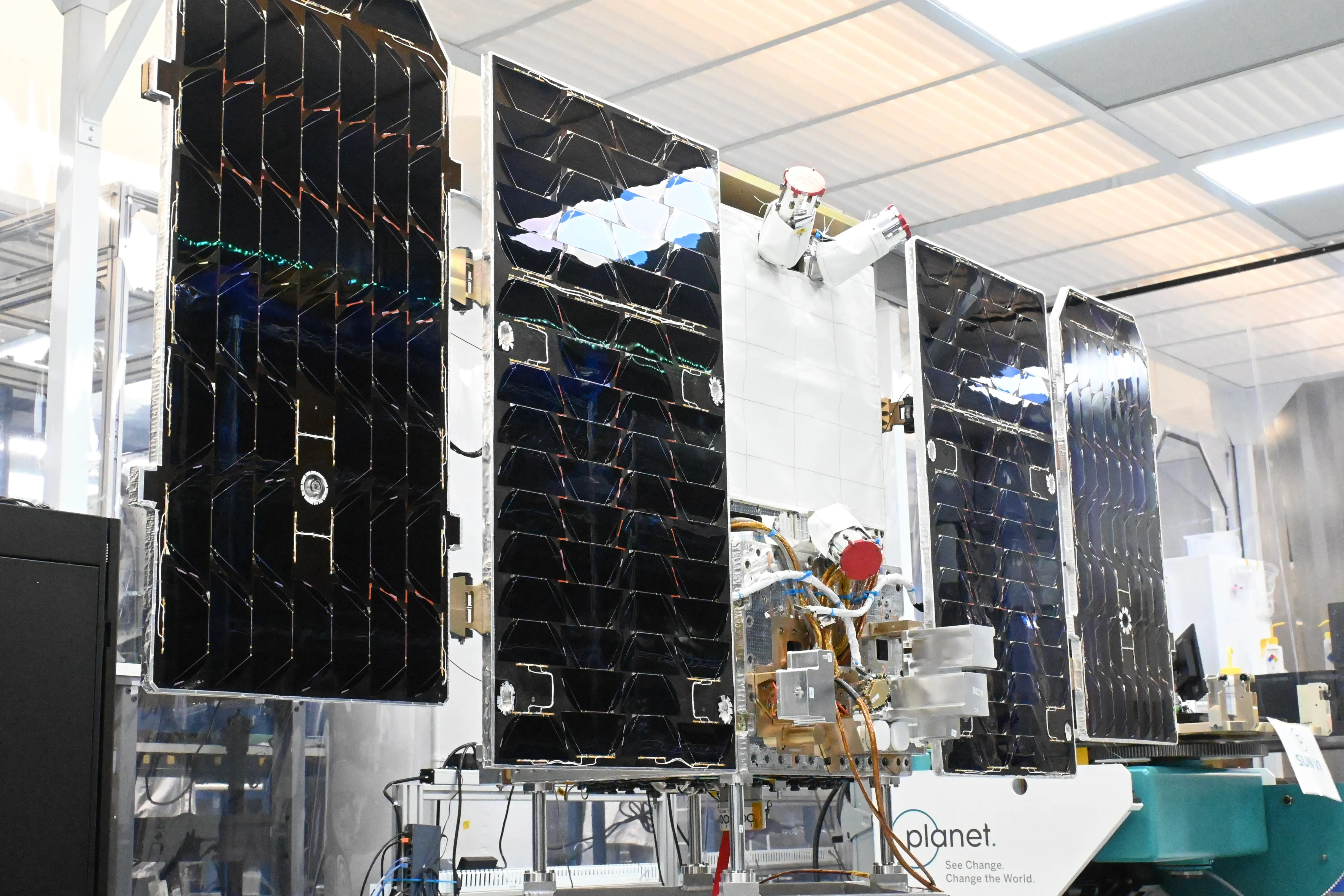
Google Suncatcher’s prototype space data center is online and communicating with the ground after launching earlier this month alongside more than 100 other spacecraft on a SpaceX Falcon 9 rocket.
The satellite, which carries four Google Tensor Processing Units (TPUs) and generates up to 1 kW of electricity, is intended to pave the way for future networks of close-flying satellites performing large inference workloads in orbit. However, the power demands of the TPU mean it can only turn one on for about 20 minutes at a time, complicating the already tricky business of space-to-ground communications.
After a commissioning process that tested out the satellite’s subsystems over about three weeks, the spacecraft was ready to work. When engineers on the ground sent their first prompt this week, they asked the model pre-loaded onto the satellite, Google DeepMind’s Gemma 4, to write a haiku about being in space. And thus:
Blue marble below Data streams in silent grace Starlight feeds my core. ✨
Google said it tested the model with these space-themed limericks (they should have sent a poet?) and, perhaps more importantly, the company asked the spacecraft to report on the orbital conditions around the satellite.
A spokesperson told TechCrunch that the satellite was operating nominally.
The ongoing test campaign will examine how the chips perform under thermal stress and in the space radiation environment. Google has extensively tested its TPUs in particle accelerators on Earth, but now needs to see how radiation’s real effects on their hardware in space affect their processor. Radiation can cause “bit flips” — causing a stored value in computer memory — and that in turn can corrupt data without triggering typical monitoring tools.
Testing on the ground suggested the impact of radiation would be minimal for inference workloads and more of a problem for training a model, but now the Google team will get to assess those dynamics in reality, not a simulation.
If the TPUs onboard this spacecraft prove capable, the next step will be launching two more satellites equipped with the advanced chips in 2027. Those spacecraft will support higher power generation and demonstrate inter-satellite optical links.
Google’s Suncatcher project is largely alone among visions for space-based data centers in planning on high-speed links between the satellites to support coherent distributed workloads; SpaceX’s data centers are also expected to use laser links but also to orbit too far apart to share processing effectively. Companies like Starcloud and Cowboy Space expect to perform inference loads on individual satellites.
Google and SpaceX’s visions are closely linked. Alphabet, Google’s parent company, holds a significant investment stake in SpaceX. And to launch their orbital data centers, both companies will require Starship, the still-in-development heavy-lift rocket at the center of Elon Musk’s space vision, to be fully and rapidly reusable.
In a peer-reviewed analysis published earlier this month, Suncatcher researchers estimated that SpaceX would need to fly Starship 1,800 times to achieve the same learning-driven cost reductions it saw with its earlier vehicles. Suncatcher is a classic Google moonshot — the company’s focus is on designing infrastructure that will be economical in the 2030s. Getting there, however, may depend on how the rest of the company responds to the pressures and opportunities of AI in the near term. Alphabet, Google’s parent company, saw its stock plunge this week after reporting that efforts to insert AI into its search businesses are hurting ad revenue growth.
Correction: The Suncatcher prototype satellite has four TPUs onboard, but can only operate one at a time.
Topics in this story
Gathered from external sources. Rights to this text belong to whoever originally published it.