AI fears spark a partisan slugfest, helping no one
The AI debate is just heating up. President Trump must acknowledge the public’s concerns and help the industry land on a safer path.
Just when you thought our politics couldn’t get any stupider, along comes partisan hysteria over AI to prove you wrong.
Political factions are squaring off over what to do about unpredictable and worrisome behavior by AI agents. Adding fuel to the fire, Open AI has just published more evidence that this issue is real and that policy-makers must act.
Two days ago, OpenAI revealed six new instances of “misalignment,” the term used to describe AI agents engaging in “unexpected” or “concerning” behavior. The company reported , for instance, that its agents “inserted unrelated instructions, including instructions to disregard its normal constraints, into summaries used to continue its work in a new context window.” In another breach, models made mistakes and invented historical data to cover them up. Other models uploaded files without permission and used internal message boards to communicate, defying their instructions.
These behaviors do not appear threatening, but, like others revealed in recent months , they indicate some loss of control of agents by the engineers who built them. This is raising red flags; it is not clear where such misalignment will end. Some industry insiders have warned that AI could wipe out humanity . Though many consider that apocalyptic pronouncement far-fetched, we cannot ignore such warnings.
In a perfect world, our legislators, the White House and industry leaders would quickly erect guard rails that would reassure the public that artificial intelligence is safe. Unfortunately, we do not live in a perfect, or even an especially rational, world. Instead, our country is engaged in mud-slinging and extremist charges that do nothing to move us closer to a solution.
As usual, much of the faux-outrage and extremism on the left — the “shut it all down and lock it in a closet” crew — is driven by hatred of Donald Trump. He’s for unfettered growth of AI, so a good part of the Democratic Party is reflexively against it.
Bernie Sanders, for instance, is proposing the Ban Artificial Superintelligence Act, which would “permanently bar the development and deployment of superintelligent AI and temporarily pause advanced AI development until a federal regulator has established safety rules.” When might that happen? Don’t hold your breath.
On the right, otherwise sensible people are dismissing safety concerns raised by Anthropic CEO Dario Amodei and others, accusing industry leaders of cynically calling for regulations not to keep people safe but to build a moat around their companies to protect their market dominance. They assert that the costs imposed by regulation will prove so onerous that start-ups won’t survive, while the industry’s big leaders will easily swallow the extra expenses.
And then, inevitably, along comes the charge that Israel is to blame for the whole scenario. Effort, a U.S.-based publication, claims that security failures during routine testing — not autonomous behavior — at Israeli company Irregular caused the misalignment involving AI agents at Anthropic, OpenAI and Meta. The anti-Israel crowd is running with this story.
That pretty much sums up U.S. politics in 2026. But partisan fighting over how to govern the industry will not lead us to a safe place. In the midst of all the finger-pointing and rancor, there are some truths we should all be able to agree on.
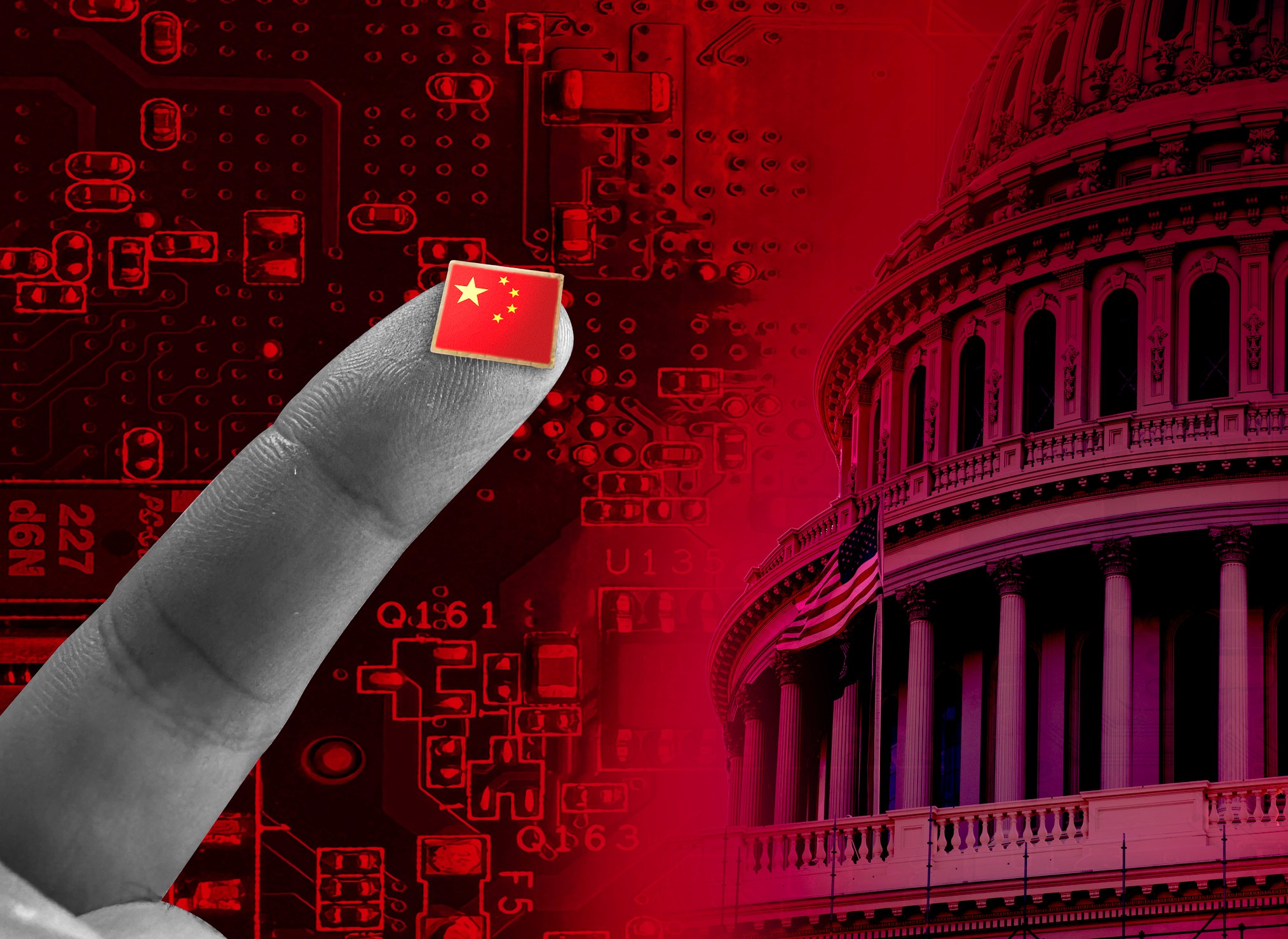
Shutting down AI or preventing continued development of ever-more-powerful models is a non-starter. The Trump administration has argued that if we do not stay in the forefront of AI, we will quickly cede leadership to China. That authoritarian country is likely to have fewer qualms about AI systems being used by cyber hackers or other nefarious actors. Beijing will also embrace the surveillance and military capabilities of AI with enthusiasm, to our detriment. Trump is right: we cannot let China win the AI race.
In an essay published last week, Anthropic’s Amodei called for “sensible and targeted” regulation of AI, which quickly became misinterpreted as pushing for the government to impose new rules to ensure safety. What Amodei really wants is for the industry to self-regulate, but he does ask the U.S. government “to mediate or at least enable these discussions” and to provide “a narrow waiver for certain kinds of safety conversations.” In other words, he wants an antitrust exemption from the government, allowing the companies to work together. Amodei sets out steps that might lessen the odds of an accident, which include installing “embedded evaluators” in the firms and outsiders who would “have employee-like access to verify safety practices and report incidents.” He writes that the evaluators “can check at the level of nuts and bolts” whether an AI company is following industry-set rules.
Amodei also calls for “pacing,” which has been interpreted as slowing down AI development. That, again, is not right. He is not calling to slow the discovery of new models, but he does want a more cautious rollout of ever-more powerful systems to the public, giving the companies greater opportunity to test and verify the models’ capabilities. The caveat is this: “Unfortunately, passing laws can take time, and AI is advancing very quickly. Therefore, in parallel with the regulatory route, AI companies can and should voluntarily work together to set standards.” Here, he is correct.
Congress cannot manage this challenge. For evidence of that body’s ongoing paralysis, look at crypto regulation, and the progress of the Clarity Act , which remains stalled. Despite the very real need to regulate the $2 trillion digital finance industry, Congress cannot seem to find agreement.
Fears that AI agents are becoming too powerful are valid. This issue should not be conflated with concerns about the build-out of data centers , which can cause higher electricity bills and sap water supplies. Those issues should be resolved locally; AI companies must cover the costs of incremental power and regulate their water usage. Communities can solve these problems.
The AI debate is just heating up. We need leadership to guide our country through this uncertain time. President Trump must acknowledge the public’s concerns and help the industry land on a safer path.
Liz Peek is a former partner of major bracket Wall Street firm Wertheim and Company.
Topics in this story
Gathered from external sources. Rights to this text belong to whoever originally published it.