Her school blocked ChatGPT. Now this 17-year-old high school senior runs an AI startup with 1,000 users
Navya Tuteja's school WiFi blocked ChatGPT and Claude: "It made me use it in school way less... as annoying as it was, it was still good, in a way."
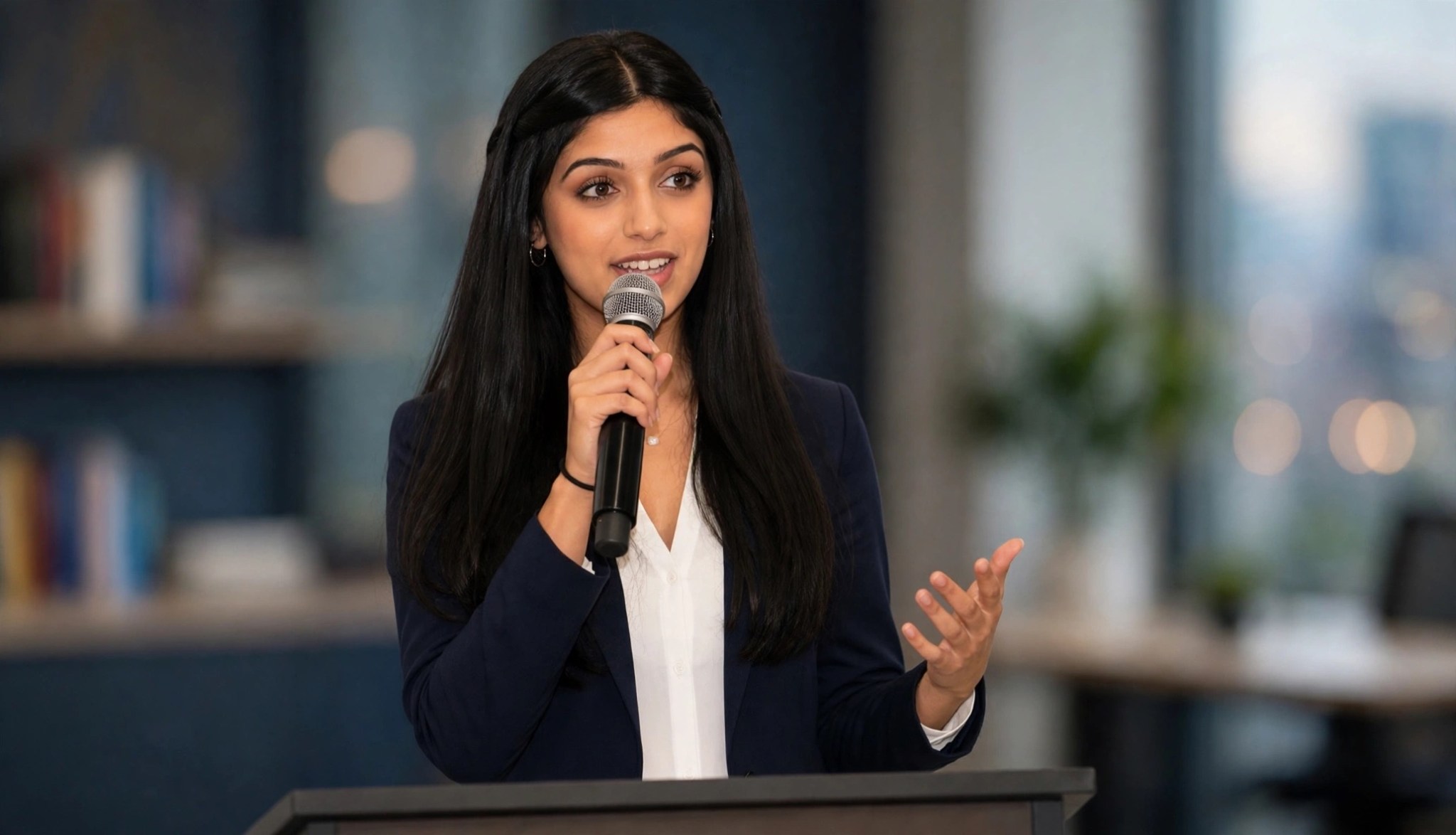
Navya Tuteja, a senior at Thomas Jefferson High School for Science and Technology, the selective magnet school outside Washington, D.C., found me the way she finds her local politicians: through a cold email with an idea. She has a strong academic record and a shot at speaking at graduation (her school doesn't name a valedictorian, but she says she would probably qualify if it did). Two months ago, she launched Raaha, a free platform that lets neurodivergent job seekers score a listing for fit before they apply. It already has more than 1,000 users and 20,000 job listings.
The idea traces back to her mother, who is hard of hearing, and to a pattern Tuteja kept noticing among neurodivergent people: job postings written entirely from the employer's side, heavy on requirements and silent on what the day-to-day actually feels like. Raaha's quiz scores a listing against several factors so candidates can get a realistic read before spending hours on an application. Tuteja bootstrapped the tool herself and is keeping it free while she builds traction; the eventual business model would have employers and workforce organizations pay to use the platform or improve their listings.
She still plans to go to college. But if Raaha keeps growing at its current pace, she says, she'd consider running it full-time.
The exception to a bad year for teenagers
Tuteja's grades stand out right now for a reason unrelated to college admissions. The OECD's PISA 2025 results , released this month, show reading and math scores at record lows across nearly all participating countries. Across OECD nations, reading is down 28 points since 2015 and math is down 22, and roughly 29% of 15-year-olds now score as low performers in all three core subjects tested. American 15-year-olds posted their lowest reading scores in about 25 years . Researchers studying the decline have pointed to screens, shrinking attention spans, and generative AI.
Tuteja doesn't dispute that theory. She just says she was structurally protected from the worst of it, and the protection wasn't her idea. Her school's WiFi blocks ChatGPT, Claude, and similar tools outright. "It made me use it in school way less," she said. "So I guess, as annoying as it was, it was still good, in a way."
She doesn't think generative AI is inherently the problem, though she worries a bit that it's making people dumber. "People just don't know how to use it properly," she said. Not being able to reach for it during the school day forced her to do exam-relevant thinking on her own, a habit she kept after hours, when the ban no longer applied and she had a company to build.
Topics in this story
Gathered from external sources. Rights to this text belong to whoever originally published it.