'Big Short' investor Steve Eisman says AI companies want to 'manufacture a crisis' with their doomsday calls
Steve Eisman said he sees a motive behind the sudden calls to slow AI development from top companies.
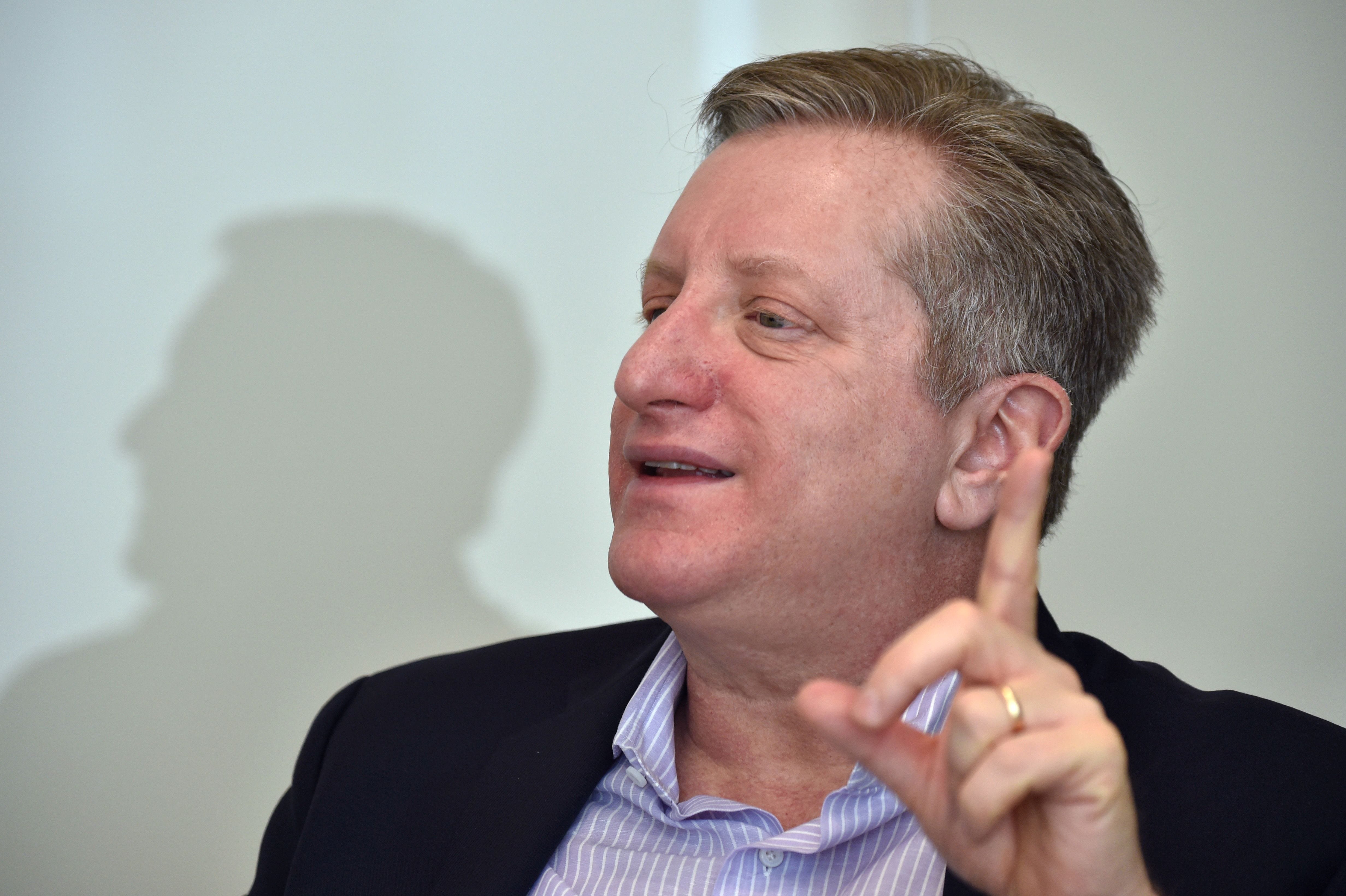
Steve Eisman isn't buying all the talk of an AI apocalypse.
The famed investor says AI companies want to "manufacture a crisis."
In his view, they see this as a way to rebuild the previous moats around their businesses.
Steve Eisman isn't worried about the robot apocalypse. In fact, he thinks AI companies that say they're worried about doomsday have a specific agenda.
Eisman, who correctly called the housing market crash of 2008, sees a motive behind the panicked calls by top AI labs so slow the development of the technology.
The AI apocalypse has been in the zeitgeist since former Anthropic researcher Jacob Coxon publicly resigned over concerns that AI makers aren't taking safety seriously. Experts have been divided on how likely a doomsday scenario is, but Eisman said he sees a motive behind the panic.
"They realize that there are no moats around their business whatsoever and they're trying to manufacture a crisis," Eisman told CNBC on Thursday. "That's what I think is happening."
Eisman laid out his own thesis on AI doomsday, highlighting the incentives that he sees for tech companies to push the narrative that their technology could end the world.
In his view, they see a need to create a crisis that will lead to regulation which they can ultimately manipulate to create a duopoly, hoping to replace the previous moats that used to surround their business.
"Tokenmaxxing is over," Eisman stated. "The open weight models are taking big market share. I think these companies are very nervous."
He isn't the only one to say that the era of tokenmaxxing, the practice of maximizing AI use, has ended. Citadel Securities said recently that rising costs have been a reality check for the AI trade, stalling some of its momentum.
Eisman revealed that he's recently trimmed his own AI exposure. That comes a few weeks after he raised concerns regarding the AI market, describing OpenAI and Anthropic as the ''Achilles' heel" of the AI trade. In his view, much of the danger stems from how dependent the entire industry is on the success of the two leading AI startups.
"They're such a huge percentage of the entire chain, so if something were to happen to one of those two companies, then the chain would really fall apart," he said. "Between the two, OpenAI is the weaker company."
Anthropic CEO Dario Amodei recently called for the pace AI development to be slowed, a perspective echoed by OpenAI's Sam Altman, and SpaceX's Elon Musk. Eisman expressed some skepticism regarding Amodei's motive, given that Anthropic is headed for its own historic IPO.
Topics in this story
Gathered from external sources. Rights to this text belong to whoever originally published it.