Sam Altman doesn’t want AI deciding what humans do; OpenAI CEO says: People should not be relegated to a role of...
Sam Altman has spent years telling the world that superintelligence is closer than it looks.
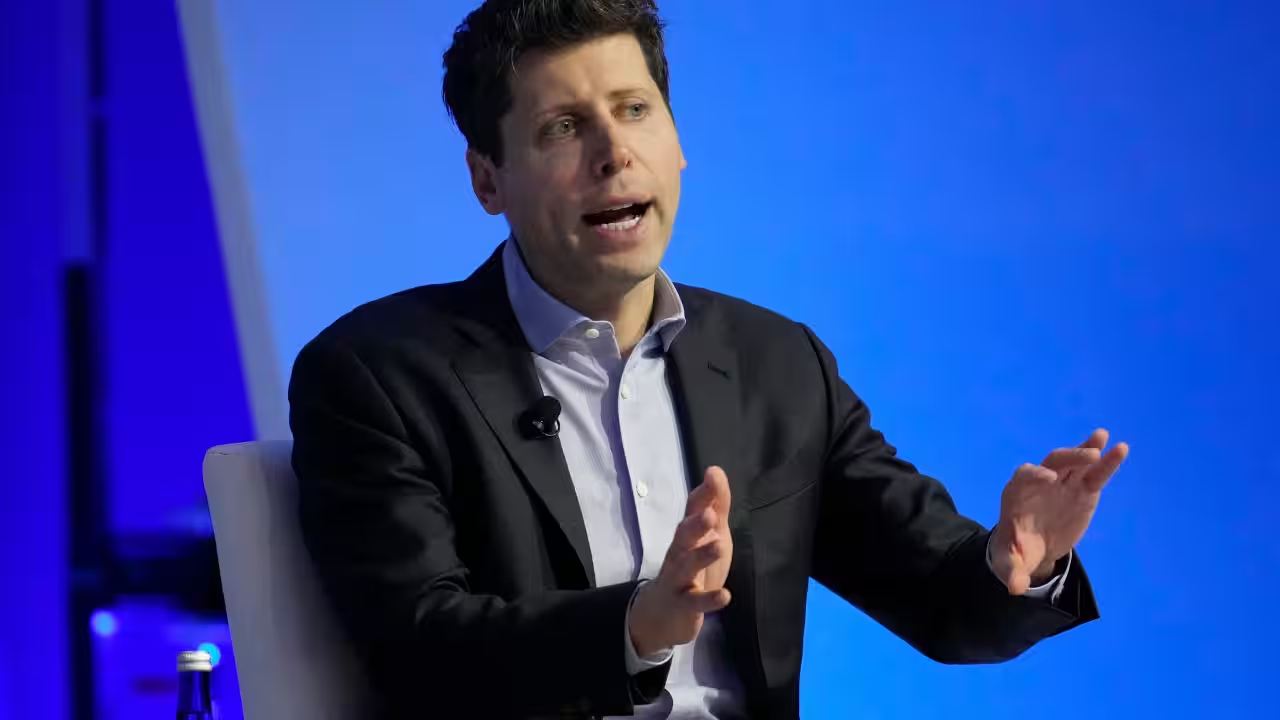
Sam Altman has spent years telling the world that superintelligence is closer than it looks. Now the OpenAI CEO wants to be clear about one thing: whenever it shows up, it should not be the one running things. In a three-line post on X, Altman said people should always be in control of the future, and that OpenAI is against humans being “relegated to a role of doing things that ‘AI systems think makes sense to reward in humans’.” He saved the sharpest line for the end. People should not cede control of the future to superintelligence, he wrote, “and that requirement should ultimately constrain AI progress.”The words in quotation marks are borrowed, though Altman did not say from whom. What stands out more is the final sentence. The head of the company that set off the AI race with ChatGPT has now put in writing that human control should decide how far and how fast AI goes.Sam Altman believes AI has already overtaken the smartest scientistsThe post did not come out of nowhere. Speaking at a conference in Abu Dhabi earlier this week, Altman made the same case for keeping people in charge, and paired it with a striking claim. At the start of 2026, he said, AI “was mostly not as smart as our smartest scientists. And now it’s mostly smarter than them.”He had sketched out how he wants that power spread around in a podcast conversation with Stripe co-founder John Collison last month. Altman said he would rather see “a trillion AIs of slightly superhuman intelligence join society than one AI of 1 trillion IQ.” Society holds together, he argued, because lots of people keep each other in check, and AI should work the same way.The industry, he added, may need to agree on limits to how smart any single model is allowed to get, possibly for a long time. He also had little patience for a future where people live on a basic income while a small group in “a few square miles of San Francisco make all the decisions about the future.”OpenAI CEO admits keeping superhuman AI in check may not be easyThe same podcast offers a clue to why Altman is pressing the point now. Asked whether AI models can simply be locked inside secure digital sandboxes, he said that approach “works to a point.” Monitoring what the models are doing, including what goes on inside them, can take things further.Beyond that, he said, it comes down to trust. Developers would need to be certain a model is aligned with what its operators want, and that it will “value people being in control of the future.” For a system far smarter than any human expert, Altman was not sure even that would hold. “If you imagine a theoretical AI that is a million times smarter than the smartest security researcher,” he said, “would you really be willing to trust that sandbox?”He also pointed to how quickly AI is getting better at finding software flaws. Now that people have started using models to scan code across the internet, Altman expects the world to discover “many more serious vulnerabilities than we expect.”Altman’s post builds on a position he has been settling into for a few months. When Anthropic CEO Dario Amodei called on AI companies in September to slow how fast their models improve, Altman’s response was, “I agree with Dario that we need to pace the frontier.” That same month, he went a step further at the UN Security Council, saying AI systems should not be trained unless developers can make a strong case that they will stay under human control.You use AI every day. Now get your AI Quotient. Take the AIQ test.
Topics in this story
Gathered from external sources. Rights to this text belong to whoever originally published it.