TSMC’s Quarterly Revenue Jumps 51% After AI Demand Holds Up
Taiwan Semiconductor Manufacturing Co. reported a 51% rise in quarterly revenue, a positive signal for investors trying to gauge the sustainability of a glob...
(Bloomberg) -- Taiwan Semiconductor Manufacturing Co. reported a 51% rise in quarterly revenue, a positive signal for investors trying to gauge the sustainability of a global AI infrastructure buildout.
Revenue totaled NT$1.49 trillion ($46.7 billion) over the three-months ended in September, based on Bloomberg News's own calculations. Analysts on average were looking for NT$1.46 trillion.
The Taiwanese chipmaker's strong sales growth reinforced the outlook for AI demand at a time investors are grappling with rising debt levels and regulatory setbacks, as well as calls by OpenAI and Anthropic PBC to pace the development of the emerging technology.
Advanced Micro Devices Inc. boss Lisa Su said this week the company expects chip demand to remain sharply higher over the next few years, while Samsung Electronics Co. reported an almost nine-fold jump in operating profit. AI server assembler Hon Hai Precision Industry Co. also beat quarterly sales estimates this week.
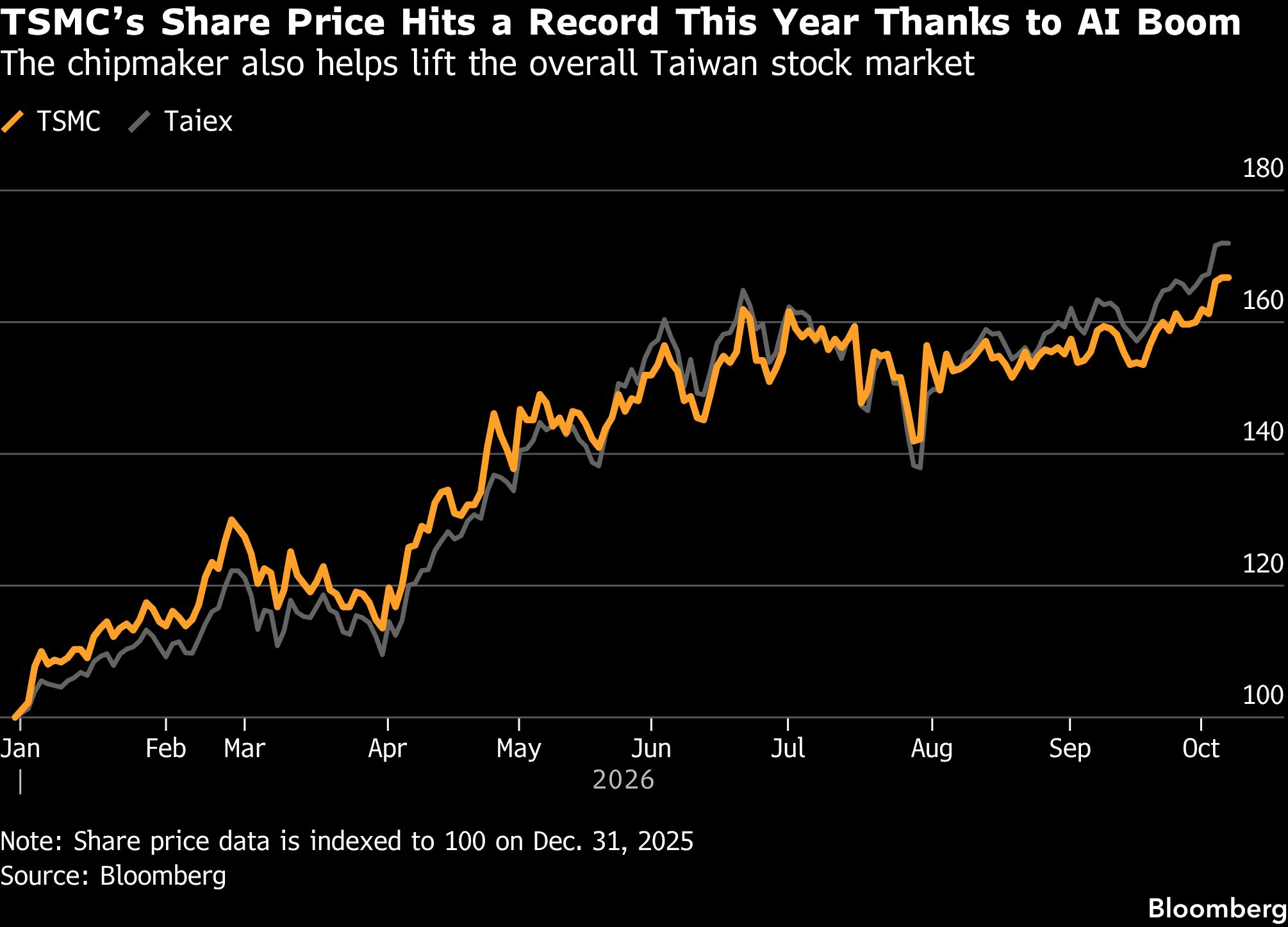
The go-to chipmaker for Nvidia Corp. and Apple Inc., which serves as a barometer for AI demand, has seen its shares hit a record this month, reflecting confidence in its cutting-edge products over the longer term.
TSMC is now also considering a further expansion in Texas due to white-hot AI demand, after pledging $265 billion to create a campus in Arizona. North American customers accounted for more than 75% of the company's overall sales in the first half of this year.
The bigger questions at the 3Q briefing concern 2027 and beyond. TSMC added $100 billion to its Arizona plan in July, while Reuters reports point to a possible Texas hub; any update could test its overseas-dilution guide and signal 2027 capex. Pricing is another focus, with Taiwan media reports pointing to 3-6% wafer-price increases in 2027. Updates on A14, CoWoS expansion and CoPoS development could also show how TSMC plans to respond to Intel's 14A and growing EMIB-T backlog.
Topics in this story
Gathered from external sources. Rights to this text belong to whoever originally published it.